LIVE Join our service streaming live right now! Click here to watch.
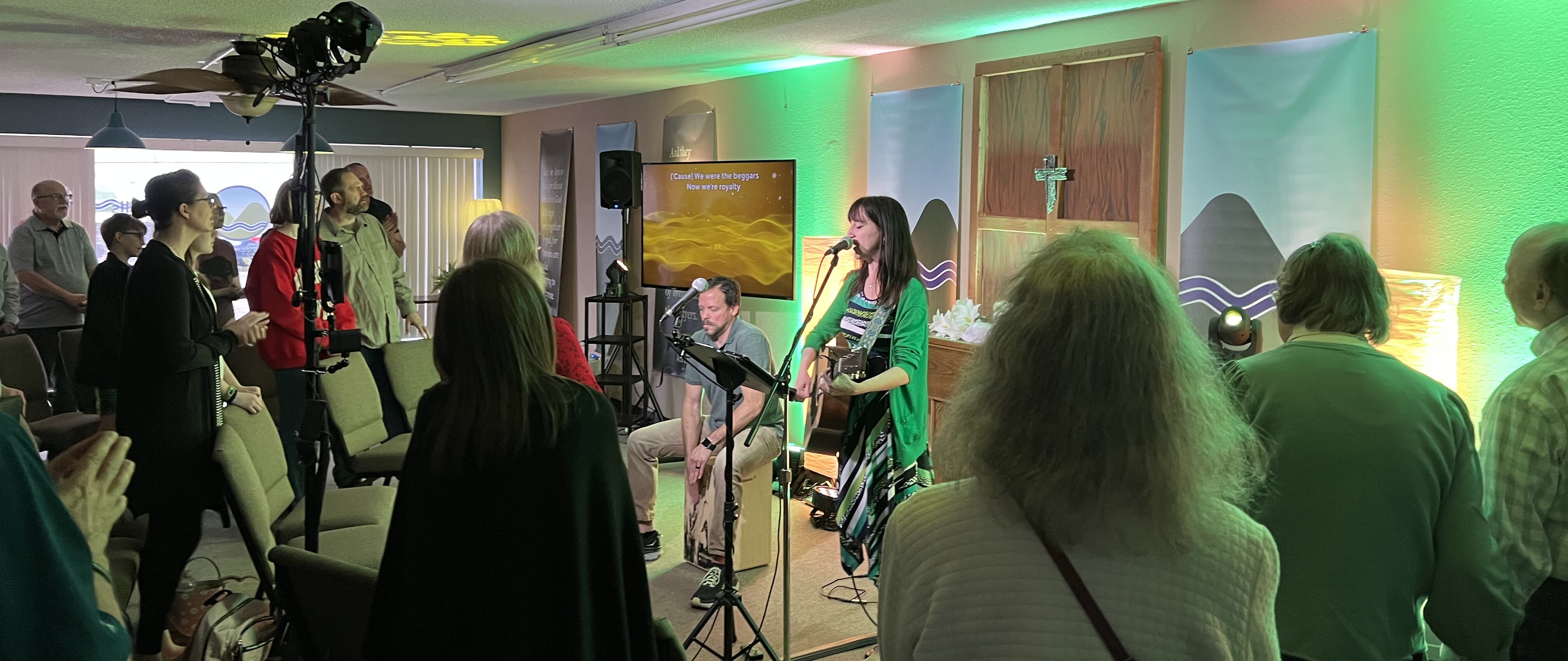
There’s always one thing we’d rather not put on the table when God asks us to give something up—and we usually know exactly what it is. In Luke 18, a rich man walks away from Jesus grieving because that one thing is precisely what Jesus names, and the disciples’ stunned question in response—”then who can be saved?”—turns out to be our question too.
Most of us have something we’d rather not put on the table before God—something we’re holding just tightly enough that we hope He won’t notice. In Luke 18, a ruler who has kept the commandments since his youth comes to Jesus asking what he still must do to inherit eternal life, and Jesus names exactly the one thing he isn’t ready to hear.
We’re drawn to people who seem useful, impressive, ready to contribute—and in Luke 18, the disciples felt the same way when they turned away parents bringing infants to Jesus. But Jesus stopped them: “Let the little children come to me, and do not hinder them, for the kingdom of God belongs to such as these.”
It’s easy to look across the room and thank God we’re not like that person—the failure, the compromiser, the obvious sinner. In Luke 18, Jesus tells a parable to confront such self-righteousness in us.
We’ve all prayed about something so long that we start to wonder if God has put us on hold—and whether anyone is ever going to pick up. In Luke 18, Jesus tells a parable about a powerless widow who keeps pleading before a judge who neither fears God nor respects people, and asks whether his people will keep crying out to him day and night or simply lose heart.
We’ve all held something we couldn’t restore—a plan, a relationship, a season of life that’s gone dry—and kept clenching it anyway, as if sheer will might put flesh back on the bone. Naomi knew that feeling: she went away full and came back empty, and the Book of Ruth shows what God does with that kind of emptiness.
Knowing where we want to end up is easy; trusting that faithfulness will get us there is another matter—especially when the path looks like a dead end. Ruth 3–4 traces ordinary people facing exactly that tension, each called to let go of control at the moment it costs them most.
Believing that God will ultimately triumph over the grave is one thing; knowing what to do with yourself in the meantime is another. Ruth 3 presses that question through people who have lost everything and choose to prepare rather than wait it out—and what their ordinary faithfulness looks like, in the daily grind before the story resolves, may be more unsettling and more freeing than expected.
In the Book of Ruth, Boaz finds a vulnerable widow gleaning in his field and he has to decide if he’ll do more than what the law requires. We, like Boaz have to answer the question Will love dictate we give more than the bare minimum? That’s much easier to tell others to do than for us to do ourselves.
When commitment costs more than you have to give, and there’s a way out, the practical thing to do would be to take it. But, Ruth chooses to stay, speaking words we associate with weddings in the cold shadow of funerals. God calls us to be willing to hold fast in our darkest places, too.