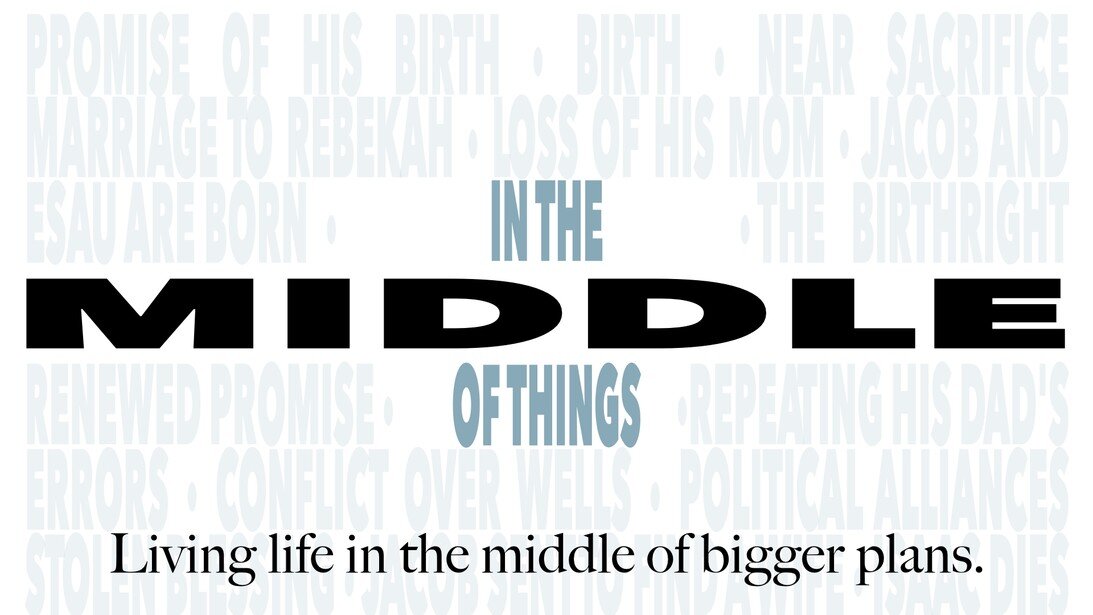
We’ve all felt stuck in the middle—watching God work powerfully somewhere else while wondering if He’s forgotten us. In Genesis 21 the long-promised son finally arrives and the house fills with laughter, yet Isaac almost vanishes into the background of his own story. Even there, something unseen is still moving.
The following study questions are AI generated and may contain errors.
This transcript has been automatically generated and may contain errors.
As we do, about a pool. Well, the last few weeks haven’t been great for swimming in swimming pools, but I’ve always enjoyed spending time in the pool. And I remember years ago, we’d had this little pool. It was like three feet tall, and it was nice. I mean, a hot summer day, you’re not picky, right? You’re in the pool. But Costco, Costco had an inflatable ring pool. It had this giant inflatable ring, and then it had these vinyl sides that were all attached. And according to the box, all you did is you inflated this vinyl ring, and you wouldn’t have a three-foot pool, you’d have a 48-inch pool. And you know, that difference, it makes a fairly substantial difference. Plus, it was several feet wider. It was going to be this big, lovely pool.
And so, my dad and I, years before that, we had ground that was flattened out from putting up the little three-foot pool all the time, every year. But we went out, and we cut out some more grass, and got ready for this big new pool. And it was going to be absolutely great, right? We’re going to have this pool. And as we grabbed all the tools, and we carried them out, and we’re shoveling, and moving all these things, and getting ready, it just seemed like, this is just so exciting. And can you believe it? All you have to do is inflate this ring, and magically, you have this pool. It just puts itself up, it levels itself, no more trying to pack. You have to pack sand around the sides of the old one, and there was like a thousand bolts to put on. It felt like you, on a hot summer day, you’re out there just dying, trying to put all this together. This, you inflate it, it goes up, perfect.
Well, let me introduce you to it. There we are, laying it out, you just spread it out, right? This looks pretty easy. There we are, we have the ring inflated. See, it’s coming along. This is probably just 10-15 minutes later, and we’re just speeding along here. And then, put water in it. Amazing, isn’t it? Absolutely amazing, the wonders of modern technology. The one thing they didn’t tell us in the instructions, is that while you want the ground level for any pool, this pool, since it didn’t have any anchoring to the ground, if the ground wasn’t perfectly level, could roll. Now, it wasn’t obvious immediately. We filled it up, went swimming a few times, it was great. This early June one year, I think 2003, this is just wonderful, right? We have this nice new pool, it’s lovely.
And then, I remember one day we were in the pool, and you look out at the yard and think, it looks a little different from inside the pool. Kind of peek around, and just my imagination. Next day, I’m sure something’s different. And then it started to become apparent, there was this dirt patch on the one side appearing, and there was grass disappearing on the other side. The pool was moving. We tried to level out underneath it a little bit, with the thousands of pounds of water inside the pool, just kept rolling. And then, rain was supposed to come in, and we thought, this is really bad news, because it’s starting to head for the back fence, and it’s going to keep going. So, what did we do when the rain came? We had to lean on the pool, and let all the water out, and re-level the ground.
Why am I telling you about a mishap on a pool? What was striking to me about that, was striking to all of us, I think, is we thought we’d succeeded at first. Here was this pool, and this massive amount of water all held in, it’s all nice, and yet there was something else moving that we couldn’t see. Gravity. And it wasn’t moving quickly, in this case, because it was only a slight slant. It still was a lot of weight to move, but it was moving.
Well, in our new series, we’re going to be looking at the life of Isaac, Abraham’s son. God of Abraham, Isaac, and Jacob. We hear that over and over again in Scripture, don’t we? That’s how God is often identified. In fact, Isaac’s name shows up 113 times in the Hebrew Old Testament. That’s a lot of times. Can you imagine having your name written in God’s Word 113 times? But as important as Isaac was for the promise to get to Jesus, we’ve been singing about Jesus and celebrating the goodness of what Jesus does for us, as important as Isaac is to getting to that point, less than half of those mentions of Isaac are really in reference to anything about Isaac. They’re simply to identify the Lord as the God of Abraham, Isaac, and Jacob.
And what strikes me as we look at the story of Isaac, it’s just how little is actually said about him. Here is the man who’s the bridge from Abraham, the founding of God’s people, to Jacob, the father of the tribes of Israel. The man who who’s given the name Israel by God. Here’s that link between those two, and most of the time other stuff’s happening during Isaac’s life. We don’t hear that much about. Think about it. I try to think, have I ever heard anyone preach a series, sermon series, going through the life of Isaac? And I believe the answer in my case is no. And I bet for many of you the answer is no. Why? Because we don’t hear much about him, and yet isn’t that actually quite insightful? Because here’s a man that we know very little about, really. We know a lot about his father. We know a lot about his son. But we know very little about him, and yet what? God carried his promise, the promise that would lead ultimately to Jesus, through him.
And I think about that for a moment. It starts to give me hope for how God is working in my life, too. Because a lot of times we feel like we’re in the middle of everything else going on. We can see over there, or over there, here’s where God’s working, here’s where God’s working. I’m insignificant. I have no part in this. Friends, every single one of you, God has a part for you. I’m not saying all of you someday will have a hundred and thirteen mentions in God’s Word. That’s not going to happen. But all of us have a part to play in the work of God’s kingdom. Jerry and Jamie, I mentioned this a few moments ago when we were celebrating your baptism. You might think, well, we read about all these important heroes, but do I have anything to share? Here’s what you need to know. You do. God is working through you.
God isn’t just working through some of us. He isn’t just working through people at churches that are in a different city somewhere. Sometimes I think, well, if only we were in a city that had significant movement going in this way or that way for the kingdom. God is working right here, right now, through each of us. And that’s what we’re going to be thinking about over the next few weeks as we look at the story of Isaac, because as we see how God continues to move his promise through them, here’s the thing that we know. That we are the ones who continue to carry that promise. We’re the ones who benefit from that promise.
So as we think about that, and we think about Isaac’s story, what we’re trying to do is we’re going to see a lot of times where there’s something about Isaac in these chapters. This chapter is primarily 21 to 27 of Genesis, where Isaac comes up and then it moves on to someone else. But in each of those cases, what we’re going to see is how God is continuing to remember what he’s doing. A lot of times I forget things. And I think sometimes we wonder if God’s forgotten us. And I kind of suspect if Isaac heard all the stories of how God was working so greatly in his father’s life, he wondered if God had forgotten him as well, because nothing was going to happen in Isaac’s life that was as spectacular as all the stuff that happened in Abraham’s life. Yes, he was going to be given a son, and he was going to have to wait an awful long time, but not as long as his dad. Yes, he was going to be a bearer of the promise, but not for as long as his father. He was going to somehow represent God’s grace, but it was going to involve him being put on an altar to be sacrificed, not exactly the way I’d want it to be a key part of God’s story, right?
And I kind of wonder if sometimes Isaac felt an awful lot like we often do. Stuck in the middle here. But in the middle of things, God was working powerfully. So that’s what we’re going to look at. Let’s pray as we share in the life of Isaac, and we would see how God works.
Father, thank you for this evening and for this opportunity to study your word. We pray that as we do, that you’d help us to remember that you are the same God today, that you are the God who was with Abraham, who was with Isaac, who was with Jacob. And throughout all the ages, you have been with your people, and you have adopted so many around the world into that people through the work of your Son, our Savior, Jesus. We pray that as we reflect on this story, we would see it as a story of our family and a story that speaks of how you continue to work. We ask in Jesus’ name. Amen.
Here’s perhaps I think the most important thing that has come out of studying these passages. It’s something that I think I really needed to hear, and I believe all of us need to hear, which is that God is working when the attention is elsewhere. We see that in those first eight verses of Genesis 21.
The Lord visited Sarah as he had said, and the Lord did to Sarah as he had promised. And Sarah conceived and bore Abraham a son in his old age at the time of which God had spoken to him. And Abraham called the name of his son who was born to him whom Sarah had borne to him, Isaac. And Abraham circumcised his son, Isaac, when he was eight days old as God had commanded him. And Abraham was a hundred years old when his son Isaac was born to him. And Sarah said, God has made laughter for me. Everyone who hears will laugh over me. And she said, who would have said to Abraham that Sarah would nurse children and I have borne him a son in his old age. And that child grew and was weaned, and Abraham made a great feast on the day that Isaac was weaned.
Let’s stop there for a moment, because there’s a lot going on there. There’s a lot more that’s going to go on in the next few verses, but just up to that point, think of all that’s going on. Isaac’s born. Sarah’s celebrating that Isaac’s born, and that God has taken away that sorrow that she had. She’d been waiting all these years for a child. Finally, she has that child. She’d laughed before when God said that he was going to give a child to her. Now she was laughing because God had given that child to her. What had come from a laughter of doubt, maybe a nervous laughter, had become the laughter of pure joy.
That’s for Abraham. And so what does Abraham do? Well, he faithfully does what God’s commanded him. He circumcises his son on the eighth day. And then as Isaac grows up, grows a little older and he’s weaned, what does he do? He throws a great feast. Let’s celebrate. My son has not been only given to me, but my son is growing and is going to be a man of God someday. And he’s excited about that, and he’s celebrating that.
With all that going on here, it all comes back to a promise that we see nine chapters before back in Genesis 12. Think about that. God calls Abraham and he says, I’m going to make your descendants as numerous as the sand on the seashore. Abraham’s going through the next years of his life, and it doesn’t look like God has remembered that promise. But now here, in this moment, Isaac is born. Finally, that heir, that one who can carry on that promise. Everything Abraham’s been doing. Abraham has moved, he’s uprooted his family, he’s gone from place to place, he’s gone through times where he was being threatened, he’s done all this, he’s done all this chasing after this promise of God, and now what does he see? He sees it coming to life. Promise fulfilled. God doesn’t forget His promises.
That’s something beautiful when we come to the waters of baptism. There’s a promise in that water. Not in anything special, this is just St. Charles City water, but in how God’s Spirit works through it. That God takes that water and He says, I’m putting that promise on you. And as He does that, He doesn’t forget it five years later, ten years later. Half the time I can’t remember what I said six minutes ago. God doesn’t forget.
You really want to make your mind explode, think about this. When God promised that to Abraham, He knew the descendants of Abraham. And He knew one day He would enter the world as a human being, as a descendant of Abraham. That Jesus would come into the world and would live, suffer, and die, and then through His death and resurrection would bring us into that family. So when He’s making that promise that Abraham and his descendants would be a blessing to this world, when you think about the promise God has for you, it’s not just a promise that’s going to happen sometime in your life. As God promised that to Abraham long, long ago, He was promising thinking of you and me. That’s how long God remembers His promises. So we see a promise fulfilled.
And we see two very, very happy people. Abraham is happy. He has a son. He has a son who’s going to carry on his name. And that’s important oftentimes in our society today, but we need to understand in the ancient world, if you didn’t have someone who was going to carry on your name, you might as well not have existed. You were nothing in that world. And in some sense, not only was that sort of a matter of honor, it was also a matter of simply survival. What happens when you grew too old to take care of yourself? What happens if you lived to a ripe old age and you no longer could do all the necessary things to keep your family running, and you couldn’t just call up delivery services and such to have things brought? There wasn’t a safety net of social services that was going to take care of you. The only hope you had that you weren’t just going to be out there begging and waiting for the elements to take you and cause you to have a slow painful death was that your children would take care of you. So this is a very concrete thing.
And Abraham’s overjoyed. He’s 100 years old and it doesn’t seem like this should be happening, but here it is that he has a son. And Sarah as well. I mean, God has Sarah laughing at him and what does she do? She lives. God doesn’t kill her. So there’s a communication of God’s grace and mercy in that. And God then fulfills the very promise that he promised to her. She now has a child. She’s 90 years old. Can you imagine? 90 years old, chasing around that baby as he starts to become a toddler. She’s going to be 91, 92. Oh boy, that’s going to be something, right? But she’s overjoyed. And so Isaac’s name refers to the laughter, the laughter that moves from a skeptical laughter to that joyful laughter.
And everything I’ve said, though, have you noticed there’s something that’s very muted in all this. For all the details we learn about Abraham and all the details we’re going to learn later on about Jacob, there’s hardly any mention at all of Isaac being born. There’s hardly any mention of what he was like during this time. Now, we might say, well, the Bible has lots of generations where it doesn’t explain that, but right here in this particular section, we’re in an area where we’re often learning great detail about the patriarchs, the founding family of God’s people. And yet the focus is on Abraham. Well, he’s a patriarch. On his wife, Sarah. But Isaac is almost more of a supporting character. He’s there to fulfill the promise that they’ve been promised.
We read later on, we learn how Jacob was born and him wrestling with his brother, even as they’re born. We know right away what kind of character Jacob’s going to be. We don’t have that for Isaac. Because he’s weaned here, we don’t learn anything. We don’t learn anything about teenage Isaac later on or young man Isaac. The promise is being fulfilled and lots of people are celebrating. And it’s about Isaac, and yet it’s almost not about Isaac.
Sometimes that’s where we might find ourselves. We’re in the midst of God working to bring joy into someone’s life, and they’re celebrating, and yet we kind of feel like we’re on the outside looking in, and we don’t really know what to make of that. That God favors them and not us. But I think what we see here is that it isn’t that God doesn’t favor Isaac. It’s that as he’s in the middle of all these other things going on, as the attention’s on Sarah and getting the promise fulfilled, now she has a child, or Abraham, and now he has a child. Isaac’s sort of in the middle of it. Very much in the middle of it. But he’s carrying on that promise too.
It doesn’t matter if at that great feast that Abraham throws, whether Isaac’s right in the middle of it, and he’s laughing away, living up to his name or not, or if he’s off in the distance and one of the household servants is taking care of him while everyone celebrates. It really doesn’t matter. Isaac is just as much a part of the promise all the same. And sometimes we’re at the great feast, and sometimes we’re off in the distance just watching from a distance, but the promise is the same.
And that’s notable because there’s another character who, in some sense, isn’t in the focus at this point, because the focus is on Isaac’s parents. But the real focus, the real hero of the story, is whom? Well, it’s God. God’s the one who’s fulfilled the promise. God’s the one who’s taken a 90-year-old and a 100-year-old and given them this child that he’s been promising for however long, and said, I am going to see through this promise that I gave to you. I haven’t forgotten.
And a lot of times when we’re feeling like we’re in the middle of things and we’re thinking, but I can see over here people are having success, people are having joy, things are working out. Sometimes I’m even playing a part in that, and yet I feel like I’m just sort of watching even though I’m playing a part in it. This God is using us, oftentimes he’s just in the background too, waiting for that moment that he’s going to make himself apparent to people in their lives, and yet that doesn’t mean anything less about his presence.
Sometimes as we’re watching people, and they’re that pool, we’re helping fill up the ring and we’re pouring the water in, so we’re doing our part. God is the one rolling them to where they’re supposed to be, and sometimes it doesn’t feel like it’s happening. And sometimes that’s true for us too, because we think, well, I see how God’s moving powerfully in this person or that person’s life, but I don’t see how God’s moving in my life. And I didn’t see that pool ever move. I never just laid on the ground and stared at the blades of grass and watched for hours and hours and eventually saw a blade start to bend over a little bit. I didn’t see that. I just saw the result. And a lot of times as God’s working in our lives, it’s so subtle and it’s so slow because God is patient that we don’t see the blades of grass bending, but God is bending the grass. He’s working.
Even if all the worry is going into all those other things, here is the key point that we see here and throughout the life of Isaac, throughout the lives of everyone that we see in Scripture carrying forth God’s mission, that God is the one doing the work and that God is the one who continues to do the work. It doesn’t matter if our focus is somewhere else at the moment. Sometimes we need to be refocused. Sometimes God just won’t. Sometimes God really just wants us to go to work or to school and to go and do the things that we’re supposed to do there, and we’re not seeing any great thing happening in the moment. But know whatever we’re doing, God is preparing us for the next thing he’s going to use us for. Sometimes it’s just very subtle, but it’s not any less true.
Sometimes we misunderstand exactly how God is even working, and as Isaac was given to Abraham and to Sarah, they may not have truly understood what Isaac was going to do, and they surely didn’t understand what the ultimate point of being a blessing to all nations was going to be. Abraham didn’t know that Jesus was going to come into the world. He didn’t understand the full details of that. What he knew is that God had said he was going to use Abraham’s family, and Abraham responded. Not perfectly, but Abraham responded. A lot of times that’s how we are.
Speaking of pools, how many of you have gotten to see some of the Olympic swimming over the last few weeks? It’s gone swimmingly, right? They’ve been doing all kinds of swimming. Here’s something, though, that I found kind of curious at first. Did anyone notice that? I don’t know if this is new, but I don’t think I’ve ever noticed it before. The little water fountain jets they have shooting into the water by the diving boards, have you seen those? Do you notice that? I think, you know, if they’re trying to fill the pool back up, if it has a leak and they’re trying to fill it that way, it’s not going fast enough, is it? I mean, this is a big pool. What is it? What’s it for? Well, apparently enough people were asking that, someone decided to write an article on it and explain. And what it’s for isn’t to fill the pool. They have other means to fill the pool. It’s not what we might assume, either. Like, some people said, well, somehow those sprinklers are softening the water, so if the divers dive in, it won’t hurt. Well, it’s not that either. Why do they have sprinklers going into the water? Well, it’s a safety feature. And the International Aquatics Association requires this so that when the divers are diving into the water, as they prepare their bodies to hit the surface of the water, often from very high heights, they aren’t going to be the most comfortable. They need to prepare so they don’t hurt themselves. And by having those jets shoot into the water, it’s causing a ripple across the water so they can see when they’re about to make contact with the water. Because if it’s perfectly still and flat, you can’t necessarily tell as you’re coming down at high speeds towards all this water.
A lot of times we can’t tell why God is doing things in our lives. We think, God, my pool has completely emptied out of water, and I have an Olympic-sized swimming pool here with problems, and I see these little jets coming in. It doesn’t seem like you understand the severity of the situation. But God knows exactly what he needs to prepare us for so that we can do the work that he’s called us to. He prepared Abraham. He prepares Isaac. And for Isaac, it’s not going to be the spectacular, I am the founding father of an entire people called by God. There’s a part in that story. But God’s preparing him to be that part. And then we’re going to spend a lot more time in Scripture thinking about the role of Jacob and how God works through Jacob, his son’s life. Isaac is there making that connection, and God’s using him, even when he may not have actually understood in the moment why he was getting to play a part in it, or what playing a part in it even meant.
As those sprinklers make the water so that the athletes can see, it’s allowing them to fulfill the mission. Sometimes we’re the sprinkler, and sometimes we’re being sprinkled, our pool is being sprinkled on so that we can see. God’s doing those subtle things, those things that aren’t even necessarily obvious to prepare, right when we’re in the middle of everything else. If you’re in our Tuesday night Bible study, you’ve heard Ginny at times say, her famous saying, life is what happens while you’re making other plans. And I thought about that as I was working through this chapter, because I thought, well, God is the one who’s working while we plan. That’s why oftentimes the plans don’t go the way we think, because we’re making all these plans. And Isaac may have thought, well, you know, if my dad was promised that he was going to be a great nation, he was going to be the one who was going to have a child who was going to bless the nations, well, that must mean I’m going to be really, really important. I don’t know that Isaac thought this, but I bet at times something like that flashed through his mind, and maybe he wondered if the way the blessing was going to happen was that God was going to establish a kingdom in this world that he’d be able to rule so he could bless people, right? You can’t just be a nomadic shepherd and be blessing a bunch of people, it would seem like. He may have thought that. Who knows what plans Isaac made? We know some of them, and we know they didn’t work out necessarily how he thought they would.
What was God doing? As he was making those plans, life was happening while he made those plans, God was the one who was working in those plans, and around those plans, and under those plans, as we make plans. Anyone ever made a plan and it doesn’t work out? It seems like, yeah, yeah, yeah. Loving has never made a plan and had it not work out, is that right? You’ve never had a plan not work out. You need to talk to this man, he has everything down, right? No, we’ve all experienced having something not work out right, right? And yet, even in the things that don’t work out, God is working. And the most important thing we need to understand when our plans don’t work out is that even as our plans don’t work out, God’s plans always work out. And so we can have confidence that it’s not that, well, like Abraham, like Isaac, we mess up, we do something that doesn’t make good sense, we confess our sins earlier, we have a boatload of ways we’re getting in our own way and tripping over ourselves. God is going to work even in that.
Sometimes it feels like he isn’t, and especially when suddenly then it’s not just that we’re not really sure, it’s just all the stuff going on. As the bumper video opened us up, we had all kinds of things happening all around Isaac and they just pile on, you can’t see Isaac any longer, right? Well, it’s one thing when it’s just a bunch of noise, right? All kinds of stuff going on, but what happens when there’s actual conflict? It feels like the only part we play in the story is there’s conflict because of us. Well, that happens with Isaac. Take a look at the next few verses. Verses 9 and 10. It says,
But Sarah saw the son of Hagar, the Egyptian, whom she had borne to Abraham, laughing. Now we’re back to laughter again, aren’t we? This isn’t a happy laughter. So she said to Abraham, Cast out this slave woman with her son, for the son of this slave woman shall not be an heir with my son Isaac.
Here we are, there’s this feast celebrating that Isaac is starting to grow as a child, he’s getting bigger, and now there’s conflict because what does Sarah see? Well, Isaac isn’t Abraham’s first child. You see, they tried to figure out God’s plan for him earlier because God had promised Abraham a son, nothing was happening, he doesn’t have a son, so maybe we can figure out a solution. God didn’t foresee this, I guess, we need to help him out here. So they try, it doesn’t end up being what God is doing. And now Abraham has this son through Hagar, through Sarah’s slave, and Sarah looks at that child who’s older and says, well he’s the first born. And I’ve been really joyful that I’ve been given this child, but now I realize something here. Ishmael is always going to be older than Isaac, and if Ishmael is always older than Isaac, then Ishmael is going to be the one that gets preferential treatment, and I don’t want that, that can’t be, he needs to be thrown out.
So for a second time, Sarah comes to Abraham and says he needs to do something about Hagar, this time with Ishmael in tow, he is a boy now, and she says to Abraham, I can’t stand these two, get them out of here. I think, well, if God’s really working in the life of Isaac, then this shouldn’t be happening, right? Isaac, he’s supposed to carry on this promise that it’s going to be a blessing to the nation, it can’t even be a blessing to the people at the table. How’s that going to work?
Sometimes, that will strike me, you try to follow God’s plan, it just seems like it doesn’t work, and now people are upset, and it’s just coming apart, and you think, well, clearly God isn’t working through me, because if he were working through me, there’d be peace, right? There’d be comfort, people would be happy. Everyone should be laughing, but they should all be laughing together in joy, not at each other’s throats, and yet, what do we see here? It’s exactly what’s happening here. That doesn’t invalidate the promise. When we’re serving our Lord, when we’re following in those footsteps, and being a part of those people that Isaac is the second generation of, know that there are going to be times that just like Isaac, our very presence can cause discord. And certainly when we stand up for the Lord, there can be times where it causes discord, but just because things don’t work out right, and sometimes it feels like it’s blowing up in our face, it doesn’t mean that God has abandoned us, or that we weren’t really a part of his promise. It means we live in a fallen world, and sometimes part of that conflict is going to come from our own sin and our own bad choices, but God is still working.
I can’t help it. I need to go back to the Olympics. Hey, they just had the closing ceremony a few hours ago. We need to spend a little more time in the Olympics. I was watching the other night the steeplechase as people do these amazing feats. It’s just amazing how to think that you can run, and you can jump over hurdles, and then you can jump over hurdles into water, and then start running again. It’s amazing. And they do so at such great speeds, and they do so right next to each other, and they don’t run into each other, and it’s so amazing. And they do it with such perfection. It’s shocking when suddenly it doesn’t work out right.
And there was a man from the Kenyan Olympic team, Amos Sarim, who was running. He’s one of the best runners in the world. He’s won championships, and he comes up on the last lap of the race. And he comes up to the hurdle that has the pool of water after it, and he starts to go over it, but he misses and ends up on the side of it. He was right towards the front of the group of runners. He was right there. But now he hasn’t made it over the hurdle properly, so he has to walk back around and run. And suddenly he’s no longer right in the thick of things. Now what is he’s way, way, way back. The camera has to turn away from the group of runners and look way over here. Oh, there’s that runner over there. He might as well just give up, right? He should just sat down when he missed it. He starts running, and running, and running, and then it was… I don’t know how to believe my eyes. He’s catching up. And right at the end of the race, he’s running, and he’s within one footstep of the number five runner, and he has to get to the fifth place to qualify for the final. And you come to it, and you just know at this point he’s been running his heart out. He’s made it all that way to that point. He is going to do this, right? No. Sixth place. It’s all pointless.
Well, in the complex system they figure out a lot of Olympic sports, he was not part of the automatic qualifying group for that last race, but he was chosen afterwards to be part of that race. He ran that race, and he placed 14th. What was the point of all this? I thought about it for a moment. I thought about how striking it was to see him running like that, and to keep running as he missed it, and turning around, and running again. And I talked to our brother, Tyrus, over in Kenya, JGM Church, that we pray for and support, and I asked him if he’d gotten to see it. He had gotten to see it. They were all watching the Kenyan team running, and he said, well, there are lots of other runners that are doing amazing things on the Kenyan team, and in fact they are. But I thought, I’m not so sure that Amos didn’t do the most amazing thing. Because who’s going to remember in a few weeks? If you’re the family of the runners, or if you get a bunch of medals, you’ll be remembered. But there are a lot of people that run and get one gold medal, and most of us, if we ran to them on the street, would never remember them. Yet there’s this man who ran, and he didn’t achieve what he thought he was going to achieve. He didn’t achieve gold, or silver, or bronze. He didn’t even get in the top ten, but I think there were an awful lot more people talking about him than even the people who did get in the top ten.
And I wondered, who is it? Maybe someone watching his national team, Kenyan team, maybe someone in Tyrus’s church someday is going to be at the Olympics. I don’t know that they will, but maybe. And maybe that person watched someone run with endurance, even though it seemed completely hopeless, and thought, maybe I can do this too. A lot of times when I’m running it feels like I miss the hurdle. I miss the water. I run back around. I don’t even get within a footstep of qualifying. I’m still way back. I’m the guy who just keeled over on the track, wishing I could catch up with everybody else. But how is God using me, even when I can’t tell? Even when there’s a disaster area behind me, the hurdles knocked over, the water splashed out, nothing’s going right. Someone else is tripping over me as they make the next lap, and it feels like nothing’s happening.
And I wonder if we talked to Amos. I’m sure, I can’t imagine you train for years of your life to do this. It has to be so discouraging, and yet does he understand the beautiful impact that he made by just running faithfully? Do you understand the beautiful impact of the running that you’re doing as you run faithfully following the Lord? Now, a lot of times we are going to knock over those hurdles. A lot of times it’s gonna feel like we shouldn’t inspire anybody, and I certainly know that my legs are worn out, and I can’t run another inch. But it wasn’t really about Isaac. It wasn’t about Abraham. It wasn’t about Jacob. It was about their descendant Jesus, who was going to run the race. And he wasn’t gonna knock over any hurdles. He wasn’t going to miss the pool of water. He was going to run. And the other runners were just, they were just getting their feet off the starting line. He already zoomed around and made it past the finish line. What we could never do.
What’s important as we understand that is that we just run and follow. We stumble, mess up. Sometimes there’s conflict. Family, Abraham’s family, it’s coming apart at the seams here it seems like. But God’s promise, His blessing is right in the middle even of that. I think all those carry things a lot like that, where it just feels like things aren’t working. And God’s never gonna do anything with this, but God can and He will. What we need to do is just keep our eyes on Jesus, run faithfully following Him, knowing that He’s the one who’s won the gold medal. We’re not trying for the gold medal, we’re just trying to follow the one who has earned the gold medal for us. As we do and as we feel like we’re just the forgotten middle of the pack person and we don’t get to do the amazing feat like Amos did where we we catch up and do this thing. We’re just the person that you forget because everyone’s moved on to the next race before we even get to the finish line. What’s God doing? How is He working through you? We’re sitting in those stands and just saying, wow, He’s running, she’s running. Maybe God could use me to run as well. God works in the middle even when when it seems quiet, even when we’re not sure how He’s working, God is moving. That’s why we can follow Him with confidence as we ask Him, God give me strength to do your work. The answer is faithfully. That’s true for you and for me today.
Let’s pray. Lord, a lot of times it feels like we can’t do anything right. It feels like we’re not doing anything that seems to make an impact. We’re not running that faithfully. We stumble constantly. We’re not running that well. We’re not even doing something spectacular, catching up. Help us to remember that what matters is that we keep our eyes on your Son, our Savior Jesus. He’s the one who’s run the race successfully. And as we do, that you use us in our faults and our foibles as we’re at the family banquet and it’s causing conflict that we’re even there, that you, you are using us. Will you help us to endure not in our own strength, but in yours. We pray in Jesus name. Amen.
Start the Conversation