Most of us haven’t murdered anyone this week, so we figure we’re keeping the sixth commandment just fine—but Jesus suggests the problem runs deeper, into the anger we harbor and the contempt we broadcast, long before any blade is drawn.
The following study questions are AI generated and may contain errors.
This transcript has been automatically generated and may contain errors.
Here’s the interesting thing about our God. When He calls us to worship Him, He calls us to think about how we interact with others. And we started to make that transition in our last message in this series before Advent, where we were thinking about honoring our parents. Now tonight, tonight we go a little further, and if you’ve murdered anyone this week it might be a little bit convicting. But I’m glad you’re here, as long as you’re not planning to murder us.
We have a lot of efforts in our society to try to make us, if not want to physically harm others, at least to emotionally want to. Certainly a lot of our social media—I don’t mean to sound cranky—but a lot of our social media, that’s His purpose. Why? Because if we’re angry, they’ve found something very clear. When we’re angry, we’re likely to read more of it. Because when we get all that adrenaline rush from finding out about those evil people that aren’t us, and hearing other people express what we would like to hear expressed about them, it’s really what’s made social media successful. It’s wonderful to have this tool. I’m not anti-social media by any means. I am somewhat anti-algorithm, if you know what that is—the thing that decides what it is we’re going to see.
Perhaps no algorithm is more famous or controversial at the moment than TikTok’s, which went dark for a little while overnight. It’s back at the moment—12 hours. Can I confess up front? I know some of you are going to hate me for this. Don’t be too angry. I hope it goes dark again. I want it to go dark. For a simple reason. We know that TikTok exists to make us angry. Now, that may not be why you use it, but it’s why the Chinese government wants it here. It’s well-documented. That’s what it does. They’ve done research, and people’s opinions become more angry, more divided, and pick up all kinds of really unfortunate things, which the TikTok algorithm is designed to make people see.
If you wonder why our society is so angry today, it’s because we have things like this that are actually taking a stoker and stoking the flames of our own hearts. Now, it’s our hearts. We can’t say, well, TikTok made me do it, but we should understand our hearts and ask, what is it aiming me to do? A lot of the anger we’ve seen over the last few years, a lot of it’s come from these algorithms, because it knows what’s going to make us come in more and watch more or read more.
In that, the computer scientists that design it, they’re not discovering something new about the human condition. This has been a problem since the beginning of time. We go all the way back to when—we go back to the very first family, and we look at Adam and Eve and their first two children, and what happens? There’s anger, and in that anger, Cain kills Abel. I sort of imagine in that setting that Cain is scrolling through TikTok Alpha—it’s not even beta yet, TikTok Alpha—and in that, he sees Abel showing his successes in his farm, his ranch, Abel’s ranch. “I hate that brother of mine,” and Cain literally does kill him.
What we’re going to see tonight though is that it’s not only about whether or not you’ve ever pulled the trigger or pulled out the knife and stabbed someone or poisoned someone or whatever other creative means you can come up with. It’s what’s going on inside our hearts that God cares about. That’s where we’re going to go tonight, because here’s the thing—I think if we find ourselves just trying to be human for any length of time, we realize that the real challenge is it’s really hard to love other people, and God’s calling us to do exactly that. So let’s pray that He would give us strength as we think about how to love other people tonight.
Lord, would you help us to be people who show your love to this world? Would you help us to start by remembering that you love us? That’s the basis of everything we do. And then would you help us to be a people of love that go so much further than simply not murdering others? Would you guide us tonight? Would you convict us tonight? And would you encourage us when we’re in that conviction to know that with the help of your Holy Spirit, you can use us for showing your love to this world? We pray in Jesus’ name. Amen.
Okay, well, you know, it is right after the New Year, and I know that one of the popular things people like to do—pastors like to do—is assemble, you know, five easy steps to a better life in the New Year. I’m going to keep it much simpler than that, and let’s just start with step one. Step one: don’t kill your neighbor. That’s a great first step, and we see that when we turn to Exodus 20, verse 13: “You shall not murder.”
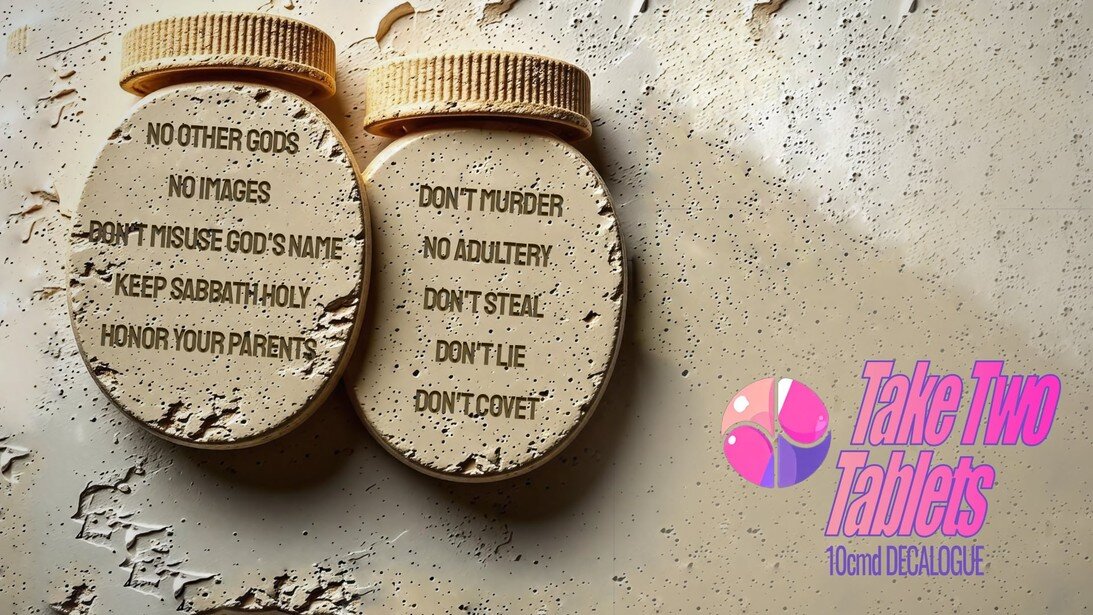
Now, if you think about the rest of the Ten Commandments that lead up to this, if you were here this fall or you’ve read them before, most of us have probably encountered them repeatedly. This one’s really short. When I was designing the graphic for our series, I had to think of how can I condense some of them to make them fit. This one wasn’t hard, right? It’s short. And the first precept of it ought to be simple, but actually, you know, it causes a lot of consternation to us because the question is, well, what does it mean here when it says, “You shall not murder,” or in some translations, “You shall not kill”? People have wrangled over this a lot over the years because the two things can mean very different things. You open up a King James Bible and it says, “Thou shalt not kill,” and you’re a soldier sitting in a tent, getting ready to go to war. You might think, am I about to be ordered to break God’s commands? What about the police officer who’s going to kill my neighbor? What about the police officer who’s called onto the scene as a gunman is holding a school hostage? You’re going to be ordered in there, and if you see that gunman, what are you supposed to do? Shoot him. You might kill him. Are you breaking this commandment?
Well, the word used here for murder isn’t super common. It’s used, I believe, seven times throughout the Old Testament, but as it’s used, it’s used in a very specific, narrow sense typically, and it has to do with a wicked approach. It’s not used when it’s talking about the Israelites going into the land and eliminating the Canaanites for their wicked—that sort of killing. It’s not talking about when the Bible addresses capital punishment. When is it used? It’s used when people have a premeditated desire to bring evil on a brother or sister.
Exodus 22, verse 2: “If a thief is found breaking in and is struck so that he dies, there shall be no blood guilt for him that is the one who kills the thief.” So two chapters later, we already have an example, a pretty clear example, that this is not a prohibition on all forms of killing. It’s not saying it’s good if you kill the thief in the night, but what it is saying is that if you’re in your home at night, the lights are all out, and you hear this crash of someone breaking in, and you can’t even get to the lights, and you walk out into the hall, and your child’s down the hall, and you realize between yourself and your child, there’s the intruder, and you don’t know what that intruder intends to do. All you know is there’s someone in the house that’s not supposed to be there, and you shoot.
That’s something different. Not ideal, but it’s something different than what we’re talking about here. It’s something different when the soldier goes to war and is ordered to fight. Now, we could spend a whole long discussion on just war, and are there times that soldiers should stand up against illegitimate orders, and how does that all work? It’s a very complicated subject, but the big thing we want to hold onto here is that if someone has, in a sense, been the arm of the state, if you served in a war, and you fought honorably in that war, and as part of that honorable fighting, you had to take a life, that is not what’s being talked about here.
I think it’s really important to say those things because people will apply that. And yes, we shouldn’t desire to take lives. I cringe sometimes when I hear Christians, and it’s sort of like, I need to make sure I can have as broad a category of the lives I can take as possible. It’s not that. But we need to be clear, too, that when Scripture’s talking about murder here, what God’s really concerned about is what Cain does to Abel, and what happens over and over again, unfortunately, in our society, which is someone’s anger takes over, someone’s wickedness takes over, and they feed it to the point that they decide that someone else shouldn’t have life any longer.
Now, some people have gone so far, when the term is just killing, to say, well, we shouldn’t take any life at all, and argued, for example, that we should be vegetarians or vegans because we shouldn’t kill. Clearly, that is not what Scripture has in mind. When we look at the way that the buildup to this point is, there’s been no question that human beings are allowed to have livestock and to kill the livestock. I have to confess, I don’t really like thinking about it that much, even though I love a good piece of meat as much as anybody. That’s something different. It’s speaking specifically about taking an image-bearer of God, someone made in God’s image, and taking that person’s life simply because you don’t like them, they made you angry, they’ve obtained something that you didn’t get to obtain, you’re miserable, and you just want to bring misery upon someone else, anything like that. That’s what we’re talking about here.
Interestingly, when we think about this, it’s such a simple phrase, but it’s profound, because in much of the ancient world, the approach to killing was a little different than this. It’s not to say this is the first time that murder has been labeled as something bad in the ancient world, but oftentimes in the ancient world, instead the concern was, how do we get vengeance? So, you kill someone who’s in my family, I kill someone who’s in your family, and then since I killed someone who’s in your family, you kill someone in my family for killing someone in your family for killing… it’s a mess. But the concern was more with honor and representing one’s family than some kind of concrete principle that here’s what’s good and pleasing to God and here’s what’s evil. Here God simply says, I made these people, they belong to me, you don’t need to be killing them. It’s that simple. God doesn’t want us to kill.
The fact that God doesn’t want us to kill in that sense, that very specific sense, but at the same time understands it will happen, also comes up again in Exodus 21, 12-14. Let’s take a look there: “Whoever strikes a man so that he dies shall be put to death. But if he did not lie in wait for him, but God let him fall into his hand, then I will appoint for you a place to which he may flee. But if a man willingly attacks another to kill him, by cunning you shall take him from my altar that he may die.”
As we go on through the development of God’s law in the Torah, what do we find? That over and over again God has a very clear distinction here on what we might call manslaughter. You accidentally kill someone. You get into a fight with someone and something happens and it wasn’t intended to kill the person. You have an accident that kills somebody. It’s very different from premeditated “let me make this plan and I’m going to get this person, I’m going to kill this person and somehow I’m going to get away with it.” There’s a difference here, and I want you to understand this difference.
It’s not about this honor and vengeance system. I just want to make sure that everything stays equal. What I care about is I don’t want you to view life as so disposable that you’ll discard someone’s life just because you want to. Genesis 9, 6: “Whoever sheds the blood of a man, by man shall his blood be shed, for God made man in his own image.” That’s the earliest reference we see in Scripture that ties the image of God to concerns about murder, and it sets the stage for everything else.
As God is giving His covenant to Noah, he wants this to be the thing that Noah is going to carry forward—that God values life. Are there times that life is taken justifiably? Yes. Noah just watched that in spades, right? Noah just saw the vast majority of humanity wiped off the face of the earth because they were wicked. Temptation there could be to say, well, you know, if God can just cause it to rain and wipe out humanity, maybe people don’t really matter that much to God. Maybe if someone angers me like those people apparently anger God, I’ll just flood on them with a flood of blows until they die. I’ll just do it because it doesn’t really matter.
God wants Noah and everyone after him to understand, no, that’s not how it is. Yes, there are times where it’s justifiable. Yes, there are times where someone’s so wicked that God pours out His judgment upon that person. But God didn’t want Noah to start going around and just killing people. He didn’t want Noah’s descendants to go around killing people.
In other words, there’s something sacred about life. We toss around the term sanctity of life a lot in this culture, either approving of it or mocking it, but do we really think about it and what it means? When we use the term, what we’re saying is that God made these lives. And every life that ends, naturally or otherwise, that’s a life that God valued. It’s not to be taken lightly. It’s why in that law about the thief breaking into the house, there’s a distinction on whether it’s night or not.
Some might say, well, what’s the matter if it’s night? The guy broke into my house. Well, the clear point here in the way it’s worded is that this isn’t someone coming in with a machine gun to steal and kill the homeowners. This is a person coming in simply because he wants property. He’s greedy or he’s impoverished and trying to find some way to enrich himself. Whatever it might be, he’s coming in for property, not for life. And God says, well, if it’s night and you can’t tell if he has a weapon or not, you can’t tell what he intends to do or not, and that person, you end up killing that person in defense of your family. That’s okay. It’s not ideal that someone died, but it’s understandable because you can’t see.
But during the day, you kill that person as murder. Why? Because you can tell this is someone who’s coming in, doesn’t have any weapons on him. This feeble beggar breaks into your house looking to see if there’s something he can steal out of your kitchen. You say, ah, you’re in my house. I’m going to kill you. And God says, no. Should he be punished? Yes. We’ll get to, “We shall not steal,” in a few weeks. It’s wrong, but it’s not a reason to kill somebody.
See, the difference there is, in the one case, I don’t know what’s going on and I need to protect. In the other cases, I’m angry this person’s invading my space. And even though I could use other means to defend myself, to defend my family, to realize there’s no harm involved here other than someone coming into my house, instead of going through the proper channels and receiving the proper support for this person trying to steal from me, I’m going to take matters into my own hand and say, this person doesn’t deserve to live because he tried to steal from me.
And God says, don’t you realize every day as you take a breath and you think about something other than what brings me glory, you’re stealing something far more precious from me than that person’s ever going to steal from you. But I redeem you because I love you. God wants us to turn, and even when we’re being wrong, to understand that the point is yes, there are times to defend the people of God, to defend our families and friends. There may be a time where it is unfortunately necessary, but it’s not the point. Our point is not that we should want to kill. Our point is not that it should be somehow a wonderful thing, but rather a necessary sign of the broken world.
There’s been a lot of discussion in the last few weeks of the latest earnings report for Walgreens, and apparently it wasn’t very good. In fact, they lost $245 million. It’s kind of mind-boggling to me. A few years ago, it wasn’t that long ago, they were building a Walgreens at every corner. Oftentimes you could walk out of one Walgreens and actually walk into the next one before you got to your car, and yet apparently it’s not going well. It’s not going well, and one of the reasons they cited is the fact that they’ve had what they call evaporation of product. In other words, shoplift. People come in and they steal.
And so what do you do when you have things being stolen? Of course, we hear lots on the news debating about parts of our country that won’t prosecute anyone that shoplifts unless they shoplift a very large amount and that sort of thing. There’s all that going on, but what do they do to defend against that? Well, they started putting up cases over all kinds of products, not just really high-end things like we were used to years ago, but even average everyday things, putting them behind glass cases in an attempt to reduce the amount of product that’s stolen.
And one thing they said is they found that while they need to reduce the amount of product that’s stolen, when people go into the store and they can’t just grab something, they sell a lot less. You go into the store and you think, oh, I could use an extra bottle of toothpaste, and you say, oh, but I have to go get someone to unlock the case to hand me the bottle of toothpaste. I think I have enough. I don’t really need it. Walk out and buy it. And they said that they’re trying to figure out how to balance the two. And the point being, they realized our goal was to protect our business, to protect the merchandise, but we realized in attempting to do that, we’ve done something that’s actually defeated what our real mission is, which is to sell stuff.
And now they’re having to try to figure out, well, how do we balance that? How do we make it where people want to come in and buy, and yet we don’t lose so much through theft that we can’t turn a profit? When we forget the point of why God allows killing in certain circumstances, it’s like putting up too many anti-theft protections. God doesn’t want people dying. And so in this broken world, sometimes someone is going to die because that person intends to kill other people. Someone’s going to die whether it’s an enemy army that’s seeking to wage an unjust war, or it’s an armed robber that comes in and wants to kill the people that he’s breaking into the house of, or whatever it might be.
Sometimes the only way to stop it is through lethal force. But God isn’t excited about that. God doesn’t want us to be excited about that. It’s just necessary. And so step one, as we’re thinking about it, is to balance that—to understand the difference between being really excited about it and, oh, finally someone crossed my threshold in a way that I can shoot that person—and understanding what it is is a thing that we approach with sorrow. We live in a world that’s broken. We shouldn’t murder.
That’s not where it ends, right? The goal isn’t simply to have a store that can sell some product and not have too much stolen. It’s to have a really successful store, right? If you open a shop down on Main Street, you don’t want just to break even once you get past theft and so on. You want to actually have a successful shop, and maybe expand that shop, and bring in more things. God wants us to be thinking how we expand as well, because we’re expanding something, not a store, but the kingdom.
And so you’ve probably heard one of these sermons or read an article, five steps, right? Well, we’re going to one-up that today. How about steps two through two thousand? Care about your neighbor. And it’s more than one step, because there’s a lot of complicated things that God is calling us to do. It’s not so simple as we just say, well, okay, I’m going to leave church tonight, and I’ll do this one thing, and as long as I do that, I’ve completed it. No, it’s something that’s going to involve us for a very long time. In other words, the rest of our lives, we care about our neighbors.
Jesus helps us to understand better what we’re reading in Exodus 20, as we turn to Matthew 5, verse 21. It says, “…you have heard that it was said to those of old, you shall not murder, and whoever murders will be liable to judgment. But I say to you that everyone who is angry with his brother will be liable to judgment. Whoever insults his brother will be liable to the council, and whoever says ‘you fool’ will be liable to the hell of fire.” Notice that Jesus lists out something that’s going to convict every single one of us.
He doesn’t say, if you are completely, utterly, irredeemably cantankerous towards people, then you violate us. He says, you say to someone, “You’re a fool,” where are you going? You’re going to hell. That’s what the right punishment for that. Jesus knew that there were plenty of people, including people that he ministered to, who knew this law in Exodus 20, and they said, you know, it’s not that hard to not murder. I haven’t murdered anyone today. In fact, I’ve never murdered anyone in my life. Okay, great. I already earned a point, right? Ten points. I cover the Ten Commandments. I’m good to go. God will praise me for being such a great person.
He says, whoa, wait a second here. It’s a little more than that. We need to actually care about our neighbor. Because the antidote to wanting to call people foolish, to wanting to become angry at people, is to actually care about them. It’s not perfect because we’re fallen people, and I suspect all of us have cared about people and still found ourselves angry at them. But it’s the thing that brings us back down from anger.
It’s a whole lot easier to remain angry about someone that we simply don’t care about. Because if you don’t care about the person, if your life you feel like would be just as good, if not better, if that person had never lived, well, we may not have made the physical jump to now I’m going to go kill that person, but we’ve essentially made the mental jump. I’m going to kill that person. I don’t care about my neighbor when I feel that way. That’s not what God wants.
You might say, well, you’ve not met my neighbor. And we all have that neighbor, right? We all have that neighbor or that co-worker or that fellow student that’s that one that you think, I know this can’t apply to that person. Okay, applies to most people, but not that person. God says, yes, that person.
Here’s the thing we can say conclusively: That person was made to bear the image of God. You were made to bear the image of God. I was made to bear the image of God. The most annoying, grating person you’ve ever met in your life was made to bear the image of God. And so, that person is bearing the image of God perfectly. Yes, we’re clear in our minds that that person is really imperfect at bearing the image of God. Still, that person is an image-bearer.
When we look at that person, we say, here’s a person that Jesus was willing to die for. Here’s a person for whom the most precious blood ever was shed. We’re challenged not to say everything’s okay, not to never seek to genuinely resolve problems, but to love that person even in that, and to fear when we feel anger building up in us that that’s not where God wants us to dwell.
Jesus isn’t saying that there’s never a time for anger. Paul showed anger in some of his letters. Jesus showed anger, but we need to be awfully careful because we’re not Jesus, and we’re not even Paul. And most of the time, most of the time, we’re cruising along and something falls somewhere inside of us, and we have that sinking feeling. God wants to do more than just to restrain. He wants us to care.
John Calvin, reflecting on this commandment, said that God picked the worst example in order to instruct us in the path He wanted us to go. He starts with the baseline, right? If you’re saying, I care so much about people, yeah, I murder a few people every once in a while, but I care so much about people. Well, that’s a problem, right? That doesn’t work. So we start with, okay, don’t kill, don’t murder, and it’s certainly one that we can actually implement a law on. God’s establishing His people. You can have a law in the nation, don’t murder people, and that’s something you can enforce.
We can’t, and we don’t want a government that tries to enforce, don’t be angry, right? We’ve seen Minority Report; we know that’s a bad idea. It needs to be that it’s that physical act—that’s the thing that the law is dealing with. And yet we shouldn’t be satisfied simply by the fact that we haven’t done anything worthy of arrest. God wants us to care.
You might get in trouble for carrying a weapon, right? You walk into a place—many buildings we walk into, they have a big sign up with the line across the weapon, and you say, okay, I realize if I walk into this building with a weapon, bad things could happen to me. And if it happens to be someplace like, say, an airport or government building or something, really bad things may happen to me. I may be the one being shot if I do that. Bad things.
And yet, how often do we walk into buildings? Do we walk into buildings metaphorically as we make phone calls or write emails or post on social media or whatever it might be, sit around the dinner table, and we walk in with this giant weapon of anger right there with us, and we say, but no one can sense that on a metal detector. It’s fine. And I have it under control. It’s not that bad.
God says, that weapon does more damage than you realize. I want you to guard your hearts.
1 John 3:15, we looked at that earlier: “Everyone who hates his brother is a murderer, and you know that no murderer has eternal life abiding in him.”
We’re murderers. I am a murderer. And admittedly, the risk, if we say, well, we’ve all done it, is to say, well, okay, we’ve all done it, so let’s not feel too bad about it. But that’s not the point. The point is to feel God’s conviction on it. To say, yes, I haven’t always loved other people. I haven’t always seen them as bearers of God’s image. And a lot of times, you know, in the moment, I felt pretty good about that.
I don’t know exactly at what point and to what extent Cain felt regret. We see he has regret for a circumstance. What all is transpiring in his heart, we don’t get a full psychological study on Cain. But I’m pretty certain in the moment, as he allowed his rage to pour out, he felt good about it. “I’m finally putting this guy in his place where he belongs. God liked his sacrifice, he didn’t like mine, and I’m tired of that man.”
A lot of times when we’re pouring out anger, it’s the exact same thing. It feels pretty good in the moment. God wants us to be tending to our hearts, that fire that keeps wanting to flare up. We say, whoa, wait a second, this is not who I’m supposed to be. I don’t want to be known for my anger. I don’t want the anger to linger, even if I’m not known for it and I cover it up really well. I don’t want a furnace inside of me that no one sees blazing hot. God wants me to care.
Sometimes we’re criticized as Christians for having a limited view of the sanctity of life, and I think a lot of that actually is unfortunate and a misnomer. I’ve known people who’ll criticize pro-life efforts as only caring that babies aren’t killed before they’re born and not doing anything about it, and yet the pro-life people I know, the ones that are out working with expectant mothers and working with families struggling through different circumstances, they’re not just concerned with that. They’re concerned with actually helping this image-bearer grow up. I’ve seen that over and over again.
And so I do think that’s a misnomer, but maybe even in that, we should take the critique as something that’s right at a broader scale, because we might be worried in that one section of life, or we might be worried when we see a war that we think is unjust. We might be worried in this or that area, but are we worried about not being murderers in the area where it feeds our particular rage, our particular anger, our particular thing that we feel like people need to be putting their place on? Or in that area, are we just content with the fact that someone didn’t physically die?
And I say that as someone who is genuinely having to work on this. I’m not perfect on this by any stretch of the imagination. It’s convicting if we really think about this, because there are plenty of times someone does something and it does make me angry, and it’s not pure righteous anger. It’s not just, I am a channel for the Holy Spirit coming and bringing the righteous judgment upon this person. It’s that, you know, it feels pretty good to be angry at this person.
Every time we allow that and think, but it didn’t do that much harm, we’re setting up a situation that’s going to cause much more damage than we realize.
There was a study done over 20 years—they released it last year—studying the forests of California. And the question was, how do we prevent forest fires? And without citing Smokey the Bear, we don’t need to go to him, they found something much more practical than you. They found something much more practical than myself. They found that the forests need to be managed, and that they could do certain things. For example, controlled burns of areas, harvesting out dead wood and overforestation and all these sorts of things. And if they did that, it would actually reduce the severity of fires.
They created little lots in areas that they expected fires might happen, some of which they did nothing to, and others that they managed very carefully. And when fires did in fact happen, they found that the heat of the fire was toned way down in the area that they’d managed. It wasn’t perfect, but it was better.
And I’m sure we’re going to hear lots more about this over the coming months, as people are trying to figure out these horrible, horrible fires happening in California right now, and how to sort it out, and what could be done in the future, and who did this or didn’t do this, and all those sorts of things.
But it really came down to the fact that somehow or another—I’m not the one that’s going to figure that out—they didn’t manage it properly. A lot of times we have that undergrowth of anger. It’s not that bad. It doesn’t get out of control that often. We haven’t actually gone and killed anyone over it, and we think, well, it’s okay. And then we hit a certain crucial point, and we just explode.
And maybe we just still don’t actually physically kill someone, but we turn people away from God’s kingdom. We’re working against God’s mission rather than for it. Maybe sometimes it actually does result in physical violence. Maybe not. It doesn’t really matter.
And here’s the greater point, even. Even when it stays inside us, and it’s only in us, God’s saying, that’s corrupting you. It’s corrupting me. He doesn’t want us just to manage it. He wants us to stop it. Because even in that controlled area of the forest, there still was a fire, and if you lived in that area, it’d still be destructive.
God doesn’t want us to even have a controlled blaze. He wants us to help other people, not to see how we can incinerate them in a controlled sense. He wants us to protect our neighbor. That may involve standing against the wicked. It may even, again, we think about veterans especially that have had to fire weaponry and kill other people. It may be necessary.
Let’s just make sure that we’re always seeking our hearts and understanding what the right reason is, and the right context. And let’s spend a lot more time—because this is where Jesus is taking us on it—loving our brothers, loving our sisters, rather than trying just not to murder them.
As we think about this commandment and the ones we’re going to be looking at the next few weeks, I really think that’s where we’re being called to. Because the temptation is to say, well, it’s not that hard to do these things. And in each case, what God wants us to think about is not the easy thing of not doing the criminal act, the act that will at least make us a pariah in society. He wants us to be thinking about, what would it be that would actually carry forward my love to people?
We’re going to be tested on that tomorrow and in the days ahead. We’re going to see all kinds of things challenging us on that. Whatever your preference was as you went to the election polling place in November, we’re going to have a new administration, and you’re going to be tempted, and you’re going to hear voices that are going to tempt you either to hate that administration, or to hate the people that don’t like that administration. And that fire is going to be fed.
The question is, how are we going to manage that, Christians? Are we going to say, well, everybody else is doing it? Or are we going to say, you know what? President Biden is a bearer of God’s image. President Trump is a bearer of God’s image. Their administration members are bearers of God’s image. And you know what? Scripture calls me to pray for them, and the people who voted for them, and the people who admire them, and the people who post those memes about them that drive me nuts.
God doesn’t just demand that we avoid murdering. He demands that we love His people. But here’s the hope. We start with the fact that He loves us. He’s simply calling us to reflect that to a world that desperately needs it.
Would you pray with me, please? Lord, as we come before you, we come before you as those who struggle. There are times we lose our temper, and there are the times that we pat ourselves on the back because our temper’s in there, but no one gets to see it. We think, wow, I’m doing such a good job.
But Lord, as we encounter our neighbors—encounter our neighbors at church, as we encounter our neighbors at work, at school, our literal physical neighbors in the places where we live—Lord, you don’t want us just to avoid showing anger or avoid physically bringing harm to that person. You want us to see the people around us the way that you see us and the way you see them. We can’t do it on our own, but by the power of your Holy Spirit, we pray that you would help us to reflect the love that you show us.
We ask this in Jesus’ precious name. Amen.
Thank you, Jeff.
Start the Conversation