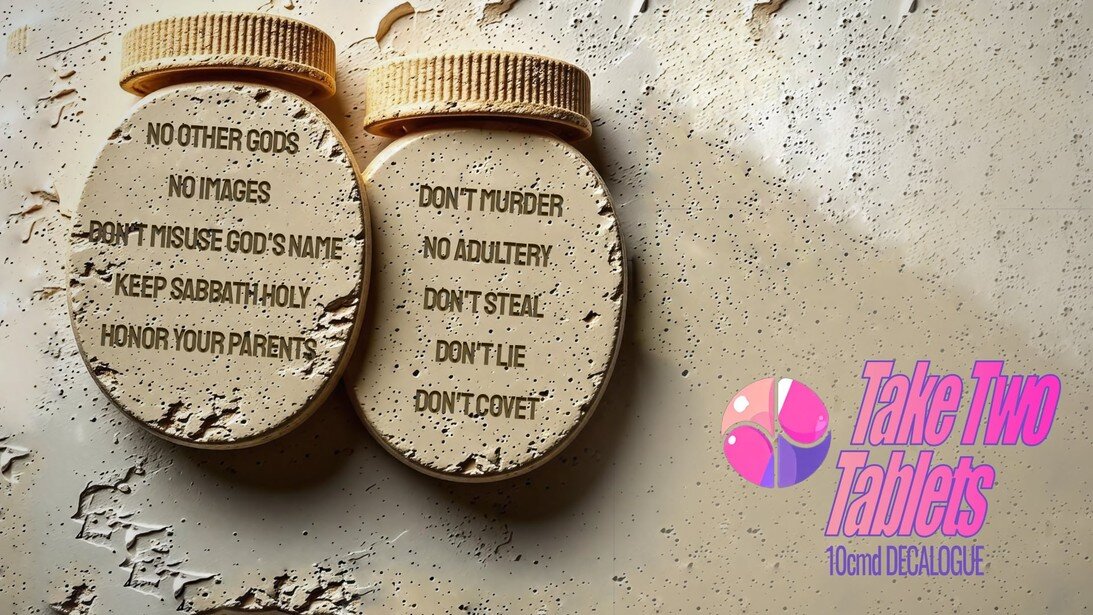
We’ve all known that strange, off feeling when something of ours is stolen. That instinctive certainty it is wrong is precisely where Exodus 20:15 begins—”You shall not steal”—yet the command reaches the many ways we take from God without ever feeling the sting ourselves.
The following study questions are AI generated and may contain errors.
The preacher argues that stealing extends far beyond physical objects—to include taking someone’s reputation through gossip, withholding truth, or damaging their dignity. Which of these “invisible” forms of theft do you struggle with most, and why does it feel categorically different from taking something tangible?
Every theft whispers to God, “What you’ve given me isn’t enough.” Where do you feel that discontent most acutely—in material possessions, in status, in attention, or somewhere else? What would genuinely trusting God’s provision look like in that specific area?
The sermon contrasts small, seemingly “victimless” thefts—a paperclip, unpaid music downloads, an exaggerated résumé—with the reality that God always notices. Does the size of the theft matter morally, or does the act itself violate the same trust regardless? How do we typically rationalize the small ones?
Ephesians 4:28 moves from “don’t steal” to “labor honestly so you have something to share.” How does understanding work as a means to generosity rather than just personal gain change your perspective on your job, your time, and your abilities?
The preacher suggests that even when no one is materially harmed, dishonesty and reputational theft can cause others to doubt God and damage our testimony. Can you think of a time when someone’s small hypocrisy or quiet taking shook your trust in their faith—and what would restoration have required?
This transcript has been automatically generated and may contain errors.
And with that, let’s go ahead and prepare our hearts for God’s Word.
We’re coming to stealing tonight. Yeah, anyone excited? Let’s talk about stealing. It may be sort of like when you are watching television or listening to the radio and you hear those drug commercials and you can tune them out pretty quickly because you think, well, that’s not one I have trouble with. That’s sort of been, if you really think about the last few weeks, these are areas they’re attempting to say, okay, this is not for me. I’m not going to be arrested on grand theft, right? It’s not me.
So let’s start by thinking about when was it. I’d imagine all of us have experienced this at some point. When was it that was the first time that you had something stolen from you? Do you remember how you felt? Or maybe you were little and it wasn’t necessarily even something of yours, but you remember your family having something stolen. That’s what came to my mind when I started to think, when was that? I remember we moved into a new house and there’s a sidewalk that went along the side and it was kind of dark. And so we got some solar lights, and this was, I mean, it was kind of exciting. Boy, solar lights, I mean, I’d never seen anything as a little kid like this before, these things, they don’t have to be plugged in. They charge during the day, they light up, amazing. I still remember what they looked like. They had sort of a triangular shape and a flat top with the big solar panel because you need a big solar panel still at that point. It was really exciting.
One day they weren’t there. And there were still a lot of houses in the neighborhood that hadn’t been built. And so a lot of the older kids would cut through and apparently, and we had a pretty good idea of eventually whom it was that had stolen it, but we couldn’t prove it. Someone had come through and said, I’ll just take those. And I remember it felt weird. I mean, it wasn’t like I had personally gone out and bought them, but I remembered us being excited and I remember being excited as a kid seeing those there and those lights were gone. And it was sort of like, oh, I don’t like the way I feel when this happens. And I’d imagine that’s the way we all feel when we’ve actually had like an object stolen from us, something taken.
And sometimes it’s something like that. Okay, it was nice. It doesn’t dramatically change your life. Maybe it’s something bigger. Maybe you had a car stolen or something like that. And then it’s like, then it’s a huge deal, right? Maybe I can’t get to work. But we all had something stolen. And when it’s something taken from us, here’s the thing that I think we can say pretty conclusively. We have no doubt it’s wrong, right? It comes to us pretty naturally. You shouldn’t do that. You shouldn’t take things from me. They belong to me. They’re mine. I want those things. And so we have this clear sense it’s not good to be stolen from.
When we think about the 10 commandments and coming to this commandment, “You shall not steal,” it’s about what we do to other people, but a lot of it, when it really boils down to it, is what we do towards God. What we’re gonna be thinking about tonight is that there are so many examples where we don’t even realize that we’re stealing. We just do it. It just happens. And because it’s not against us, we don’t feel it, but God feels it because we’re dishonoring Him. And if something that doesn’t really even affect us that much causes us to feel off and sad, imagine if the one who gives us everything we ever could need and cares for us throughout our lives, when we take things from Him that we ought not to, how much worse that is.
The commandment itself is pretty simple. It’s just that we don’t feel it. The commandment itself is pretty simple. It’s straightforward. “You shall not steal,” Exodus 20, verse 15. But there’s a lot that we need to explore in this. And so let’s go ahead, come before our God and ask that He would help us so that our hearts are receptive to see, where am I stealing from God? And sometimes that’s because I’m stealing from other people and sometimes it has nothing to do with other people. But where am I stealing from God? Let’s pray.
Father, would you help us to be people who want to do the opposite of stealing? Lord, you are the giver of every good and perfect gift. You are the one who is with us every single day. Would you help us to be people who are faithful and who, as we reflect on how it feels when people do something wrong to us, that we take that and that would instill in us an absolute revulsion at the idea of doing anything against you. I pray this in Jesus’ precious name, amen.
If we don’t like to be stolen against, and ultimately God is the one that gives everything that we have, He gives us the very breath that we have. And when we think about the food that we eat or the work that we do or the church building we can meet in or the online channels that we can connect through or when we think of all these things and we really stop and we reflect on the fact that they’re from God, that God’s the one who gives these things to us. And we don’t like the sense when something that’s really only there because God’s allowed us to have it is taken from us, then how much more so than should we not steal, full stop? No exceptions. We like to think of exceptions, but there are no exceptions. God doesn’t want us to steal.
And when we think about how broadly God’s ownership of everything is, I mean, you can’t get any broader, everything, period, than anything that we take, anything that isn’t really meant to be for us. Well, we’re taking it from God. And here’s why this is so important. I think one of the ways that we often justify this is we do one of two things. One, we think I’m really annoyed with this person or this person irritates me or this person means nothing to me and so I can take something. Or we think, well, it belongs to, say, an organization and that organization, they don’t even know me from Adam. It doesn’t matter if I take it, it doesn’t hurt.
But if we really believe what we say as believers, that we’re stewarding things, that God provides these things and allows us to have them for a time, then we have to get that out of our minds and be thinking more in terms of, why am I taking from God? Now, some things he intends to give us, some things he does indeed give us, and so it’s appropriate to have those things. He wants us to have things. He made the earth and everything in it. He gave humanity that earth. We’re gonna be talking about that more tomorrow night on Steadfast, thinking about the dominion that God gave us on this earth. He gave us this earth to enjoy. But just as he told Adam and Eve not to take that forbidden fruit, so too he tells us to take the things that he gives to us, but not to take things with force, not to take them from other people.
And to understand that it’s not only certain things, right? We have this ongoing controversy that’s brewing in our culture today. At least in certain cities, they’ve said, well, we’re not going to enforce shoplifting laws unless it’s a certain amount of money, right? I think, for example, in California, I think it’s now like $1,000, or maybe it’s even more than that. It might be $1,700, I think it might be that. That if you don’t steal more than that, they’re not even going to try to come after you for stealing. Still technically a crime, they’re just not going to enforce it. And of course, the fact they’re not going to enforce it has caused more theft. People go in and they say, well, as long as I make sure I’m tallying up how much I’m stealing, I’m okay. And it sounds ridiculous, right? I mean, does anyone think that’s, it sounds ridiculous, and yet, we kind of do the same thing on a lesser scale.
We think, well, if it doesn’t really hurt anybody, it doesn’t really hurt to take it, no one will ever notice. Think, well, it doesn’t matter. What we mean when we say nobody will notice, we mean that no human being will notice. And sometimes that’s true, and sometimes it’s not, right? We can very easily work ourselves into a place where we’re kind of blurring that a little bit. And when we say no one will notice, we think, well, if they’re really occupied doing other things, they won’t notice. But here’s the thing, God’s going to notice. He absolutely is going to notice. And so when we say no one will notice, what we mean is no one other than God will notice. The only one who actually has total rights to everything that’s ever existed, well, he’ll notice.
And every time that we take something, we’re saying to God, I don’t think what you’ve given me is enough. And when I was wrestling with this commandment, and I came to that point, I thought, when you really put it that way, isn’t it, doesn’t it just really strike you, right in the heart or the gut, that every time we come up with an excuse that there’s something that maybe really shouldn’t be ours, that we go ahead and claim it anyway. What we’re saying to God is, you’re not providing enough for me. And I’m going to do it on my own. That same thing that Adam and Eve said.
In a sense, you could really say that forbidden fruit was the first step, because God said, you can’t have that. And so what do they do? They try to sneak it. Well, maybe God won’t notice. And ever since then, we’ve been trying to find a way that we can sneak those things that we would like, that God doesn’t want us to have. And it’s not just stuff of a certain value, right? I think that’s really important, because what our own minds like to do, and what the forces of evil like to do, what Satan wants to whisper into our ears, is, you know, that paperclip, you know it won’t hurt if I take a paperclip every day from work, and soon you have a whole box of them, right? Maybe that’s a little bit of an exaggeration, but we find those things. Hey, it won’t hurt if I take a little more of this.
It adds up, and it adds up more than we think. And so we’re actually, we are harming other people, but we harm them thinking that it’s not going to actually harm anyone. And we’re harming other people, we’re harming our relationship with the Lord, and we’re harming ourselves, because we’re making ourselves dependent on what we think we can get away with, rather than what God’s providing for us. Doesn’t mean that we don’t need things, it doesn’t mean that we don’t try to obtain the things that we need in a rightful way, and we’ll talk more about that towards the end of the sermon, but it means that we pay attention to what’s the right way to obtain things.
The word used here for steal can mean all sorts of things. For example, it’s used in Exodus 21 to talk about stealing a person, enslaving somebody. God prohibits that explicitly, but it’s implicit here, as he says, do not steal, that one of the things people could steal, and this feels a little alien to us for the most part, because thankfully it’s not something we’re confronted with all the time, but one of the real realities of the time, and certainly for the people of Israel, because they have it right in their history, as they’re leaving Egypt, the reason they’re in Egypt is because of a theft of a person that happened years before. They can look back to Joseph, and say, you know, our whole story’s intertwined with the theft of a person.
Or Joseph’s brother said, he annoys us, and so it doesn’t hurt if we sell him into slavery. At least we didn’t murder him. Well, we already took care of murder a couple weeks ago, we can’t do that. But if you ever thought, well, I can’t murder someone, so I’ll just sell them, that’s also a bad idea. And that’s, again, thankfully something we don’t, we’re not confronted with as directly today as often, but it’s still happening, incidentally, and it should be something that concerns us, because it is still happening. Human trafficking is a reality today. We see it all around the world. Some places it’s very much out in the open still, where there’s just slavery happening, as it has for millennia, and the ugliness of that, but certainly it happens even in our country, where people are kidnapped, and often trafficked, and that’s just it.
If you think that stealing is only about stuff, and not people, well, no, it’s about people. The term is perfectly legitimately used about people, and so it’s that. But in a sense, I wanna back away from that just a tad, because if anything, our danger with stealing is to think that it’s only really big things. And like I said, it’s sort of that, well, am I stealing under the amount that the police will come and try to get me for shoplifting? Oh, I haven’t stolen a person. Great, I’m okay, right? Or I haven’t stolen a car. Haven’t stolen a house. Maybe I’m okay.
But as God said this, it probably would have been clear to the people then than it is to us now that it would have encompassed everything, because we live with the luxury of plenty. If we think about it, if you actually look at global statistics, the poor in the United States are rich compared to people in many parts of the world. Not to say that it’s easy, but it is to say that in comparison to people who often literally don’t know if they’re going to survive another day because they don’t know if they have the food to survive. We have an abundance. And for most of us, it goes beyond that. It’s not just that we’re surviving, but we don’t have just enough to barely make it by. We usually have some excess.
You go to write something and you can’t find your pen, you go grab another one, right? You don’t have just one pen. You go and realize you left something out from the refrigerator and it’s spoiled. You don’t say, oh no, I don’t know if I’m going to eat today. Thankfully, typically most of us, we can go in and say, okay, what else am I going to eat? I lost that. Okay, maybe I’m not going to eat something that’s quite as good as what I was going to eat, but I’m not going to die. And so we can get into these games where, well, maybe it doesn’t matter if I steal just a little bit, because everybody could spare a little bit, right? Well, everybody else. It’s hard on me, but what about the other person? They have plenty, it doesn’t hurt.
But in this society, in this time, that wasn’t the reality. Everyone was living in a subsistence level where it was unclear if they could make it another day without something. And so anything that was stolen was quite possibly a death sentence. Anything that was stolen could possibly ruin people. You didn’t have extra clothing, so if you stole someone’s coat and it got cold, they might die. You steal someone’s hammer, they can’t complete their carpentry. You steal someone’s plow, they can’t plow their field. And what happens? They die. And so they understood very clearly, if my things are taken, it’s going to hurt me. It’s going to have a definite impact. And so it’s not those little luxuries that might get taken where maybe you set something down at a restaurant, right? You set down a book that you’re reading and you go use the restroom, come back, and it’s gone, and you think, oh no, I was really wanting to know what was going to happen in the next chapter. But you’re not going to die. It really was life and death.
And the point wasn’t that once it’s not life and death, it doesn’t matter, it was that people understood everything. If it’s not yours, if it’s not meant to be yours, then you shouldn’t take it. And we say, but it won’t hurt, that person will be okay. We need to understand God didn’t say, well, don’t steal unless the person has enough that doesn’t really matter to them. If you think it doesn’t matter, it may matter. You may not know what’s really going on in that person’s life. But don’t steal, and don’t just think there’s some limit to that. And yet we fall into these games. And a lot of times we really feel justified.
I remember, it wasn’t that long ago, I know for some of our younger folks here, it used to be this was really high-tech stuff, but now it sounds like it’s antiquated. Anyone remember file sharing services where you could? Yeah, Napster, oh yeah, Napster. And I remember, I mean, they had to keep changing because they were trying to make it more accessible. I remember, I mean, they had to keep changing because there were law enforcement people going after the different services. But in college, I mean, people, all kinds of, they were constantly downloading whatever the latest file sharing service was. And they’d download music, and they’d download software, and they’d download all this stuff. They weren’t buying, they didn’t have permission to use it, but they didn’t want to pay. And there are big faceless companies, and artists, and so on that have this stuff. It doesn’t hurt if I just take a little.
It’s okay. I mean, nowadays we have music services, and so you have to subscribe, and they won’t let you steal it as easily, right? It’s gotten harder. But that impulse, the impulse that there are things that I want that I don’t have that maybe I can’t afford, or at least it would be uncomfortable for me to afford, or at least inconvenient for me to afford. And so therefore, I’m going to take them by their means. And I don’t think they’re really entitled to what they want for it, and so therefore, I’m going to do it. God doesn’t have that ignore under a certain value. God doesn’t have ignore if the person has enough. Instead, God says, trust me and trust my provision.
And he did watch over the people, for example, when the people of Israel arrived in the land, and they farmed, and they had farms. Well, the poor were entitled to go to the edges of the field and take from the field. So God had safeguards in place that people could legitimately receive if they didn’t have. But the key was you had to go through the right means, and it’s the same thing today. If we don’t have something, we need to ask, well, do I absolutely need this something? Well, a lot of times we have to evaluate what we really mean by need, but even if we say, yes, I do need it, then we need to ask, well, what’s the legitimate God-pleasing way for me to obtain it? And incidentally, it’s never to say, well, I’ll just go ahead and steal it. It won’t matter. That’s not how God works.
Okay, so fine. Maybe we should care about small theft, and maybe we should write a check and send it off to whatever recording artist we have whole albums of that we haven’t paid for. And yes, the folks that were pre-file sharing, if you have those cassette tapes. But God goes further than that, because stealing isn’t only about physical objects, not even human physical objects, right? We’re still physical, but it’s not only that, and it’s not only products that could be sold like music. It’s anything that isn’t really entitled to be ours. For example, Genesis 31:20. Same words used here, and Jacob tricked Laban the Aramean, boy, I cannot speak tonight. That’s stealing away from my time. By not telling him that he intended to flee. The term translated trick there is the same as the term for stealing.
We do see that Laban is quite angry, and we can get into all kinds of interesting discussions there. And I’m not saying necessarily that Jacob was, in fact, stealing from Laban by leaving. But what we can say is when God uses this word stealing, he didn’t expect the people to limit it to just things that could be stolen. If we deceive people that deserve the truth, we’re stealing. We are meant to be a people of truth. We owe people truth. And so when we say, eh, I’d rather not, what are we doing? We’re stealing. It might not be a physical item, but we’re stealing.
If we cheat people, and we think, well, you know, it doesn’t matter. No one will notice. We’re stealing. If we damage someone’s reputation, we’re stealing. You see, anytime someone’s entitled to something, so if someone has worked hard at something and has a reputation for that, and we say, but I’m annoyed at this person, so I’m going to gossip a little and chip away at it and undermine it a bit. We’re saying, God’s given you this dignity. God’s given you this reputation, but I don’t think you should have it. I think I should have it. I should build myself up instead. I’m going to take it.
When you really think about it, it’s a sort of possessing. We don’t maybe use that language typically, but then it occurred to me, maybe our society at times is actually more insightful than we give it credit for. A lot of times it feels like our society’s clueless, but you know how people talk about owning people? We hear that tossed around in the political sphere a lot. I’m going to own the opposition. What do we mean by that? We’re going to make them look like fools. If you own someone, I’m going to make that person look like a fool. Well, it’s really getting to the heart of this because even though that’s not typically how we really think about it, we’re not thinking at that level. What we’re saying is, I’m going to steal something away from this person. I’m not going to have a helpful dialogue with this person. I’m not going to help come to a better understanding. I’m going to mock that person so that other people look down on that person, not because they deserve necessarily to be looked down upon.
We might talk ourselves into that, but because I have presented things in such a way as to make them look like fools. We’re stealing. And when we think about that, when we start to think about how this word has that broader sense, I think what it’s really challenging us to think about, again, is right where we started, that God gives us things, and they’re not just possessions. He gives us life. He gives us our abilities. He gives us our creativity. He gives us our personality. He gives us our friends and our family and our community. He gives us these things, and if we damage those things for another person, we’re taking something from them.
Now, am I saying, for example, we just got done with a whole round of campaigning and so on, that, for example, if you decide in the next election that you’re going to run for office, right? You’re going to run for state auditor or something. And so you run for state auditor, and you’re in a primary debate with your opponent, and you point out where the opponent has made some choices that are not the best, that are true. Am I saying you can’t do that? No, I’m not saying that. We can point out truth, but we need to be constantly thinking, I don’t want to take away more from anyone around me than what is right.
If someone is coming in to murder all of us, I sure hope someone says something if they know about it and don’t think, well, I don’t want to steal away from the murderer, their dignity as they come into murder. No, that’s not the point, right? The point is we don’t make false accusations, we don’t say false things, and we don’t embellish for our own importance and the harm of another person. We don’t take what isn’t meant to be ours, whether it’s physical or emotional or whatever it is. Because every time we do, we’re saying to God, I don’t think you gave me enough. And so I either need to somehow take what belongs to someone else and apply it to myself, or at least pull other people down so that I don’t feel like I’m impoverished in comparison.
And when you really think about this, then suddenly this is a commandment that does two things. One, it’s setting us up for the next couple of weeks as we talk about false witness and coveting in the last two commandments. These three go together really well. But what it also is doing is challenging us to, like we’ve been challenged by Jesus as we looked at the last two commandments, as we looked at murder and adultery, not to see these as things we can just set aside and say, I don’t need to listen to that prescription from God because it’s not something I, I’m not a kleptomaniac. I’ve never walked out of the local Walgreens with a cart that only has $998 in it so I don’t accidentally get pulled over for shoplifting.
And what it’s saying is, I don’t want to take anything from anyone that isn’t mine. If it isn’t mine, if God didn’t intend it for me, I don’t want to take it. I don’t want to take it for myself. I don’t want to take it away from someone else just to make it so no one can enjoy it. Sometimes that’s how we justify it too. We say, well, I’m not getting any benefits out of it, but that could be what we do with physical objects too, right, those solar lights I mentioned at the beginning. I don’t know that anyone ever enjoyed them afterwards. For all I know, they threw them in the creek in the back of the subdivision and they slowly rusted away. But they took them and they weren’t theirs.
And a lot of times that’s what we do. We get into this ugliness in our culture especially where we can go for mutually assured destruction and say, I don’t care the fact there’s mutually assured destruction. I’m going to get what I need to get from that other person. Even if I don’t get to enjoy it, at least they don’t get to either. God says, be satisfied in what I’m providing you. We don’t just stop at the negative. Like all the commandments as we’ve been seeing, God says, don’t do something, but there’s a positive point that he’s pointing us to. He doesn’t want us to stop with, I’m not doing this bad thing. He wants us to move to where he actually wants us to be. We’re reflecting his image into the world.
Ephesians chapter four, verse 28, Paul writes, “Let the thief no longer steal, but rather let him labor doing honest work with his own hand, so that he may have something to share with anyone in need.” What we see here is a transition from using hands. I think it’s intentional that Paul uses the word hands here because what do you do when you’re going to steal a physical object? Typically, he’s not talking intellectual property because that wasn’t a concern at the time. If I want to steal something, what do I do? I go over and I go over to the blacksmith’s shop and I take his tools and I walk away with them. I use my hands. And Paul says, you have hands, use those hands for what is good, not what is evil. So he says, don’t use them to steal, use them for an honest day’s work.
And that can be true metaphorically too. If we’re doing intellectual labors, we can still use our hands, so to speak. We can choose instead of taking something that isn’t ours, if we need something and we don’t have it, we can work for it. And so certainly the point of this isn’t to say, well, I’m satisfied with whatever comes my way. I’m not going to work. I’m not going to steal. I’m just going to sit back and see if God provides. No, God does want us to work for the things that we need. But he wants us to use our hands for good and not for evil, to use them for building up and not for tearing down.
Because here’s the thing, when we’re doing actual good, God-pleasing work, notice that we’re enriching ourselves and others at the same time. Now, that does have one little footnote we should put on it, which is, if we’re doing work that’s dishonest in itself, then we can be using our hands for work while also stealing from people, right? If you’re selling something and you are the worst stereotype of a salesperson, and I know there are honest salespeople, so I’m not trying to be up on all of them, but if you’re the worst kind of, forgive me if you’re listening and you’re a used car salesman, because I know there are honest ones out there, but if you live up to the stereotype of that, and so yeah, you’re not doing anything against the law, but you do fail to mention the fact that the car was flooded before it was put in the parking lot. You are stealing, even if it’s not a violation of the law, because what the person deserves to know what they’re receiving, the person is trusting you to provide an honest transaction, you’re doing something dishonest that deceives them.
So Paul’s point when we look at Ephesians 4 isn’t to say, just do some work, and as long as you’re not going to be pulled over by the police, it’s just like the shoplifting thing, do something that’s honest and good, because notice the second part of that, let’s just pull it up again, that he may have something to share with anyone in need. The view is that we move not only from grabbing to honest labor, but grabbing to giving. God wants us to go from seeing, how can I enrich myself with stuff that isn’t really even stuff I deserve? How can I use my skills, my abilities, my time, my resources so that I actually have enough to give to others as they have need? It’s one of the key ways that God wants his church to interact and deal with the fact that people often need things they don’t have, is to be saying, God, show me the way to take the resources I have and distribute them to others so that they have as well.
See, we turn this thing on its head, when we’re stealing, we’re saying, how can I distribute for myself? How can I take something and give it to myself? When we move from grabbing to giving, what we’re saying is, how can I take things that are by all legal rights mine and hand them over because I realize that the one who gave them to me wants me to be a person of giving as well? How do we do that? Because if you’re like me, you don’t want to, right? It’s mine. It’s not yours. I’m the one that worked for it. I’m the one that struggled for it. I’m the one that figured it out. I’m the one who made it. And we do because we realize the one who gives us more than we could ever ask. And we recognize what he’s doing for us.
2 Corinthians 5:19. Paul writes, “That is, in Christ God was reconciling the world to himself, not counting their trespasses against them, and entrusting to us the message of reconciliation. Therefore, we are ambassadors for Christ, God making his appeal through us. We implore you on behalf of Christ, be reconciled to God. For our sake he made him to be sin who knew no sin, so that in him we might become the righteousness of God.” God takes what rightfully belongs to himself, righteousness itself, and he hands it over to us.
And the reason why stealing should cut us so deeply is we’re saying, God’s given me eternal life. God’s given me something better than anything I could ever possibly, no matter how creative I am, no matter how ingenious I am, no matter how fortunate I am, no matter what, I could never earn that, I could never generate that, I could never make that, God gives it to me anyway. And I’m still saying, but I want more. And I do this. I don’t like that about myself. How can I have more? That’s really where the Holy Spirit, I believe, challenges us in this. Stop before we get to the point of taking something and start at the point where our attitude says, I deserve more. I deserve more than I deserve. I deserve more than I deserve. I deserve more than I deserve. I deserve more. I deserve extra. I deserve something that I don’t have that’s not being given to me, that’s not being provided by the means that I’m using.
And it’s just a, I have life. I have a God who loves me, and a God who loves me even though I’m fallen, even though I’m imperfect, even though I deserve nothing, and he’s given that to me, and I want to take that stuff that I have and give it to others because I want others to be blessed. I want to be a blessing, not take away a blessing. It’s funny how things can be both constructive and destructive, the very same things, and we’re often confronted with this, but when we think about this metaphorical set of hands, because again, it doesn’t matter if it’s purely intellectual, if it’s actually physical labor. It doesn’t matter if you earn money by using your hands or your feet or your mind. It doesn’t matter, however we do it, it can be constructive or destructive.
I was reminded of that this week when we witnessed these horrible airplane accidents that we saw, just terrible. I mean, just heartbreaking seeing it and thinking about the people that thought everything was fine until moments later, everything was very much not fine. And I was particularly struck looking at some of the devastation in Philadelphia after that medical plane crashed, and just the people that were on the ground just going about their business, had no reason to suspect anything would be wrong. They weren’t even taking the risk of getting in an airplane. They weren’t thinking about the dangers of an airplane as an airplane came crashing down right where they were.
And I know they’re still trying to figure out exactly what happened, but one of the things that’s thought because they found an actual oxygen tank is that the oxygen for the patient on the plane may have malfunctioned in some way and exploded. And as I was reading about that and thinking about that, it struck me how this thing, the reason there was an oxygen tank on this plane is that if someone needs oxygen, it means they can’t breathe, they can’t have life without this oxygen, right? They have a medical problem that necessitates that, and this tank is life-giving. But if it’s not handled properly, if there’s a defect in it or if it’s misused in some way, that thing that’s life-giving suddenly becomes life-taking.
And if it is indeed, as it may turn out in this case, where one exploded and damaged the plane and then caused all this destruction, we see this life-giving thing moving to destruction. And for each of us, as we think about the gifts and the abilities that God’s given us, the challenge as we think about this commandment is, am I going to use my abilities, my wisdom, my physical abilities, my place in society and community and time, am I going to use those things to be life-giving and to give things to bless people because I’ve been given the ultimate gift by God, or am I going to use it to take away?
Because when we justify taking things, when we justify stealing, I don’t think we’re really thinking we’re doing that much destruction. But even if it doesn’t cause someone to die, it doesn’t cause someone to even miss a meal, oftentimes someone sees it and it causes them to doubt the one who gives eternal life, damages our testimony. And so even as we think, well, it didn’t do any harm, they’re still doing just fine, we’ve actually maybe been stealing something from them that’s even more precious than anything we could imagine.
And Paul here, as he gives us instruction, he says, be ambassadors of Christ. He wants us to be those who are life-giving. He wants us to inspect our tanks and look for the defects and make sure that we equip them properly and we take good care of them so that whatever is in our tank, whether it’s helping someone fix something on their home or do their taxes or talk through a mental problem they’re having or just show them some love when they’re hurting or weep when they’re grieving or whatever it might be, if we’re withholding that. We’re withholding forgiveness when people need forgiveness. If we’re withholding anything that someone is entitled to because God has said that they should have it, we could be that exploding oxygen tank and take away life. Most of all, we’re taking something from God because God has made each of those things, made every moment. We’re choosing, am I going to give it and allow it to be where it should be or am I going to try to seize it and hold it for myself?
God calls us to understand what he’s given us. And over the pages of his word, as we read over and over, he’s given us and given us and given us to recognize that. Now, let that soak in so much that everything we have, everything we do, we want to do for his glory and for good. Let us pray.
Lord, would you help us to be a people of giving, not a people of taking? Would you help us to see those places where we don’t generally think of ourselves as thieves? Maybe we’ve never stolen something that could technically, legally be considered theft in our lives. Or maybe we did when we were kids and we don’t now, whatever the case might be. Would you help us to see those places we are taking from people what they deserve, physical or not? Would you help us to understand the destruction and the life-giving resource that our hands can be? And we would see those places where failing to follow your righteous way, your loving way, your good way, can cause people to turn away from the testimony we share. And would you help us to see, on the other hand, that when we follow you and we’re so focused on the giving that you give to us, the blessing that you pour out on us, that we overflow and give to others, that we can be those who are genuinely ambassadors of the kingdom, the only hope that people have for eternal life? We pray this in Jesus’ precious name. Amen.
Thank you, Chris.
Start the Conversation