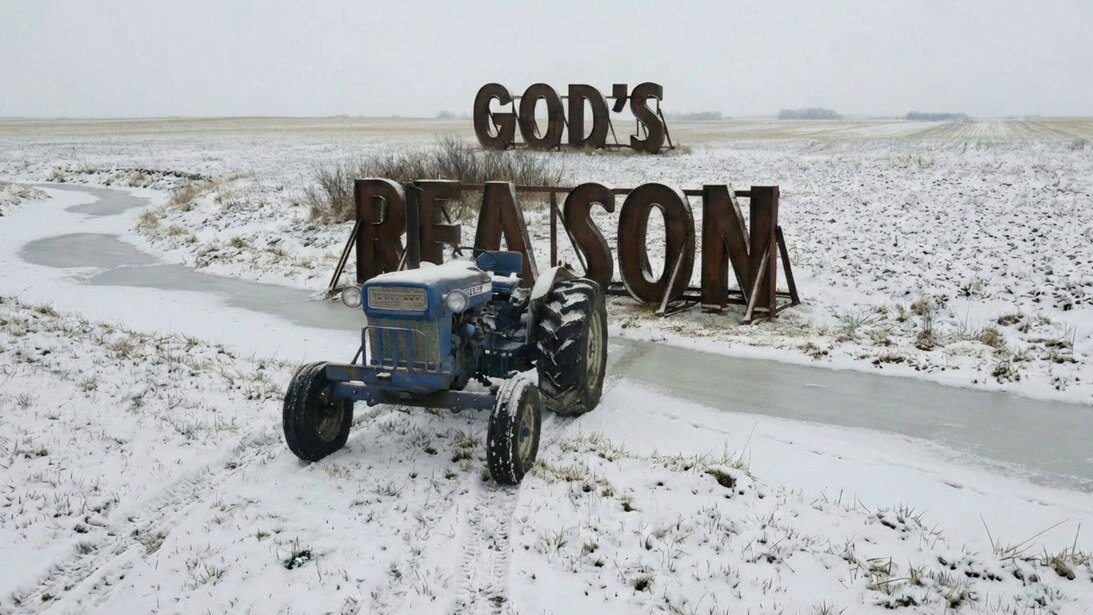
An ox knows who feeds it; a donkey knows its master’s crib. But what about God’s people — including us? We forget.
The following study questions are AI generated and may contain errors.
This transcript has been automatically generated and may contain errors.
I made a call into an old friend and asked if he would help us get started in our new series in Isaiah, and he said, “I may be dumber than an ox, but I’d be glad to help.” So we are in a series starting in Isaiah chapter 1. If you’re trying to summarize the message of Isaiah, you really could summarize it as God’s message to the people that they are consistently dumber than an ox, and those people are us.
You think about it—how often do we keep pounding away, putting up our dumb signs, working on it, focusing on it, while God’s reason and God’s care is right there, all nice and propped up already, just like it was for Dusty? It’s all there, and yet we just keep pounding away and hauling our dumb letters. How often do I do that? Because that’s Israel’s problem in a nutshell. God rescues them over and over and over again. He’s there for them, and they say, “Well, let me work on my dumb idea for a little while longer and see if that works,” while they complain about why God is not doing things.
The crucial thing is that this is not just an Israel problem; that’s a human problem. That’s what we do—we get confused about who it is that’s actually turning away. We say, “God, why are you turning away?” And yet it’s us—we are the ones. They is me; we are the ones who turn away. But here’s a timeless truth we’re going to talk about tonight: even though we’re dumber than an ox, God doesn’t abandon his people.
If you’re looking for hope in this chapter as it opens up—and maybe you read ahead of time because you knew we were going into Isaiah—you might say, “Well, this doesn’t sound very hopeful at first. If we’re doing a multi-week series, boy, this is going to be really depressing.” But right up front, tucked in even in God’s indictment of the people, is the fact that He doesn’t abandon them.
Let’s pray that God would help us to see that about Israel, and then as we see that about His people Israel so long ago, that we realize that it’s still true of how God reflects towards us today. Let’s pray.
Father, thank you for this evening. Lord, we thank you for your word, for your goodness, for your steadfast love—that you stay with us even when we are dumber than an ox. We can’t even explain why; we don’t know why. It drives us crazy—it drives me crazy so often—when your faithfulness is shown and yet I just keep going right back to my dumb ox ways, and yet you’re faithful. Would you help me to sense that tonight? Would you help everyone here to sense that, to feel your presence, to feel your faithfulness and to be empowered by it to go and do the things that you’ve called us to do? We pray in Jesus’ precious name, Amen.
Really tonight, we have a challenge: are we going to run towards and work on the dumb sign? Or are we going to run towards and embrace the sign of God’s reason, to embrace it even when it doesn’t make sense? This chapter confronts that—we don’t understand God’s reasons, but we embrace it because we know He’s faithful.
Take a look if you want to turn there: Isaiah chapter 1 verse 1: “The vision of Isaiah the son of Amoz, which he saw concerning Judah and Jerusalem in the days of Uzziah, Jotham, Ahaz, and Hezekiah, kings of Judah.”
Verse 2: “Hear, O heavens, and give ear, O earth; for the Lord has spoken: ‘Children have I reared and brought up, but they have rebelled against me.’”
If you peeked this week or if you’ve read through Isaiah before—I think most of you probably have read Isaiah at some point—but if you’re joining us and you haven’t, there’s no shame in that; now is a great time to start.
But you might open it and say, “Well, I don’t think I want to read Isaiah. That’s why I’ve never read through it, because this sounds really depressing. The Lord says, ‘Okay, look, you, my people, you’re dumber than oxen.’ And we think, ‘I have enough negativity in my life; I don’t need to read this. I don’t need to hear it.’” But we actually do need to hear it. There’s a reason why God places this here in the middle of His redemptive plan before He gets into what I say He’s going to say about the Messiah coming and saving us—we have to start with how dumb we are so we can understand what God is actually rescuing us from.
A trial scene—that’s really what this seems to be here. “Hear, O heavens; give your ear, O earth.” The Lord says, “Okay, I’m going to gather up creation and present my case to creation.” I’m not just going to present my case to the people who’ve done wrong but to all of creation: “Hear it!” We’ve probably all been in this place at some point—in an argument with somebody—thinking if someone else knew the contents of this argument, they would naturally side with me. I’m always reasonable; they definitely say, “Right.” We all think, if everyone else knew, they’d say, “Oh yeah, of course.” Now if we actually are being reasonable, that might be the case.
And of course, here the Lord is being reasonable; He is perfectly reasonable because He is the Lord, He is perfect. So when He comes before the people and says, “I’m going to present a case,” and not just to you, but everyone—including those who haven’t received my blessing—I want the very foundations of the world to hear; I want angelic beings here, I want everyone to hear the case because I actually bring you a steady case.
The flip side of that hypothetical is if we’re trying to ask something that we know is unreasonable, we don’t want other people to hear. We might try to pressure someone, make our case, but we don’t want everyone to hear because if everyone heard, people would push back. That’s the case I’m bringing to you, Israel. I know it’s reasonable—so reasonable that I’m actually going to call a trial scene, call the court to order. I’m going to present my case to everyone.
What is God’s case? It’s a twofold case: one, God has provided for His people; and two, as God has provided for His people, they haven’t been faithful.
Imagine someone who is supposed to be blessed—Israel, a nation of priests. Israel is formed as a nation of priests—in other words, a nation of God’s agents or representatives who are to go out into the world and present who God is. You’re sitting somewhere far away in the world; you’re called into this court scene, and you hear the Lord say to the people who were supposed to represent God, “I gave this blessing to you, and what have you done? You’ve turned to the very people that need to hear about me, and you’ve embraced their ways rather than following My ways.”
That’s the gist of the case. Israel should know this; it’s in its very founding. It’s like if you say to America, “We hold these truths to be self-evident.” Right? We know that is part of our character, what draws us. For those of us—I shouldn’t say all of us—but many of us know this; some family online may not be in the United States, but you know enough about America to know if you’re talking to an American, that’s ingrained in us. That’s part of why we are people; that really is why we are people.
These self-evident truths were unique in the United States’ founding; it was founded on people holding a common bond of truth, not just a common location. Well, it was unique to the United States, but not really, because the people of Israel—that was really their constitution too. Yes, they were descendants of Abraham; yes, that was a genealogical reason for being a people. But really why were they a people? Because God rescued them. That was what really drew them together; that was what was really essential. That’s what they were missing.
Exodus chapter 19 verse 4 says: “You yourselves have seen what I did to the Egyptians and how I bore you on eagles’ wings and brought you to myself. Now therefore, if you will indeed obey my voice and keep my covenant, you shall be my treasured possession among all peoples, for all the earth is mine.” There is their founding constitution—the thing that holds them together—that God bore them on eagle’s wings; He rescued them out of Egypt to be a treasured possession who would represent the Lord to the world; they could present this to the world.
Now, you might say, “But I’m not part of Israel, so this is all very interesting to them, but what’s it matter to me?” Really, if God wanted to, He could call up any of us and do the same court scene because everyone benefits from God’s goodness. Take a look at Genesis 1:31: “And God saw everything that He had made, and behold, it was very good. And there was evening and there was morning, the sixth day.” We live in a world that God made very good.
So when we say, “God, why aren’t you providing to me? Why aren’t you there for me? Why haven’t you given me what I need?” the starting point that we need to start from is this: Why did God give us a very good world to live in? Why did He give us breath? Why did He give us anything?
The people of Israel are representatives of God to the world—that’s what their calling was. But when we look at their failings, they are representatives of humanity before God in general, because they do what we do. It’s so tempting for us to look at them and say, “Well, why are they such dumb moccasins?” But the real question should be, “Why are we such dumb moccasins?” And we have the benefit of not just hearing from Isaiah what’s coming, but that it actually has come—that Jesus came, that we celebrate Christmas.
I can’t believe it’s been about six weeks now, I guess, since Christmas, when we celebrate Jesus. Why do we celebrate Easter? Because Jesus came and He died for us. This has happened; it’s not merely foretold from Isaiah; it actually happened.
So if Israel was dumb for hearing that it was going to happen and turning away from the Lord, how dumb are we when we turn away from the Lord?
I’ll confess for reasons I know all of you know, I have stayed away from snowblowers and snow shovels this year. I have to say I think my eyes started to twitch a little just when I saw ice on the ground—it was like, “Oh boy, no, no, please get me away from it.” But I was thinking back to last year when trying to get the snowblower started. If you have a battery-powered snowblower, I think it’s one of the greatest inventions ever.
There was nothing like hauling out the gas-powered snowblower and trying to pull it to start in the cold, and it doesn’t want to start because it’s cold, and it’s like, “Well, I know this is supposed to be helping,” but instead of fighting shoveling the snow, I’m fighting the snowblower to start, hoping that once it starts, it can actually do it for me.
Well, the battery ones don’t do that, right? You have the battery charged, put the batteries in, and off they go. You don’t have to fight with them—that’s really nice.
And yet, when it doesn’t go smoothly, I still don’t blame the snowblower when it doesn’t start; I want to blame the snowblower. And with the gas-powered one, maybe the starter just wasn’t working, the choke wasn’t choking properly. I don’t know mechanical things that well, but you know, it wasn’t spewing out the exhaust and pulling itself forward; it wasn’t working. The battery is supposed to solve that, and so it doesn’t start, and I say, “Oh, stupid snowblower,” and last year, it didn’t want to start.
But the problem wasn’t the batteries. I wanted to blame the batteries; no, they’re charged; it wasn’t the charger; the battery was just fine. It wasn’t the snowblower; it was ready to run. It was the fact that as you open the little door to put the batteries in, it kind of starts to click into place but you need to push it a little bit more to get all the way in. So it was partway in place, so the poor snowblower couldn’t get its power.
I imagine this hungry snowblower looking up at his meal: “It’s not coming in—come on, push it down a little further, Tim.” But when I forgot to put the battery all the way in, did I really blame myself, or do I think, “Oh, that stupid snowblower doesn’t want to start?”
It’s so weird how we do that, isn’t it? God’s given us the batteries; He even puts the batteries in for us, and then we pull the battery back out and say, “God, why isn’t it starting?” He gives us life; He gives us breath; He gives us redemption; He sends His Spirit with us, and we turn away from Him and say, “Where is God?”
Here’s the important baseline we need to understand; Isaiah wants the people to understand it. He begins his series of oracles, his series of messages in Isaiah chapter 1: God doesn’t quit providing for His people. We have plenty of problems—we do—and I don’t want to deny that. I know the faces in this room and the faces online that are church family. I know not everything you’re going through, but I know enough of it to know that if I said, “Well, just look at the bright side, how good it is,” that’d be ridiculous, right? There are a lot of challenges, a lot of painful things we face; there were a lot of painful things the Israelites faced because they were living in this fallen world. There was pain.
This isn’t to deny that, but rather, do we understand the good that God has provided us, the baseline? Because when something does go wrong, when something is painful, instead of turning away—from our own way of trying to do things—and turning more to God, too often what we do is turn away from the one thing that is actually good.
Say, “Okay, now I’m going to solve it.” It might be something external— we seek after worldly success, or affirmation. It might be internal—we try to strengthen ourselves. “I’ll just be tough; I’ll be strong.” Where is it that the dumb sign is what we’re facing towards and the sign that says God’s reason, God is right there behind us, and we’re not looking the right way? Where am I ignoring His presence?
I don’t say that tonight to condemn anyone here, to say, “Well, you’re so dumb, you’re ignoring God’s presence.” I say that because we’re all so dumb and ignoring God’s presence. And if you’re tuning in for the first time tonight and you’re online and you say, “Wow, this sounds pretty heavy,” it is, but it’s heavy with hope.
First, we need to understand the problem. Isaiah is establishing two things here at the beginning of chapter 1: first, that God doesn’t quit providing for His people; and second, a timeless truth as well, that God’s people turn away. That’s what we do over and over and over again.
Verse 3: “The ox knows its owner, and the donkey its master’s crib; but Israel does not know. My people do not understand, a sinful nation, a people laden with iniquity, offspring of evildoers, children who deal corruptly. They have forsaken the Lord; they have despised the Holy One of Israel; they are utterly estranged.”
Now, as I said, Israel didn’t have everything going exactly as you would hope. It wasn’t all beautiful, wonderful times in Israel at this point, or in Judah, or whichever you take your pick.
A lot of that was self-inflicted, but needless to say, it wasn’t just easy. There’s a lot of speculation on precisely when this chapter was written because Isaiah doesn’t necessarily go in chronological order. It’s a compilation spanning decades, and people argue over when Isaiah chapter 1 occurred.
I can’t say conclusively, although one very appealing option is that it happens when Sennacherib invades. You have this mighty king, this emperor coming in and attacking, and things look really dismal. This is during good King Hezekiah’s reign, and people are scared.
It’s a question: Are they going to turn to the Lord? Are they going to try to find some other nation that might be angry at Sennacherib and willing to come against him? Where should we look?
Maybe it’s that time, maybe it’s a different time in Isaiah’s life; we don’t know for sure when this was composed. But the simple truth is there are lots of things like that happening, and as they happen, the temptation is to look toward our own construction, to build our own sign.
Here’s the problem for Israel that remains our problem today: they don’t realize this, and they don’t realize this provision.
We’ve been talking about God’s provision, and we have to put that right next to our own sin. And we say, “Well, look at the kings Isaiah lists here: Uzziah, Jotham, Ahaz, and Hezekiah. If you’re looking for a post-Davidic time—sometime after King David—in the life of Judah and you’re trying to say there was a good time in Judah’s history, this is a pretty good chunk of time actually. Of the three kings, only one is outright wicked: Ahaz. The others were really not bad; they did much to seek after the Lord.”
Uzziah and Hezekiah in particular might be singled out as two kings that are good. But what’s going on under a good king? It might not be terrible, but both Uzziah and Hezekiah notably have major lapses of pride in their lives.
Uzziah tries to take the place of a priest and receives punishment for it because he does what he isn’t called to do—what the Lord has specifically said the king ought not to do.
Hezekiah receives incredible mercy from the Lord, a healing, and what does he do? He decides to show off to the Babylonians, who will someday invade his land. He doesn’t realize that; he doesn’t know that yet. Instead of praising the Lord and focusing on Him, he decides to seek worldly status.
These are the two good kings. They’re good, but they’re flawed, and all of them fall short of ensuring that the worship of the Lord is pure and true. We’re told the people continue to worship at places the Lord has forbidden, and the kings, even when faithful, don’t throw themselves into trying to purify it; they seem to just ignore it. They live with it.
So this is when the kings are good, and it’s sort of like the old saying, “If these are my friends, who needs enemies?” It’s like, if these are our good times, who needs bad times? The good times aren’t really good; we still fall short. We’re too busy drifting to our daily concerns; we’re too busy worrying about seeds in our field and making sure they’re taken care of, and we say, “I don’t really have time to pray today; I don’t really have time to spend with God in His word today.”
The dirty secret of that is that pastors fall into this a lot. I wish I could say I never do, but you get so busy. It’s like, “Okay, I will trudge through some of God’s word.” But I say, “Well, you have to study it; you’re a professional Bible studier; you have to do Bible studies and write sermons.” But how often do you get so busy producing stuff—putting it out, even stuff about God’s word—and you say, “Wait, did I actually internalize any of that? Did I allow God to speak to me in that?”
There are a lot of times I don’t.
Maybe you start a Bible reading plan at the beginning of the year; a lot of people like to do that. It’s a great resolution. But if you made that resolution or you say, “There’s really no reason February 1st couldn’t be just as good a day to start a Bible reading plan if you haven’t yet.” Now they’re even online tools that can start the dates and the schedule itself from the day you start.
So what do you do if it’s going to be confusing? Do it! It’d be great. I can guarantee at some point in the year you’re going to be reading it, get done, and say, “What did I just read? I’m tired.” Did I do that when I was checking baseball scores? Did I do that when I was reading the latest news on technology, or politics? Did you do that when you were relaxing?
How often do we get busy with daily concerns, with daily rest after our concerns? Those are good things, right? Who cares about daily concerns? I don’t need to go to work; I don’t need to go to school; I don’t need to do anything for my family and friends because I am going to be with the Lord. That’s not what God’s calling you to do—not faithful to His word.
But there’s a happy medium: being in God’s presence, being reminded of His faithfulness and experiencing Him is actually a priority in what I’m doing.
Oxen and donkeys need to go and do their daily concerns, eat food, walk around the field, plow, whatever else, but they don’t forget who’s taking care of them.
Verse 3 says, “The ox knows its owner and the donkey its master’s crib, but Israel does not know; my people do not understand.”
If you look at the generations from Scripture where God does something spectacular, a lot of times, in the moment, you look at the people and say, “Wow, God is so faithful; He’s doing such wonderful things,” and they praise Him, wanting to enhance the temple, offer more sacrifices, hear God’s word, be convicted by it.
But even within the same generation, they fall away. We get really excited, singing “Holy, holy, holy.” I don’t care how many times we sing it when we’re in here singing Holy, Holy, Holy together, and then, just like, “Oh wow, this is amazing,” we’re in the throne room with Isaiah—this is just great, merciful and unity—how long does it take for us to fade from that?
We don’t say, “We don’t think as we’re singing it, ‘I’m going to forget this the moment I finish singing it and go back to being grumpy about whatever I was grumpy about.’” We don’t think that, but we do it, and it happens in small, gradual ways.
Have you ever wondered why there are two ways we spell the word donut? These are things that can keep me up at night—but not enough to look it up in the middle of the night—but I think about it.
I found an article last year about the history of Dunkin’ Donuts. If you ever wondered why we have two ways to spell donuts, one that actually has the word dough in it and one that’s just “do,” you can probably blame Dunkin’ for it.
Dunkin’ and its closely related cousin, Mr. Donut, both opted to shorten it for marketing purposes. They came up with shorter forms and came to dominate the landscape. Mr. Donut faded in time in the US, but these two chains became what Americans often think of when they think of donuts.
They spell it “D-O-N-U-T-S,” nice and short, and as people started to spell it that way more often, they probably thought, “I’m going to spell the marketing way.” We just absorb it. You drive by; back when Dunkin’ admitted it was a donut shop and it was still on the sign, you see “Donuts” spelled that way, and you think, “Donuts, donuts, donuts,” and you eat donuts and spell it that way. You don’t even realize the change.
It’s kind of funny. If we spelled it the way it was originally spelled, it’d make more sense. I’m still not sure what nuts are—unless you put nuts on it, and please don’t, because I’m allergic—but at least the “dough” part made sense; it was describing what it was. It’s a thing of dough. Now it’s just “donuts”; it doesn’t make any sense.
But this happened gradually; it went from something that made perfect sense to something that makes less sense. That’s often what we do in our relationship with the Lord.
The critical danger is the small changes when we go from “D-O-U-G-H” to “D-O” and we don’t even notice. We don’t really think about it unless you have a weird brain and can’t sleep and you start to ask how it happened.
The critical danger is those small changes—those places where we’re blind to God’s provision. We forget that God’s providing for us.
Following from that, we often become dumb to how rote our responses to the Lord are because it’s like, “Well, I’m not that amazed; I’m not that in awe of what God is doing right now, so I just put in my duty, punch in, punch out. I show up at church and leave. I open my Bible, read a chapter, close it; I’m not guilty because at least I opened it and read a chapter.”
I want to be very clear: I’m not saying stop the Bible reading plan if you don’t always read it perfectly. It’s better to open it and do that than not at all because the Holy Spirit can nudge and stop us.
But we shouldn’t be self-congratulatory. We think, “Look at all these wonderful things I can offer, Lord. I’m doing all this stuff.” And God says, “But you’re contemplating what you’re going to eat when you’re reading this; you weren’t being fed by My word.” You were saying the words of the Lord’s Prayer but thinking about how to move on to the next thing.
“Don’t forget what I’ve done for you.” That’s what God’s calling this court scene for. He says, “I brought up Israel; Israel would not exist except because I called Israel together. I am the reason you exist. Don’t forget that. Children have I reared, reared and brought up, but they have rebelled against me.”
We offer up our reactions and are dumb to the fact that they’re so empty. That’s what we’re going to see—conviction throughout this chapter.
Israel, here’s all these things you think you’re doing great, but you’re not. You’ve become deaf to the screeching of your sins, blind, dumb, and you don’t even realize it.
Remember what I’ve done.
This actually wasn’t planned. It all happened as we were getting ready to come into service. Carolyn brought in—many of you know the Outlaws—and we were praying for Ben last year, and Carolyn brought something Pat had sent with her. This tie here I have on tonight is one of Ben Outlaw’s ties.
Pat offered this tie to me, and I said, “I’d be honored to have a tie from Ben.” She said, “Well, which one do you want?” I started looking at pictures of times with Ben, and this particular tie is the tie that Ben wore on the night of my ordination.
I thought, one, he favored red ties; he has a lot of pictures with a red tie. But this particular one was tied to a particular memory.
Ben was so encouraging over the years. I remember so many times he would pray for the ministry I was doing or when he was persevering through things. It was so encouraging to see how determined he was. I thought I would love to have this tie to remember this incredible man that I was blessed to have in my life. I’m so thankful for that time. I wish it had been more.
Think about those gifts God gives us—those times, those people that touch our lives and encourage us in different ways—and when we take time to remember.
That’s what I hope this tie will remind me of—both Ben and everything surrounding that night that I remember wearing this tie—and that it reminds me of how God is so faithful.
That’s what we need to do: find all sorts of ways to keep reminding ourselves that God’s faithful.
This very text, which feels focused on conviction and sin, is to remind us: “I’m going to remind you of what happened in the past.” We hold on to the things, mementos, that remind us of loved ones and special occasions.
God says, “I want you to remember what I did for you. I called you out; I formed you as a people.” That’s the starting point.
We might say, “Maybe God doesn’t care about the money,” and here’s something that we’re going to see clearly over this chapter—it’s going to get into straight gospel by the end of the few weeks. I don’t want to spoil it; we’re going to get there.
The very fact that God is speaking to them is the gospel because as He brings conviction, why does He bring conviction? Because He cares about them. He doesn’t want to leave them where they are; He wants to call them back to Himself.
We have to understand when God calls people out, when He calls us out, when He convicts us through our conscience and says, “You’re being blind to My provision. You’re being dumb about how your actions don’t really mean anything toward me because you’re not actually putting your heart into it. Your sins are screaming, and you’re ignoring it,” this is not because He loves to beat us up.
He uses that conviction to allow us to actually absorb the grace He offers. It’s not just saying, “I forgive you.” We say, “Oh yeah, thanks. I’m not sure what for it was for,” but actually, “Here are the things—here’s how you fall short, here’s how you can’t come into the throne room, as the angels and the saints say, holy, holy, holy, without just being torched by the holiness that you encounter.”
But God says, “I have made you holy because I am the Holy One who loves you.” This chapter and the whole book of Isaiah are very clear: God is the Holy One of Israel. He is the one who is different from all others; He is the one who is greater than all others.
We’re dumber than an ox, whether in the moment we feel like we know why or we don’t.
Here’s the thing that we can know: He still calls us to Himself.
Would you pray with us?
Father, thank you for this evening and for your word. Lord, we pray that You would help us to see the places where we’re just going through the motions and instead put our hearts back into it. We can’t do that on our own.
Lord, would You help us to see the places where we’ve become blind to Your provision and to rejoice again, to be refreshed—that it’s not just in a flash of a moment when we’re singing a beautiful hymn or You’ve answered a particular prayer and we say, “Wow, God is so wonderful and provides so much,” but every single day that we would sense Your provision.
Even in the dark times, even in the painful times, we wouldn’t lose sight of the fact that You have provided.
What do You want us to remember in those times so we know all the more that You continue to provide?
Lord, would You offer us forgiveness? We need Your forgiveness for all those times we fall short, for all those times we sin.
Would You redeem us just as You have promised? Give us confidence and hope in that; that we would know the one thing we can rest our hope in.
That we can each say, “I know Him,” and as we do, have hope even in our failures.
We pray in Jesus’ precious name, Amen.
Start the Conversation