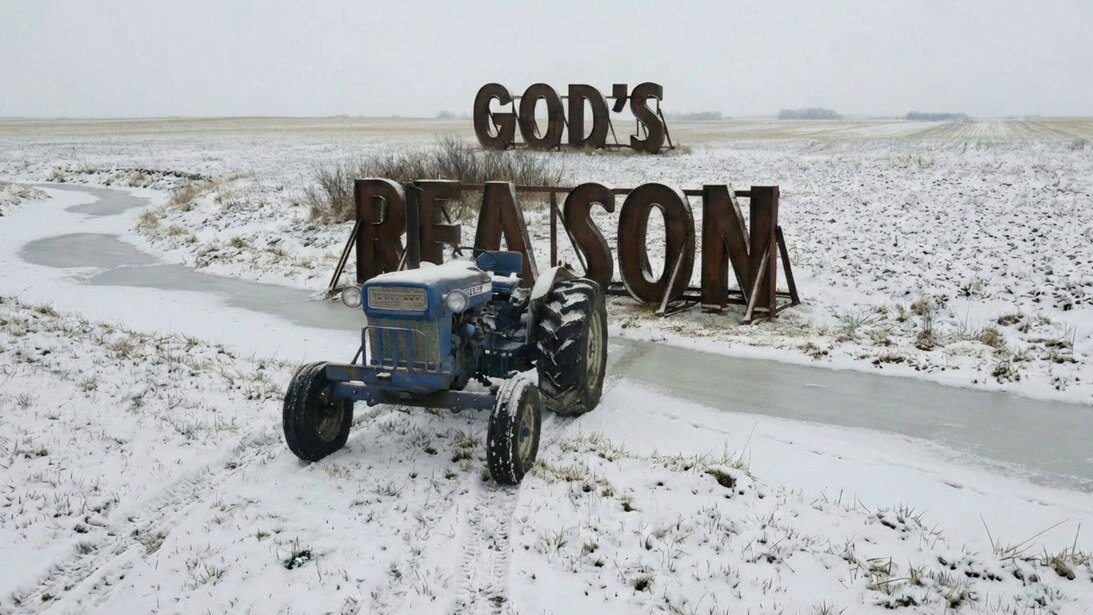
We’ve all charged after something we thought would finally set things right, only to watch it cost us everything we hoped to protect. That’s the dumb-ox pattern God confronts in Isaiah 1 when he asks his people, “Why will you still be struck down? Why will you continue to rebel?”
The following study questions are AI generated and may contain errors.
The pastor uses Aaron Burr as an example of someone who destroyed his own future through revenge. What are modern examples of people—or ourselves—who pursue something we think will help us but actually destroys our credibility or future instead? Where have you seen revenge or a “clever” shortcut backfire in your own life?
The sermon argues that God’s judgment isn’t revenge but restoration. How does understanding judgment as corrective rather than punitive change the way we read difficult passages in the Old Testament? How should it change the way we respond to God’s correction in our own lives?
The pastor describes how we justify our own sin as “clever” while we would never justify the same behavior in others. He uses the shrink inflation illustration to show how sin looks appealing on the outside but delivers far less than promised. Can you identify an area where you’ve fallen for sin’s short-term appeal? What made it so easy to rationalize at the time?
What’s the difference between exposing sin in order to restore someone versus exposing it simply to share misery or feel vindicated? How can we tell which motivation is driving us when we confront someone about their choices?
The sermon closes with the reminder that God “never loses sight of salvation even in the darkness of sin.” How does that promise change the way we approach repentance—both our own and when we’re calling others to it?
This transcript has been automatically generated and may contain errors.
If we really wanted to, we could find in history, we could write a book called Dumber Than an Oxen, and just fill it with all the things that we as human beings do because, well, what Dusty’s saying is true of being a human being in this fallen world, right? One example of that, just one tonight that I think is fascinating because his dumber than the ox moment—he actually had a number of them—is the dumber than an ox moment that we think of. I can say his name, you’re going to know exactly what I’m going to talk about: Aaron Burr.
Aaron Burr was one of the very first vice presidents; he was Thomas Jefferson’s first vice president. In that founding generation, the founding fathers, you have this man who was incredibly capable. In fact, and I’m betting that you probably don’t know this, did you know that he helped to define the way Senate procedure operated? For example, if there was an impeachment trial of a government official, he ensured that there was integrity in that process, so that when the president was angry at one of the justices, the president, Thomas Jefferson, couldn’t just get rid of the justice. That was Aaron Burr.
But if you recognize the name, I don’t think that’s probably what any of us think of. In fact, I didn’t know he did that with the Senate either until I started reading about him more in preparation to mention him tonight because what do we think of? We think of one thing: his duel with Alexander Hamilton. This great mind, the author of the Federalist Papers, this founding father who helped to determine, even today, how monetary policy works in the United States, brilliant at so many levels, whose life is cut short because he decides to accept a challenge to the duel and goes out and isn’t quite as fast with his pistol as Aaron Burr was. And he dies a day later. And that’s what we think of when we think of Aaron Burr.
Interestingly, do you know why Aaron Burr decided to challenge Alexander Hamilton to a duel? Well, after he’d fallen out of favor with Thomas Jefferson, he decided to continue his political career by trying to become governor of New York, and he became aware that Hamilton, who had opposed him earlier, was continuing to mount a campaign against him, and he believed that Hamilton’s efforts were a key part of what had become a roadblock to his renewed political career. And he decided, “We need to get revenge.” He needed to challenge Hamilton to a duel. He wanted to continue to be a politician. He wanted to continue to be a thought leader in the country.
But what happened when he went and challenged Hamilton to a duel? He became known as the man who killed Alexander Hamilton. And though he managed through various technicalities not to be imprisoned for murder, we think of him as a murderer who had a great mind. It’s funny how revenge is like that, isn’t it? We think it’s a good thing. We think it’s going to accomplish something. But here’s a man, obviously great talents, who’s clearly dumber than an ox, because what does he do? He takes all that great ability, all the connections he has, and pulls the trigger once, and that’s what we know him for.
Now, one of the challenges I think when we’re reading God’s judgment in Isaiah is that we think of stories of revenge like that when we hear about what God’s going to do to Israel. When God says, “I’m going to bring a people that’s going to inflict pain upon you; I’m going to take you off of your high place; you are going to face my judgment,” what we think God is saying is, “I am going to get revenge on you.” Because that’s what we know as human beings. And as we think that, one of the challenges is that we know in our heart of hearts—not when we’re about to go get revenge, but the rest of the time—that revenge doesn’t work. And so we think, why is God so nasty?
As we look at the next part of Isaiah tonight, in Isaiah chapter one, what we see is that God’s judgment isn’t human revenge. We interpret it that way. It’s not human revenge. And it’s not intended to do the same thing as human revenge. When God brings judgment, it is meant to bring restoration. That’s so, so important. And so let’s tonight pray that we can understand that in Isaiah, but then also we understand as God speaks of his ultimate judgment, as he speaks of his calling for us to live according to those ways, that it isn’t just because he’s looking to pull out a pistol and shoot it, but something far, far better.
Let’s pray. Father, thank you for this evening. Thank you for your word. Lord, thank you for your goodness, and would you help us to understand as we study your judgment here in these next verses of Isaiah tonight, how that makes sense. You help us see your goodness and to see the restoration you offer us. We pray in Jesus’ precious name, Amen.
Well, we read the first four verses last week. We’re picking up in verse five tonight. If you want to turn there in your Bible, here’s what the Lord says: “Why will you still be struck down? Why will you continue to rebel? The whole head is sick, the whole heart is faint. From the sole of the foot even to the head, there is no soundness in it, but bruises and sores and raw wounds; they are not pressed out or bound up or softened with oil. Your country lies desolate, your cities burned with fire; in your very presence foreigners devour your land. It is desolate, overthrown by foreigners. And the daughter of Zion is left like a booth in a vineyard, like a lodge in a cucumber field, like a besieged city.”
There are some interesting pictures there, aren’t there? And we kind of get the picture, but there’s a lot going on here that we need to unpack, to understand how God’s judgment works and how it plays out in different situations. But all of it points us to something really important: God’s judgment isn’t arbitrary. It doesn’t just say, “This is what’s going to make me feel better. I’m going to blow off some steam,” and what that looks like is wiping out part of my people. That will feel good.
Aaron Burr thought killing Alexander Hamilton would make him feel good. “I’ll be avenged on my nemesis for years in theory on how this government that we’ve founded together should work, and then everyone will see me as the one who actually was right.” Didn’t work there.
Well, you see, Burr isn’t really much like God, but he is an awful lot like us. Because Israel, the problem here—the problem isn’t that God’s going to bring judgment and we look and say, “Well, God, don’t you realize it’s foolish? You’re just going to destroy your people.” That’s not the problem. The problem is that the people actually are charging towards it because they think it’s going to work out for them.
We charge towards, right? We see these different opportunities to stray from God’s word but accomplish what we think we’d like to do, what we think will make us happy, what we think will make us successful, and we just charge at it like a dumb ox, and it doesn’t work out so.
The imagery here is so vivid. Some commentators have suggested that when we turned to Isaiah 6 that we looked at again tonight in the confession time, as we turn there, maybe as part of that vision that Isaiah is given of the heavenly throne room, that he also sees the judgment going on on earth below—it’s going on here. This is what he’s seeing because he just starts out guns ablazing here, right? I mean, this is vivid, visceral, painful images.
Isaiah has seen the bad, but the question here is crucial. He’s not struck so much by the judgment like, “Why is God doing this? How could he be so cruel? How could he be mean?” But rather, “Why are we such a dumb ox people that we charge towards it and bring it upon ourselves?”
“Why will you be struck down? Why will you continue to rebel?” See, the question here isn’t, “You’re really bad,” or it’s not a statement. It’s a question, not a statement. It’s not, “You’re now going to be struck down because you’re really bad.” What does God say? He says, “Why would you be struck? You don’t have to do this. This isn’t necessary. Why are you going to be struck down because you choose to be struck down?”
Throughout the Old Testament, we find that God warns his people, “I am calling you to a standard, and you need to live by that standard.” Deuteronomy 28:35 says, “The Lord will strike you on the knees and on the legs with grievous boils of which you cannot be healed, from the sole of your foot to the crown of your head,” very similar language to what we see here in Isaiah.
The only difference is that then it’s a disease; now it is going to be a foreign invader. But God’s point is, “I’m the sovereign Lord of the universe. I can use whatever means I wish to bring about judgment. But when you choose to abandon me and you’re going to charge the opposite way, don’t wonder what’s happening.” All I can do is ask you people, “Why are you being Aaron Burr? Why are you charging something that’s only going to destroy you? Not going to accomplish what you want.”
How often would the people of Israel say, “Well, you know, I really love the Lord, but I just don’t think his blessings are panning out for me like the blessings of the other guys. I’ll go follow them. I really like the Lord, but his law is too strict. Maybe I could just kind of love them. I’ll do most of it but hold back where he’s being unreasonable. Maybe I shouldn’t show mercy. Maybe I need to challenge the people to duel.”
And every time we do that, because we continue to do that today. And we all—I know we all can understand this because we were all experienced sinners. We have, no matter what age we are here, all of us have had a pretty good career of sinning already. We’ve gone through it, right? And we know the process, and we know how we get from step A to step B to step C.
“Oh, God won’t really mind if I do this.” “Well, God’s so unreasonable.” “If you were reasonable, it’d be okay.” And then when he brings judgment, we look at this and say, “How can he be so harsh? Why is he getting revenge? We know revenge doesn’t work. God, don’t you know revenge doesn’t work?”
The key thing here is it has a purpose. Shooting Alexander Hamilton didn’t have a purpose. There was nothing good that could come out of killing Alexander Hamilton. And maybe in defense of Aaron Burr, there wasn’t anything good that Hamilton could have accomplished by killing Aaron Burr either. Either way, it would have ended one of their careers into the other’s life. It wasn’t a good thing. Revenge doesn’t work.
But it’s not just revenge; anything we do, the sin we do, doesn’t work, not in the long run. It may in the short run, right? We can see times it works. Maybe Aaron Burr would have publicly challenged Hamilton to a duel. He hires a hitman and covers it up, and Hamilton dies, and suddenly Burr becomes a voice unopposed by the author of the Federalist Papers. Maybe you can even forge a few of those papers that seem to show that Hamilton actually liked Burr a lot more than he admitted, right? Do that. It seems to work. But it doesn’t work ultimately. It somehow comes apart one way or another. It comes apart.
And what the Lord’s saying here is that’s exactly what Israel is doing. It seems like if you just go ahead and go to the temple with your Canaanite neighbors and you worship a few other gods, you know, does it really matter? Does it really matter, does it? It works for them. It’ll work.
He’s saying to the kings of Israel and Judah, you know, it looks like if you make political alliances with those pagan kings who worship those pagan gods, it seems to work out for other nations. And you think that maybe you can follow me but also do that. That way you kind of have a backup plan. That seems pretty clever, doesn’t it?
Oh, how many times the sin that we do, it seems clever, right? We think we’re working everything out. “It’s okay if we do this. It’s okay if we share some things we really shouldn’t be sharing and it won’t hurt the gossip,” right? “No, it won’t hurt. It’ll even help.” Yes, we do it. Helpful if we do it. Not helpful if other people do it. But, you know, if they could be as discerning in gossiping as we are, it would work.
“Yes, we should stop and help the person that needs help, but we have more important things to do.” Maybe we can don’t work it out. Next time we can help someone; we’ll help twice as much and we’ll all balance out in the balance.
What God’s saying here is we come up with all these clever maneuvers, what we can do, and how it’s justified for us, even if we wouldn’t justify it for someone else. We can justify it for ourselves, and we can be really clever about it.
The kings of Israel, of Judah, the ones that are reasonably good that we were talking about here that Isaiah calls out by name at the beginning of his book, they’re reasonably good kings, most of them. Not great kings, right? They’re all flawed. But when we’re talking about human beings ruling and trying to pursue the Lord reasonably good, but also too clever for their own good.
We alluded last week to Hezekiah and showing off to the Babylonian envoy all the blessings he had. And I think what Hezekiah is thinking there when he does that—God’s just healed him, God’s enabled him to be a righteous king. He’s mostly following the Lord, and he’s seen this powerful answer to God’s prayer.
But I think he sees his own way. Here’s what he does: He says, “You know, the Lord’s protected me when I needed protection. But maybe he wants me to use my own mind here. And yeah, these Babylonians aren’t particularly good people, but they’re far away. There are no threat. There are a lot of people that are bad closer. And I bet God would actually be mad at me if I didn’t do everything I could to make sure if we ever need an alliance with them, we could have it. I’m going to impress them.”
Never mind the fact that God told me not to do things like that, never mind that he’s shown that he can actually spare my life when I’m about to die. I might need some help if someone decides to come up to my gates and try to conquer me. Maybe I should be clever.
Over and over again, that’s what we think. But what the Lord says here is: I favor something more than being clever. I love when my people are righteous. I want you to do what’s right, even if it seems foolish, even if it seems reckless. What you do is right.
So why do we sin? Because over and over again, we convince ourselves again that we’re being clever. Over and over again, we think we’ll get away with it. Over and over again, we think we’ll get ahead. And so God asks the question, “Why are you going to be struck down? Why are you going to do this? It doesn’t work. Yes, you’ve convinced yourself it’s going to, but it doesn’t work. It’s irrational.”
Are these people so stupid? How am I so stupid? Why am I dumber than an ox? I can’t tell you why I’m dumber than an ox. God’s word is here full of wisdom. He tells us what we should do, how we should live. You’ve given us life, even when we’ve failed, when he’s restored us, and yet I still say, “God, but I might know better than you, I thought.”
And every time we sin, every time we choose what he, we look at what he’s called us to do, we choose to do something differently. We’re saying, “I might know better than you, God. I can be clever here.”
I think we probably all, by this point, know the term shrink inflation. You know shrink inflation. You go to the store and you see the bag of chips and it’s exactly the same size bag. It’s always been, it’s nice and big and puffy and looks like it’s going to satisfy you with potato-ey deliciousness. And you open the bag, and you think, “I wonder if I went through the machine too fast. There’s not very much in here.” And then you look at the bottom, and what do you know? Another ounce has fallen off the bottom.
It happens over and over again, right? The family size now what used to be the small size, but the bag’s still the same size. And so that’s what they call shrink inflation. They keep the price actually keeps going up too, but they keep, just in theory, keep the price but they reduce what’s in it.
I saw one of the chocolate bars out there they’ve actually, the little shape that’s carved into the bar, they’ve angled it a little bit more so they can shave off a little extra chocolate. It looks almost the same. It’s imperceptible, but it’s not the same.
Well, why do they do that? It’s because what they’re hoping is we’re gonna look at this outer surface, and it appears like we’re getting a good deal. You say, “Wow, I’ll buy two bags of these chips. They’re on sale for 25% off.” And what we don’t know is as well, but they have 30% less in them. Doesn’t look like it. So we buy it, and then we find out, “What, I actually got worse product.”
Sin is like that time. And again, it’s all nice and inflated and puffy, and we just don’t bother to look at the ounces on the bottom and realize we’re getting a really bad deal.
When God brings judgment, as he does here, what’s his goal? His goal is to say, “Let me pop those bags for you and show you what’s actually in them. Do you know what sin’s actually buying for you? Do you know where it’s actually taking you?” You must expose the mess.
Now, one thing we should say on that though, we sometimes like to expose messes, but for a different reason. It’s sort of a hybrid version of revenge, right? We say, “I’m going to tell you about this situation. I know there’s nothing you can do about it; there’s not really any way it can be fixed, but I gotta tell you about it.” And it’s really just so we can share misery.
And our temptation here could be to say that’s what God’s doing, right? He’s saying that judgment’s going to come. Is he just saying, “You messed up. Now I’m going to bring judgment upon you and let’s talk about all the ways you’re going to suffer.” What he’s doing? No.
Because he has a good reason. He actually understands the bags full of error and the problem. He doesn’t just grasp it. And here he’s not going after something that will make him feel good because he can get it off his chest. He can tell the people what he really thinks of them. He’s doing it because he wants them to understand the situation and restore them.
Verse 8: “And the daughter of Zion is left like a booth in a vineyard, like a lodge in a cucumber field, like a besieged city. If the Lord of hosts had not left us as few survivors, we should have become like Sodom and Gomorrah.”
God has a purpose to judgment. He’s also not done with his people. And I think that’s so, so essential.
When we’ve seen over history God bring judgment and allow things to happen to his people as a correction, what we need to understand is it’s not him abandoning his people, it’s him shaping his people. His goal isn’t for them to stay like this.
When we look at prophecy in the Bible and we look at what happens afterwards, what we should be saying is exactly what God’s saying here: “Why will you be struck down? Why will you continue to rebel?” He says, “You don’t have to do this.”
It’s rational. You’re picking the bag that has more air in it that’s larger rather than the bag that has more chips in it that’s smaller. I don’t know about you, but I’d much rather have more chips and more air. Taste it. It’s great. But God preserves his people.
Have this really interesting image here. If you look, of a booth in a vineyard, a lodge in a cucumber field. I mean, that’s not just a saying all the time, right? “I’ll be like a booth in the vineyard and a lodge in a cucumber.” What in the world is being talked about?
Well, if you imagine a field—and there are plenty of fields around here—you can get the sense, you can go to the bottoms along the river and see these giant fields, say of corn, and you drive through it during the growing season, and you have these tall crops all around you and you can’t really see anything, and it also rents easy paths through it, right? There’s control of how people can walk through it and so on.
It’s all nice and secure, but then what you do, you harvest the crop, cut it down, and what’s left is this desolate dirt, right? And if you were trying to guard your field, you would put a booth out there instead of all your workers that were normally attending the field. You might have a few key guard posts, booths in the field, and you’d build a booth; you’d build some kind of shelter because to be out in the field when there’s nothing out there in the middle of winter is harsh, right?
You go out when the weather was like it was a week or two ago, and you go out to one of those farm fields and you just stand in the middle of the field, maybe just—I think we know what it is. You don’t want to get the farmer to call the police on you, but, um, we know what it would be like, right? The wind’s whipping through, there’s nothing stopping. You’re just charging toward you. It’s going to be miserable.
So you build a little booth. You preserve a little something. Maybe even leave a few of, if you knew you were going to put it there, maybe you’d even leave some of the plants in place or, in like the field that we see that Dusty’s driving by, which is very much like many of them around here, let me see a little stand of the trees, maybe in the field for livestock to shelter there for people. That’s what we’re talking about.
Now, what does that actually mean? Okay? That’s a nice image. Well, actually, there was another image used of Hezekiah and the kingdom of Judah during the time of Sennacherib, king of Assyria. He tried to conquer Judah. He was not successful. He managed to put a good fight up and to damage Judah, but he couldn’t actually take Jerusalem.
But in the process, he bragged. And we have this recorded in ancient Near Eastern text where Sennacherib said himself, “I made a prisoner in Jerusalem like a bird in a cage.”
And for Sennacherib, he looked at it and said, “You know, I’ve come in, and the mighty Hezekiah, the one who claims to be the Lord’s chosen king, look, I have him tweeting like a bird in a cage. All they can do is just stay here and wish something were going to change in Jerusalem, but he can’t even get out of it.”
But notably, Sennacherib couldn’t get in it either. And ultimately, Sennacherib wouldn’t get the last laugh. Why? Because the Lord was with Hezekiah.
And yes, at times because of the people’s unfaithfulness, God allows something like that to happen. He didn’t give Judah complete border security and say, “I’m going to keep all the invaders out. I’m going to keep everything safe. You won’t ever face any problems.” Said, “No, I’m going to let Sennacherib come in and come right up to Jerusalem. But I’m not going to let you be destroyed.”
Sennacherib could conquer so much, but the Lord was the one who was actually in charge and ultimately, Sennacherib couldn’t overpower the Lord. You find that out the hard way. So confident, so sure of himself, so clever, but he couldn’t.
And here Isaiah says, bad things are going to happen. The field of my chosen people is going to be harvested like you harvest a farm field where there isn’t much left in them but I won’t want to get completely taken out. I’m not—Notably, the Lord says he’s not going to make you Sodom and Gomorrah.
Verse 9: “If the Lord of hosts had not left us survivors, left us a few survivors, we should have become like Sodom, become like Gomorrah.”
God can offer complete judgment. He does for Sodom and Gomorrah, right? They’re proud, haughty cities who say, “We’re clever; we can do what we want. It doesn’t matter if it’s displeasing to the Lord. It doesn’t matter if it’s wrong. If we want to do it, we can do it, we shall do it.”
And God says, “No, you won’t.” It’s like, “Well, Tim, you’ve just been talking about how God doesn’t just exact revenge. Is this just revenge?” No.
If Sodom and Gomorrah experience early God’s ultimate judgment because God is using that judgment to call people to faithfulness. Even today, we know the name Sodom and Gomorrah not because of the great cities they were but because of their great wickedness.
And so by showing his judgment, his wrath upon Sodom and Gomorrah, God set a model to say, “This is my holiness not held back. This is my holiness just poured out.”
And back to the question of verse five, “Why would you still be struck down?” This is what can be, but it doesn’t need to be. You can turn to me instead. Build the booth around you. The wind won’t get you.
But notably, he goes a step further with his people. People, when God makes a covenant with the people, he doesn’t forget that covenant. He didn’t forget it then; he doesn’t forget it now.
And so he says something more: “I’m not going to make you the next Sodom and Gomorrah so that other people can learn what I do. You’re my people.” And so yes, there will be judgment, but I’m not going to eliminate my people. I won’t say, “Remember Judah that once was, now new people that I’ve selected, learn that lesson and don’t do like them.” He says, “I’m going to take that people, that wicked people, that stubborn people, that clever people, and actually make them a people of righteousness.”
He continues to say that with his church today. He takes us and he says, “Yes, you think you’re clever. Yes, you think you can get revenge. Yes, you think that sin somehow is going to work. As long as you do some religious things, it doesn’t work any better now than it does then. But you’re my people, and I’m going to restore you. I’m going to bring you to righteousness.”
The prophecy here is aimed at not revenge but restoration, not destruction but renewal.
I don’t remember the name of it. I’ve heard the commercial plenty of times now, and I kind of intentionally want to feed it because I don’t know this company personally, but I’ve heard a tree company advertise with sounds at first like sort of an intriguing offer. If you have a thickly treed yard, well, if you had to have a tree taken down, you know how much that costs. It’s not a pleasant thing to do, right?
So you hear this, and they say, “We are actually certified arborists. So have us come out. If we can save your tree, you don’t pay anything. And if we can’t save your tree, then we’ll take it down for you.” And of course, you do owe them something.
Well, at first, that sounds pretty good, doesn’t it? Because if you’re like me, you’ve never seen anything lovelier than a tree. Trees are just lovely, right? I love trees. And it always makes you sad when you see that yard that just took down all the trees. No offense if any of you have that yard. It just makes me sad because it takes decades to get a beautiful shade tree, and you think about how nice it is on a hot summer day to stay under that tree and watch the birds going in and out of it and hearing the leaves rustle.
You hear a commercial like this: “Oh, they’re going to try to save it.” Wow, well, I might not have the money to pay someone to come out and try to save this tree, but if it has to be taken down, otherwise they’re willing to do that for free.
Bit of a question. This is a business, and businesses rightly have the necessity of making profit. And you only pay this company if they take the tree down. And so it is right through my head: exactly how motivated are they to actually heal the tree? Because every time they’re successful at healing the tree, they lose money. When they say, “Oh no, that one’s too thick,” they actually can pay their employees. It seems like they have the wrong motivation going on there.
They said, “Well, we’ll save the tree, and if we can’t, it’s free for us to take it down.” That would make a whole lot more sense, right? If your goal is to save the tree.
Sometimes I think we think that God is sort of like that company. We think that he says, “Yeah, you know, if I can save you, I will,” but what we really think is God is just sitting there really looking forward to when he can pour out some fire and brimstone on us. And it’s sort of like, “Ah, I’m sorry, I can’t save another one because I really yeah, I have an overabundance of brimstone today, and I need to get some of it out.”
That’s not God.
Of course, a tree company wants to cut down trees. But God is different.
And notably, even—and maybe I’m doing this tree company in the service—maybe they really do want to save the trees. But there’s something to encounter that tree that is rotten and genuinely deserving of being cut down. There’s nothing good that you can do with it. It is dying, it is going to die, and it’s going to take down your house with it if you leave it there.
Well, we’re not the tree that has a little mite on some of the leaves. We’re the rotten tree that’s going to take down the house, and we left to our own devices.
That’s what we constantly do to ourselves and to the people around us and society in general. We’re taking things down as our branches flop down and hit things. We’re that tree. But God says, “Well, I’m not going to save the trees that seem to be savable. I’m going to save the trees that don’t seem to be savable.”
He takes us, and he says, “If you think I’m that company that’s really looking for the fire and brimstone, that really just wants another excuse but I’ll frame it good so it sounds really nice for PR, that’s not God.”
God genuinely is merciful.
And in a passage like this, where he’s talking about judgment, it’s about his mercy. He wants the people to hear and repent. That’s the point of it—to give those who are going to be that remnant the nudge they need. God works through his word and his prophets over time to do that.
As he pours out judgment and as the people experience it, they say, “Why is this happening to us?” There’s the mercy. God has explained it so that when they ask, “Why God is this happening?” they can say, “Oh, because we’re sinful. We thought we were clever. We thought we’d get ahead in this world by doing what seemed to get an advantage in the next day or the next week or the next year as opposed to what God said was eternally pleasing.”
God wants us to continue to live and to grow.
And here he just says, he has to ask Israel, “Why will you be struck down? Why will you choose the thing that continues to rot out your trunk when instead you can choose me?”
Where is it that we’ve done that? Where is it that I’ve done that this week? Or is it that you’ve done that? Because all of us choose in every single week. I am 100% confident in that. That’s what we do.
Why have we done that?
Of course, you all have to shout out what sin you’ve chosen this week. That would be—we wouldn’t want to do that, would we? But shout out to yourself that. Ask God, “Why am I such a dumb ox on this? Why is this so tempting? It seems like such a good solution until I’ve experienced the destruction it wrecks.”
Where have I wandered? I mean, we’re not sure we can pray, and God will help us with that too. God, help me to understand where I’ve wandered.
God is the arborist who intends to bring life back to the tree. And because he’s God and not just a certified arborist, he actually can, even when there is nothing left, even when there never really was.
If God never loses sight of salvation even in the darkness of sin, he never loses sight of salvation. That’s the message here.
He didn’t need to tell the people, “You have done like Sodom and Gomorrah brought the judgment down.” In the darkness of Israel’s sin, God called them to repentance because he never lost sight of his plan of salvation. And today, in the darkness of earth, he hasn’t either.
Would you pray with me, please?
Father, thank you for this evening. Thank you for your word. Lord, as we reflect on the places where we are dumb oxen, that choose to do what is wrong instead of what is pleasing to you, Lord, would you help us to choose otherwise. Would you help us to run from being the Aaron Burrs of the world? Because every bit of revenge we think we can extract, every way of stepping up in the world that we think we can be clever about, every advantage and alliance we think we can achieve that somehow we justify will reach a godly end at some point, Lord, we know ultimately fails, but you do not.
And so as we read of your judgment, and we see the consequences of sin in the world, would you help us not to look at that and think about how that’s what you want but rather that you point to those things that say turn and repent. And would you help us to be people who are constantly repentant and repenting?
And as we are a people who is constantly experiencing the wonder of the love that you have for us, we pray in Jesus’ precious name. Amen.
Start the Conversation