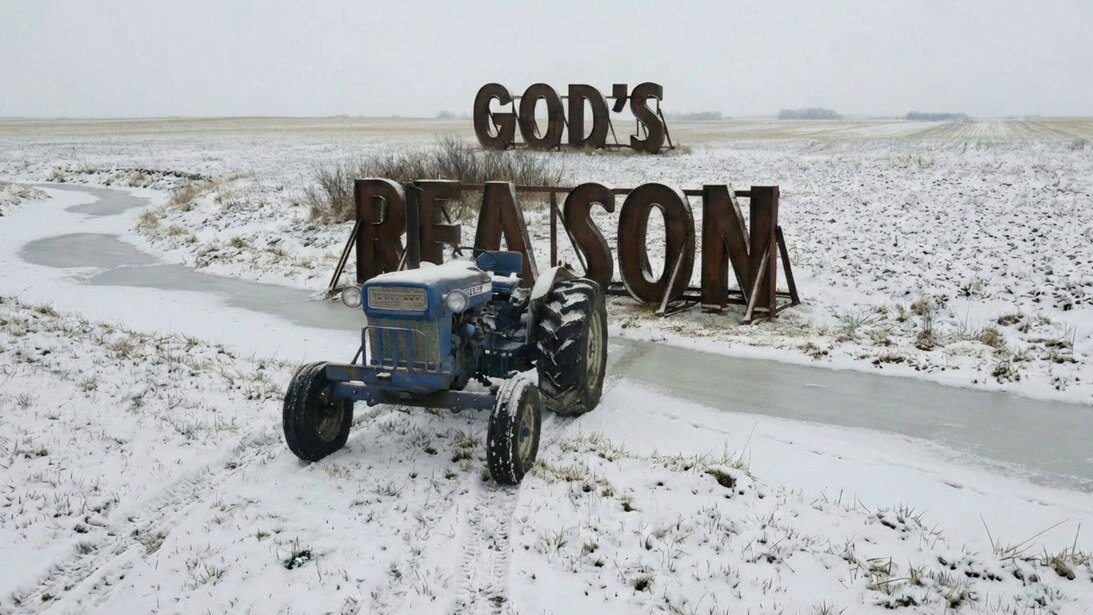
We love to DIY it, and those efforts can look impressive on the surface—but surface polish gives false confidence. Isaiah 1:30 warns that a life cut off from God withers like an oak without water. The question is whether we are still building kingdoms that burn, or rooting ourselves in the One who lasts.
The following study questions are AI generated and may contain errors.
The sermon describes “DIY” faith efforts that look impressive on the surface but ultimately fail to produce lasting fruit—much like a Cardinals opening day ceremony that doesn’t translate into wins. In what ways have you experienced this in your own spiritual life, and what did it reveal about where you were placing your trust?
The emerald ash borer quietly destroys a tree from within long before any outward sign appears. What are some modern “borers”—comfort, success, control, or others—that can silently hollow out genuine faith and kingdom focus? How do we detect them before the damage is done?
The preacher suggests that comfort may be the dominant idol for Americans today, often disguised as reasonable desire. How does the pursuit of comfort conflict with Jesus’s call to follow Him into “the trenches”? What would it look like in your daily life to intentionally choose discomfort for the sake of God’s kingdom?
The crowds shouted “Hosanna” on Palm Sunday and “Crucify Him” days later—not because they stopped believing in a messiah, but because Jesus refused to be the messiah they wanted. How can we examine our own faith to ensure we are following Jesus as He actually is, rather than a version of Him shaped by our own desires and expectations?
The sermon closes with the image of being “dumber than an ox” and yet known by God and used by Him anyway. How does honestly accepting your own inadequacy reshape the way you approach your role in God’s kingdom? What practically changes when you stop trying to manage outcomes and simply obey?
This transcript has been automatically generated and may contain errors.
So today, not today, this week marked the beginning of summer as far as it is concerned in St. Louis, right? It’s now summer. You can tell just by looking at Jim that it’s now summer because he has his Cardinal shirt on and we’re there, we’re there, right?
I confess I haven’t been quite as excited looking forward to this season for most of the winter in a regnum of baseball because, well, last year didn’t go very well and we’re in a rebuild. But the first few games have been pretty exciting and the spring training was pretty exciting. So it’s been building up, right? And so you get to opening day and you call out the Clydesdales, I mean the Clydesdales, right? They’re majestic. Just they in themselves, I mean, how can you not be excited when you see a Clydesdale, right? They’re wonderful.
And then you get all the Red Jackets, all the Hall of Fame Cardinals players that ride around and are still a part of it. And the legend and the tradition, there’s probably not a day in the year that I think St. Louis has more pomp and circumstance than opening day at Busch Stadium. And you think about that and how impressive and grand it is. And it really is grand and it’s a shared thing that we have as a city, right?
It binds us together, all our differences, all of our different experiences, but certainly this is a baseball town. On opening day, it’s a town that is very much red, right? It’s just covered in a sea of red. Thinking about that. Because the last few opening days, well, you forget them very quickly. Because you see all this impressiveness of both the city and the team and everything around the team. And it’s all really good.
And then I was thinking back to opening day 2024, the team opens up and then they play. Yes. Yeah. Exactly. Merlene is exactly right. They play. And you’re disabused very quickly of the notion that there’s all this strength and unstoppable grand power, right? And it’s like, oh. Huh.
So far this year, I have to say, I feel a little more hopeful. I didn’t hear the final score getting ready for church for today. Well, you know, batting, well, actually, that’s kind of an unfortunate number. We don’t want to use that number, what their winning average is right now, do we? Oh, boy. 6.67, right? Well, round it. There we are. We’re losing one. But not a bad start. That’s a reasonable start. That’s a pretty good start.
But the last few years, we’ve been reminded all that ceremony ends up leading to all that frustrating loss. And I’m pretty certain there have been more people going to get treatment for baldness the last few years after pulling their hair out from watching the Cardinals. Yeah. That’s what happened.
Here’s what struck me about that. Surface appearances can give an inappropriate confidence. And if your whole value judgment on how the team was going to play was on opening day, the Cardinals should win the World Series every year. And you hear that time and again. People from all around the country, players from all around the country, they say they love being in St. Louis on opening day because it’s something genuinely special here. But it doesn’t always translate. And all the effort that they do without the proper backing, well, it doesn’t translate. Just like our efforts a lot of times. Because we love to DIY it, right? We’ll do it ourselves. And our DIY efforts, they can look really impressive. But the question is what happens after they look impressive. That’s what we’re going to be thinking about tonight. So let’s go ahead, come before God in prayer. And then we’ll dig into Isaiah 1, verse 30.
Father, thank you for this evening. We thank you for your word. We thank you for the truth that we find in your word. As we come to the next part of this text, Lord, and you challenge us in it, would you challenge us just as you’ve challenged generation after generation, just as you challenged the people in Jerusalem 2,000 years ago on that Palm Sunday, just as you challenged the people during Isaiah’s time. Would you challenge us and would you transform us that we would be those who live the hosannas that we say. We pray in Jesus’ name. Amen.
Let’s go ahead and take a look at verse 30, Isaiah chapter 1, verse 30: “For you will become like an oak whose leaves are withered, like a garden without water.”
We talked a little bit about these oaks last week. How do plants do without water? Not very well, right? When it’s raining, relatively often, plants do pretty well. I noticed, thanks to Jamie, she got me looking in the garden today, and our seedlings, the reseeded plants, they’re actually sprouting up and we haven’t been watering them. Why? Because it’s been raining. It’s great, right? You have rain, the plants do pretty well on their own. But if you take away the rain and you don’t water them, plants don’t do so well.
Even really good, big, established plants. And if you’re talking about a plant that is big and established and mighty, what do we think of other than an oak tree, right? There is a solid tree, right? This tree is there. And yet, God says, without the right spirit, you shall be like an oak whose leaf withers and like a garden without water. Take away all the water, the oak tree is going to die too. It might resist longer. It might look mighty. It might have a great opening day ceremony. But when it doesn’t have the fundamentals down, it’s going to strike out and become be chopped down and become a bat, maybe.
The tree that is dying from a drought still looks impressive for a while. And if you are in the winter and you see that tree that died last year, it still looks just as mighty as the trees that are going to be alive again, right? You can’t tell the difference. But it’s dead all the same.
Question is, the crowd shouted Hosanna on Palm Sunday. Were they alive or were they dead? Let’s jump back to the scene again, Matthew 21, verse 9: “The crowds that went ahead of him and those that followed were shouting, Hosanna to the son of David, blessed is he who comes in the name of the Lord, Hosanna in the highest.”
When Jesus had entered Jerusalem, the whole city was stirred and asked, who is this? The crowds replied, “This is Jesus, the prophet from Nazareth in Galilee.” Things looked not pretty good, not kind of good, not like there was going to be maybe a good season. They looked like it was time for the good of all time, right? Here comes the Messiah, the people are excited, it is going to be great. It looked good on the surface.
And I think probably everyone who was excited about Jesus in that time thought that, now the ones who feared Jesus, they may have thought it too, right? What’s going to happen? It looked pretty good for Jesus. Jesus knew better. But people around him, the disciples probably thinking, yeah, we definitely hitched ourselves to the right train here. It’s going in the right direction. We’re in Jerusalem now, we’re probably never going to leave because we’re going to be advisors to the court of the king. This is good.
But what were the people looking for? People were looking for a political Messiah. They wanted someone who would bring earthly power to them. And Jesus looked like the ticket because he’s charismatic, people are following him, and guess what? He can do miracles, right? He can’t just promise a chicken in every pot. He can make one appear in every pot, right? He can do that. So of course, I mean, what could be better than a king who can do what he says because he has the power of miracles behind him?
What were they really asking? They’re asking Jesus, all of our oak trees, all of our idols, our sacred gardens, strengthen them so they can continue. We want you to be king over what we’ve built. We want that to be our land. What they wanted with a Jesus who wasn’t there to chop down the sacred trees and restore the tree of life, they wanted a Jesus who was an arborist who would nurse back to health their own fallen trees, their own pride, their own egos, their own successes, their own failures that they thought should be successes, their earthly power, their earthly comfort. They wanted a Jesus who was an arborist for what they already had.
Jesus looked really good on the surface because they thought that all that stuff he’d been talking about was to build a following so he could do what they really wanted. The problem was going to become, well, Jesus was deadly serious about what he’d been preaching, that it wasn’t the sort of kingdom they were looking for.
Here’s the irony of that moment. As Jesus enters into the city, as the Messiah, the promised one, enters into the city, the people hailing him, at least a lot of them, were actually turning Jesus into an idol. You might say, well, how’s that, Tim? Jesus is God. How can he become an idol? Because they were saying the name Jesus, they were maybe visualizing the physical body of Jesus, but they weren’t actually hailing Jesus, they were hailing their picture of Jesus. And so even though they didn’t have the wooden or the metal idols of their ancestors, they were taking the very God of the universe right there walking amongst them and they were turning him into an idol by replacing him with, in their minds, an entirely different Jesus that would do what they actually wanted him to do.
And I think one of the shocking things, as I think about Palm Sunday, is in a sense it’s one of the biggest idol worship festivals that we ever see in Scripture. Because how many people standing there, praising Jesus, weren’t praising Jesus as he is, but praising Jesus as they wanted him to be?
Anyone familiar with the emerald ash borer? Nasty bug. Evil bug, right? I remember when I was little, my parents and I, we planted a little bitty seedling green ash, beautiful tree, and it grew to be this magnificent tree, beautiful, beautiful tree, right? And this emerald ash borer was coming and you thought, uh-oh, this is bad because everywhere it goes, it kills all the ash trees. But for years, that tree was still a beautiful tree. And even once those borers arrived in Missouri, the tree still looked like a beautiful tree because as they started to bore into it, you couldn’t see them. The tree was still big and it could battle for a time. It was so tall, and what was eating away at it was so insidiously hidden, but it was eating away at it. And by the time you see the sign, it’s too late, right? It’s dying. It’s no longer a big, healthy tree, it’s a big, dying tree.
As people were praising Jesus, they created something that looked mighty and oak-like, right? This giant wave of people hailing the King. I would imagine everyone that opposed Jesus was feeling incredibly tense at that moment. We see that play out during Holy Week in the Passion narrative. We see that those tensions boiling over and it leading to what happens, that they want to put Jesus in his place, even if it means burying him because they do not want him to challenge them.
So it looked really good, but it’s telling that we see on Good Friday how many people that just days before yelled, Hosanna, yelled, Crucify Him. How could that be? Because they weren’t worshiping the Jesus who is, they were worshiping the Jesus in their minds that was going to build up their own pride, their own desires. And because of that, when Jesus says, no, that’s not who I am, follow me, those mighty oaks crumble. They weren’t really mighty at all. They were ash trees that were dying with the borers going through them.
The people didn’t realize they had borers inside of them, but they did. They thought they could bring about God’s kingdom. They could praise God and they could hail God and they could tell God, here is a great plan for your life, God. And God would bring the kingdom they wanted and it would work. But just like every time that we try to do it ourselves, the DIY effort is basically just a big invitation to sin borers to come into our life, start eating away. And I imagine there were some people that hadn’t really thought much about Jesus, but in that moment as they got caught up and they imagined what would be next, invited sin borers into their life in that very moment.
I’m not saying everyone that was hailing Jesus on that day was insincere. That’s certainly not the case. And certainly there were people even who were insincere then who by God’s grace came to know the real Jesus afterwards.
But I think Palm Sunday in many ways is a cautionary tale for us, a question for us. Are we looking to build up Jesus’s kingdom or to have Jesus build up ours? I think that’s what we need to ask ourselves. Are we looking to build up Jesus’s kingdom or have Jesus build up ours? The people there that day, they were looking for Jesus to build up theirs. And they thought that was God’s plan, right? Because they had understood that God’s blessing is in Jerusalem. The temple is in Jerusalem. This is about the Lord. By the way, it really works out nicely for us, but it’d be really great. And of course, we’re being good, faithful followers of Yahweh because we want this to happen.
And the problem is they were loyal to the external signs of what God was doing, but they weren’t actually loyal to Him. So often when we want to build up our own kingdom, we don’t say, I don’t want your kingdom, Jesus. I want my kingdom. We say, Jesus, build up the kingdom that’s mine because it’s really the one that you intended to build up. Jesus, I want you to build up your kingdom. By the way, it’s exactly like this.
What are our borers today? Your borers were escaping Roman power and having an autonomous kingdom again who could say, hey, here we are as God’s kingdom, rather than seeing that God’s kingdom is actually about reaching out to the entire world and seeing the whole world come to know Jesus. What are our borers today? Maybe it’s Jesus, hey, build up the economy. We can do so much more if the economy is going really well. I say, well, that’s reasonable, right? I can’t function if I can’t buy food for my family. I need a good economy. True. It helps.
What if we just said, Lord, give me this day my daily bread, however you do that. I’m not here to build up this world’s economy. I’m not here, here’s a hard one, to be comfortable.
I think for us Americans today, a lot of times our idol is comfort more than any of the others, right? All the others are leading to comfort where I can have what I want, I can enjoy what I want, I don’t have to work overly hard for it because I’ve gotten to the point that I’ve succeeded and I’ll be really loyal to God as long as God’s plan happens to make me comfortable. Which really, if you think about it, isn’t that far away from what the people were thinking that day as Jesus sent to Jerusalem because what did they want? They wanted the comfort of not being under the Romans, they wanted the comfort of being themselves again, able to determine their own future again. They wanted to restore the glory days of Israel and experience that again.
That’s what they wanted. It’s not what Jesus came for, but that’s what they wanted. Ironically, we turn even the church into this, where we become more about what makes us comfortable rather than what reaches.
I mentioned to the church family earlier today, if you are part of the church family and you’re not yet on Signal, let me know, you should be on Signal. As I mentioned, I’m going to send out some different missions over the week and challenge us as a family to invite and to reach this community on this Holy Week and then let’s keep going after Easter. It’s not just for this week, but let’s really do it this week. That’s going to be both online and in person. We’re going to have ways we can do that and I’d encourage you, dig into that because here’s what we don’t want. We don’t want to become a holy huddle. I know we know that term, it’s a churchy term, but it’s a good term to keep in mind and be, we should be repulsed by it, not attracted to it, but it’s comfortable.
It’s really comfortable to be us together and that’s good, right? I love this church family and I love that we love to be together, but the people 2,000 years ago, what they’re missing is they wanted to, God, give us a nice comfortable place. Get rid of the Romans. They weren’t thinking, God, please redeem the Romans so we can all be part of your family together. Get rid of the Romans and we’ll be this nice little self-contained place that worships you. And Jesus is saying, no, that’s not how I work. I’m feeling bigger.
And what Jesus is challenging them to do and what he’s challenging us to do is to think about how do we expand God’s kingdom? Everything we do should be about how do we expand God’s kingdom? Now you might say, well, why do we, for example, do Bible study then? Because that’s just our little group. Or why do we enjoy times of fellowship? That’s just our little group.
Well, there’s times of preparation, right? So when we’re studying the Bible together, it should be strengthening us so we’re better able to explain God’s word and to share it and to comfort each other and encourage each other when we’re feeling discouraged. Those are legitimate things, but we don’t ever want to get to the point, and maybe we never get to the point where it starts to become more about being us than growing the kingdom. Because time and time again in the history of the church, that is where the church goes. Almost inevitably. You’ll hear me say this sort of thing often, and the reason is because it’s such a danger. Because it’s so appealing, because it’s so comfortable.
God’s saying, I don’t want you comfortable, I want you to serve it. Say, but Jesus, that’s not the kingdom that we had in mind. Paul, 2,000 years ago, said, Jesus, that’s not the kingdom we have in mind.
Here’s a sobering Palm Sunday note. We can be those who shout Jesus at the top of our lungs until we’re hoarse and be as hopeless as Judah was on Isaiah’s day.
It’s not about vocalizing the syllables. It’s not about having a picture that was on our children’s Bible that we can still remember of what Jesus looks like. Or even if we get the historical picture of Jesus, like, I mean, the people in Jerusalem, they knew exactly what Jesus looked like. They had the right face in their head. They didn’t have what was behind that face, right.
They really thought that Jesus came to restore an earthly kingdom. And here’s the thing, everything on this earth is fading. Not because God hates this earth. He will restore this earth one day. But right now in this fallen world, everything is deteriorating. And the question is, do we want to ask God to focus on building what’s deteriorating? Or do we want to say, God, use us to build what will never deteriorate?
Isaiah chapter one, verse 31: “The strong man will become tender and his work will be a spark. He will burn together with no one to quench the flames.”
This is kind of an interesting passage, and I don’t usually bring up multiple translations, but tonight I want us to actually look at two, because there’s a genuine debate. The structure of the sentence is a little unclear. There’s a couple of different ways this could go.
Let me just bring back what we had for a moment: The strong man will become tender and his work will be a spark, okay. Keep that in mind.
Here’s the King James: “And the strong shall be as tow and the maker of it as a spark. And they shall both burn together and none shall quench them.”
Now why am I showing you these two different translations? Because they’re both actually latching onto a legitimate way to interpret the passage.
This passage is either about a strong man who is not doing what God wants, he’s idolizing things, or the strong man is actually the idol. And that’s the way the King James translates it, right, and his maker, the idol and his maker. And I think both are actually kind of interesting, and I sometimes wonder when we get to one of these passages that is genuinely ambiguous, does God want us to pause and wrestle with that a bit in that spot? Because he didn’t have to make it ambiguous.
What does he want us to see here? Well whether we’re talking about the person or the idol the person makes, here’s the clear thing that the fixation that we end up with that is away from God but looks really good, that looks really strong, it’s not going to last. Either way, it’ll be as a spark and tinder. What happens when you add a spark to tinder? Explosion and flames, right, it’s going to go, might be an explosion and put some gasoline on it too, but anyway, if you have wood that’s ripe for the burning and you add a spark to it, it’s going to burn, right? That’s why you sometimes have a forest fire maybe even, but also you might intentionally do that, right? You want to start a fire, so you do it. But when we’re building our mighty deeds, we don’t want that, right? We don’t want that at all. We want it to last.
I think that last week when we had our slide show of what’s happened over the past six years at Little Hills here, do I look at that and think, oh, I hope this all burns away tomorrow, it was a really nice, it was a fun six-year ride, let’s move, okay, that’s good. No, I don’t think any of us do. I think what we’re thinking is, wouldn’t it be neat if we’re the foundation for a church that’s here 100 years from now and 200 years from now, that someday there is a 200th anniversary of Little Hills Church and the people pull out the dusty archives to read about what God was doing 200 years before back in the old days of the 21st century. And the people that have moved away, they all hop on the transporter pads and transport back here so they can be part of it, and it’s great, and they worship Jesus, and it’s great.
That’s what we’d like. Maybe it’ll be God’s will. But here’s what I can say confidently, if the world goes on long enough before Jesus returns, someday Little Hills Church will close its doors. Or if it doesn’t close its doors, it won’t be doing its mission anymore. And I can say that confidently because that’s been true of churches throughout time. It happens. And so even if it looks strong, the deeds, the momentum was really just tender, right?
That’s why we’re not here. We are here to build this church, right? We want this church to be here and we want it to go do its mission, but we’re not here to build this church. We’re here to build God’s kingdom. That’s what we’re really about. The reason we want this church here, the reason we want this building here, the reason we want to invite people here, the reason we want to learn more and be more developed as Christians ourselves is not so that we can be here, but so that people who aren’t yet here can be here. And not here as in Little Hills, but here as in God’s kingdom. And I hope Little Hills plays a part in that. I really do. I pray that.
And it wasn’t wrong for the people back on Palm Sunday to want Jerusalem to play a part in that. But the question is, are we building our kingdom or are we building Jesus’ kingdom? Do we want a place that’s comfortable or do we want to live in the discomfort of actually being in the trenches for Jesus?
Most of the people waving their palms wanted to be comfortable with Jesus. Jesus said, no, that’s not the way my way is. If you’re going to follow me, you’re going to go in the trenches. You’re going to go and fight the war.
Those opening days of 2024 and 2025, I can’t speak of where we’re going yet in 2026 for the Cardinals, but certainly in the past couple of years, I can say it went south really fast afterwards. By the end of April, anyone who actually was paying attention knew it wasn’t going to make it. Even when there’d be little ups, you’d say, but the fundamentals are just bad. It’s not going to go anywhere.
If Jason is able to come back and join us this summer, we have to tease him mercilessly on that because he always says, no, it’s going to work. I have it on recording that he said that, but it didn’t. Why? Well, I think it’s pretty clear the Cardinals had confidence in patterns, in foundations, in things to drive the team that weren’t actually the healthy things needed. I don’t yet know if they’ve corrected that this year. We’ll see. I hope so.
What patterns are we absorbing? What patterns are we wanting in ourselves, in our church, in the church as a whole? Because when we’re focused on Jesus build my kingdom, we’re basically doing what the Cardinals did in 24 and 25. It might look good even in the moment, right? If you have the big names on the team, it looks pretty good. I didn’t want them to get rid of some of them. I’m still sad about it.
But if the actual fundamentals to drive the team aren’t there, it’s not going to work. If we’re trying to, we say we want Jesus’ kingdom to grow, but we’re not focused on what he has fundamentally said is our focus, it’s not going to grow.
When Isaiah writes in verse 31, that the strong shall become tender and his work a spark, here’s something else that’s important on that. The spark and the tender there don’t just burn down the person, the individual person. God’s placed each and every one of us inside a whole web of connections, of relationships, of friendships, of acquaintances, of co-workers, of people online that we get to know now, of so many different things. The question is, what are we spreading to them? Because if we ignite, if you get the tender going and you get a big old fire in the middle of a subdivision, what might you do? You might burn down multiple houses. You might take out a whole block of the city.
This isn’t just about one person igniting, it’s about a combustion that is evil and destructive. And what Jesus is calling us to is not to be that. One commentator said, self-sufficiency and man-made gods are a dangerous combination. They really are like tender and spark. Because when we think that we can do it, when it’s about what we can do, or what we would like, those man-made gods, right? The comfort and the success and the praise, the things that we’re looking for, we’re piling up the tender to catch on fire. And at some point, our sin ignites it and it destroys.
When we’re focused on what we ourselves can do, we’re just building up the pile for the fire. Now, I can preach that pretty well. I’m not saying I’m preaching a great sermon, but I mean, I can say those words pretty well. But it kind of proves my point, though. I can’t even say the words that I wanted to say exactly right. But I can say that well enough. Can I actually live it? And that’s where I struggle.
I was thinking about just a couple weeks ago when you heard Pastor Dan come and preach here. And I was so excited to share him with you. And I’m so glad that you got to experience Pastor Dan. He’s such an amazing man. Such a wonderful message he gave. Such just a neat man. And I just love that you got to know him. And really get a taste of someone who planted one of the seeds that led to this church. Because I don’t know that we would have a Little Hills Church here today if not for how God used Pastor Dan in my life.
I was so excited that he was coming. And then we had those severe storms coming. Everyone remember those, too? And it just became clearer and clearer. It’s going to come at the time that the service is going to happen. And then my mind starts winding through what should I do, what should I do, what should I do here? Should we still have the service? Do we do an online service? Which means no Pastor Dan because he wouldn’t have a message recorded. I could record something. Do we just say that we’re not doing it? Because I don’t want everyone here in this building as a tornado rips through and takes us all to Kansas or beyond. What do we do?
But I also have to confess something about that. As I was thinking that. You know another reason why I was wondering whether we should do that? I do want everyone’s safety to be taken into account. But I really didn’t want Pastor Dan to walk in the door to an empty church when no one was able to come because of the storm. And there was a part of me that was afraid that it would happen because of the timing. That he would get there because I knew him. If he had to drive through a hurricane, he was going to be here. I thought, what happens if it’s just sort of like nothing? How can I make it so it doesn’t look like nothing? I started wondering what I can do.
But God had his plan that night as he has every day. And I have to say, I think that night was… I was thinking, how do you phrase it? I think it was explosively lovely. It was… I listened to how all of you were singing. We were all glad to be together after that storm. I think everyone… it was so neat seeing the joy that you had getting to share this time with this special man being here. And it was just so exciting celebrating what God was doing, how he was working, hearing him being encouraged to God’s continued work. That night was just so encouraging. And I thought about that.
What can I do? And what does God do? What can I do and what does God do? You’d think I’d learn. We’re in the middle of this series about being dumber than an ox. And we’ve been talking about that over and over and over again, about how dumb we are. And I’m dumber than an ox. I’m dumber than an ox because I can put up a song about being dumber than an ox. Then I can preach a 10-week series on being dumber than an ox.
And in the middle of that series, I’m thinking, well, how can I make sure this works out okay? How can I build up the kingdom that I have here? You know, God, you need to build up this kingdom. This is how it’s going to work, God. You need to make sure that storm doesn’t hit. Or you need to go ahead and make it hit and have me shut down the church for the night because we can’t possibly come in as the tornadoes are ripping through town.
Jerry’s handing out a little oxen for each of us because as we’ve gone through this series, one thing that I think is really clear is that we all are dumber than an ox. I certainly am. I certainly am, so often, over and over and over again. And how can it be that I miss? God is working. He’s going to work His plan. We just need to actually listen to what His plan is, listen to what He’s doing.
When we’re doing our DIY plans, you know what we’re really setting up? We’re setting up a pile of tinder so we can self-immolate. We’ll just burn ourselves up, right? And take everyone with us because we catch the building on fire. We catch our neighborhoods on fire. And we just burn people down.
But when we say, Jesus, build your kingdom, what are we saying? We’re saying, don’t let me self-immolate. I want you to instead catch me ablaze for you for world illumination. Not world incineration, but illumination. I want people to know you. And just like that bush wasn’t consumed, when Moses encountered the burning bush, it stayed the bush because God’s fire doesn’t consume that bush, it uses that holy bush.
God takes us and He places a fire that doesn’t consume us, but rather illumines through us. Are we ready to do that? Can we shift from Jesus build my kingdom to Jesus use me in your kingdom?
People, as they waved their palms and said, we’re shouting Hosanna, Jesus, come and build the kingdom that we want. They were saying, we’re going to build this nice pile of tinder and see if we can light it on fire and it’ll be a good thing. They might not realize that, but that’s what they were saying. Jesus says, I have something better for you.
Just a little preview for next weekend. When we encounter the risen Lord, what do we see? We see that some people, not all of them, but some of them, they didn’t set down their palm branch and walk away forever. So wherever you are tonight, whether you’ve been following Jesus and just get distracted like me, it’s not that I don’t believe in Jesus, it’s not that I don’t have Him as my Lord, it’s that so often I still try to make myself the Lord of this particular little area that I’m worried about.
If you’re in that place, you can say, Jesus, reshape me. Take me from building my kingdom to your kingdom. If you haven’t yet trusted in Jesus at all, you can say the same thing. You can say, Jesus, I’ve been trying to shape the whole kingdom. But you know what? It always burns up. It always does. Sometimes it lasts a lifetime, but we see it coming apart as our lives come to an end. Sometimes it keeps going and burning up over and over again over time.
You can say, Jesus, I might be dumber than an ox, but just as Dusty’s song ends, I’m dumber than an ox, but I know Him. That’s what matters. Do I know Him?
Our deeds make us self-combusting. Our deeds show how dumb of oxen we are. But just like it was for many of those who shouted, Hosanna, we’re confronted with the choice of what we’re going to do next. Some of those people shouted, Hosanna, and then shouted, Crucify Him. One day bowed down and said, My Lord and my God.
Is that where we’re going to be? Holy Week is an invitation to something better. As we go through this journey every year, it’s an invitation to something better than what we come up with. God’s explosively lovely, better way that is always better. He invites all of us to come to that better way.
Would you pray with me, please?
Lord, we are too often dumber than oxen. We pray that as we take home these little plastic oxen, that wherever we set it, that we would see that little ox and be reminded, that’s us. But thankfully we have a God who takes those who are dumb oxen and uses them. That’s what we’ve seen over history, that you use us, us human beings, us fallen human beings. We get it wrong. We focus on our kingdom rather than yours, and yet you redirect us and you build.
Lord, would you forgive us for those places we focus on ourselves rather than you? Would you help us to be those who are redeemed oxen? Redeemed oxen who know you. That’s what matters. We’re still dumb, but what matters isn’t how smart we are, how able we are. What matters is that we have the God who is able and who will do incredible and mighty things.
We pray this in Jesus’ name.
Start the Conversation