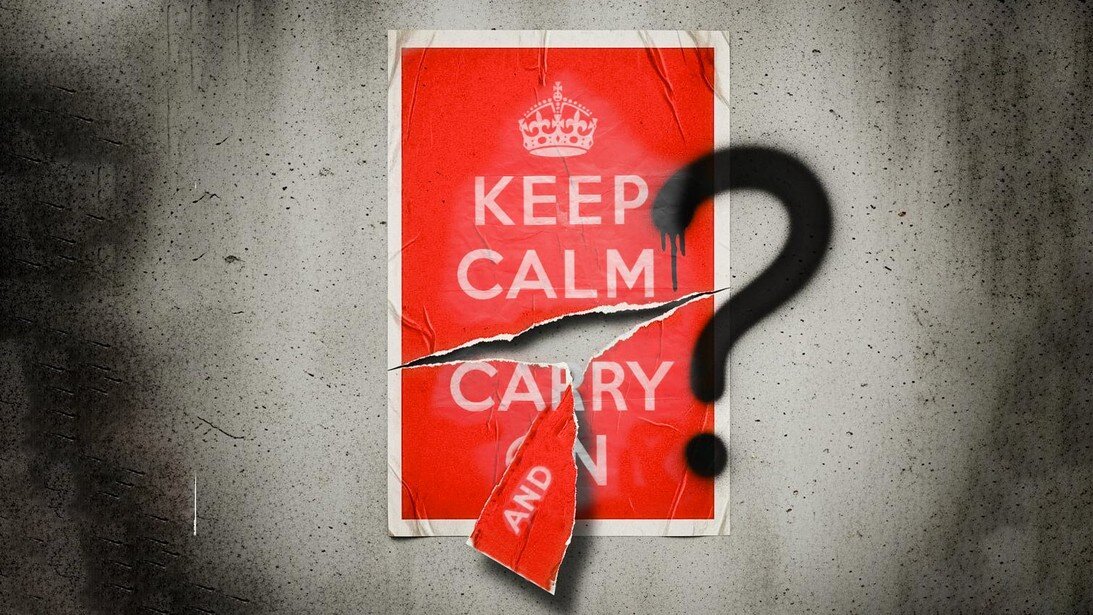
Do we only come to God when everything’s falling apart—when we’re without a prayer and just need a favor? In Psalm 10, it’s clear God is our Father, not just our favor giver, but too often we approach him only as the latter.
The following study questions are AI generated and may contain errors.
This transcript has been automatically generated and may contain errors.
One of the things that got picked up on there was a discussion about the musician by the name of Jelly Roll. And I was surprised how much conversation we had on Jelly Roll. I didn’t even know who he was until about a year ago, but we had a nice long discussion on him, and I was thinking back to the first Jelly Roll song which is Need a Favor. How many of you know Need a Favor? I heard it, I was playing a playlist of like the latest country music and it starts playing. I thought, this is kind of interesting because he’s singing about, he only prays when he needs a favor. And then he goes on to talk about how he only prays when he’s without a prayer. And I thought, that’s interesting.
Because you hear an awful lot of pop music that if it makes any reference at all to God, it might use a term like pray, and you kind of wonder who it is that they’re even praying to. But it usually isn’t in that context. Like, I’m a really lousy person who only prays when I want something. So I found myself listening because it was sort of interesting for someone to actually reflect, well, why is it that I am coming and praying? And I don’t know where Jelly Roll is in his spiritual growth. I do know that he was baptized, I think, about a year ago, something like that. And this song was written before that. So I think it’s sort of a picture, we’re watching, and this is a dangerous thing with celebrities. So I don’t know where it’s going, but I don’t want to sound cynical either. But it’s a little dangerous to be watching it all on stage. But we’re watching it all on stage. We’re watching someone trying to figure out what he believes, and seemingly progressing in the right direction on that.
But the song was really insightful, I thought, because here was someone who, not yet at a, really even a point of being a Christian, per se, just starting to wrestle with that. Was saying, well, I recognize there’s a problem because when everything breaks down, when everything’s going wrong, I pray. But I only pray when I need a favor. And to be sure, prayer is the natural place to go, and it’s the right place to go when we’re in distress. God wired us that way. We’re supposed to want to pray to him when we’re in distress. It’s the absolute right thing. But not if it’s only when we’re without a prayer. That’s not the only time we want to go there.
And I think as we’re exploring Psalm 10, one of the key things that’s challenging us to think about is, am I coming to a favor giver or the Father? Because even as Christians, we can fall into the temptation, I’m coming to the favor giver. I have these things, A, B, C, D, E, F, G. I’ll keep going. I’ll have the long Christmas list, right, and roll it before the favor giver. Or am I coming to the Father? And healthy prayer, the kind of prayer that this Psalm is guiding us into in dark times when we do feel like hope is supposedly around the corner but it’s not there, when we feel like we’re without a prayer, healthy prayer in that context and in every context requires a healthy understanding of God. And that’s what we find here as we dig further into Psalm 10.
So let’s go ahead and pray and ask for God’s guidance and then we’ll dig right into it. Let’s pray. Father, would you help us to better understand who you are? We want to come to you not as merely the favor giver but the Father. We want to come to you not merely as the one who can answer the list of needs we have when we feel like we’re without a prayer but the one who answers every day because we come and we commune with you. We know you. We experience you in prayer. There’s not a single one of us who comes to you completely rightly, with the complete right heart, for the complete right amount of time, with the complete right everything about it. We always are getting things wrong, Lord, but would you help us to understand more about who you are? Because that’s what really matters. Pray this in Jesus’ precious name. Amen.
Let’s go ahead and take a look at verse 12, picking up from where we wrapped up last week. The psalm says, Arise, O Lord. O God, lift up your hand. Forget not the afflicted. We’re going to get to the next few verses in a moment, but there’s a bookend to this we see in verse 15. Break the arm of the wicked and evildoer. Call his wickedness to account till you find none. There’s the request. I’m in distress. God, give the one causing my distress just desserts. That is essentially the payload of this prayer.
And how we approach a prayer like that says a whole lot. We get uncomfortable with some of the language in there, right? Should I be praying for someone’s arm to be broken? Now, break a leg if they’re an actor, right? If someone’s an actor, yeah, go break a leg, right? But we don’t actually mean break a leg. But we encounter a psalm like this, and this is not wishing someone a good performance. It’s wishing their evil to be stopped by drastic means, if necessary. That could go really well or really poorly depending on how we understand whom it is that we’re coming to. That’s the key thing here.
What we really need to ask when we’re praying is, well, how am I approaching prayer? What do I see that it’s doing? That question. Am I coming to the Father or the favor giver? Whom is it that I think I’m coming to? And not what word do I use, right? Do I say Father when I pray? But what do I mean when I say Father? Because when we’re in that time that we need that favor and we’re in desperate pain, okay, maybe we will pray for bad things to happen to the people putting us into that position. Even if we thought about it a little more and said, well, maybe I shouldn’t have. But in that moment we will because we just want the pain to stop. We just want relief. We want a solution.
Especially when we encounter the kind of people that we see in verse 13. Because verse 13’s person really is the sort of person we encounter over and over again in the world. The kind that causes that pain in our lives. Why does the wicked renounce God and say in his heart, you will not call to account? It’s an interesting question. But I think on some level we know the answer, right? Why do those doing wicked do that? Because they don’t actually think that God’s going to stop them. The way the world asks, what can I get away with? As we talked about last week about the wicked, sometimes the wicked act as if there is no God and say there is no God. But also a lot of times it’s exactly what we see here. It’s more, well, God’s not going to really notice if I act out in some bad way. God won’t see that. It won’t be a problem, right? I can get away with this. It won’t do any harm.
They seem to get away with it. And if they seem to get away with it, if they seem to be able to do it, then why wouldn’t they? Seems easier. Seems more comfortable. The person who thinks he can get away with it seems to be getting away with it, and the person who is trying to do what God’s called him to do is suffering. In Psalm 9, remember these two psalms are connected together. Psalm 9, verse 12, it says, Be gracious to me, O Lord. See my affliction from those who hate me. O you who lift me up from the gates of death. Well, the psalmist in Psalm 9 says, You lift me up. But here, as we look at Psalm 10, verse 12, there’s a different tone. Forget not the afflicted. Forget not the afflicted. Has he forgotten? Sometimes it kind of feels like it, doesn’t it? Sometimes when the suffering is just going on and on and on, we say, well, it’s nice that we say that God cares. It’s nice, all these platitudes we can spout off, but it seems like God has forgotten. And if he’s forgotten, now what?
We’re the wicked, right? Well, we’re going to get to verse 14 more fully in a moment, but what we do see there, we’re going to cheat and cut ahead a little bit here, is that those first few words in verse 14, but you do see. That’s the answer to that question. The wicked may say otherwise. We may even ask otherwise, but the psalmist says, you do see. But if it’s all about what can I get away with, what’s that mean? It means we’re getting away with it for the time being.
I saw a video this week. It’s a service, I’ve never actually used it, called Turo, I believe it is. It’s sort of like Airbnb, but for cars. If you want to rent a car, you can go on and get somebody’s car and rent it. And so there was a nurse who rented a car on Turo, and I don’t know if it’s standard on every car on Turo or just certain ones, but on this particular car, it was equipped with a dual-sided drive cam, which makes an awful lot of sense. I wouldn’t want to rent out my car, I would want that, right? But clearly this driver didn’t realize that. And so you see her driving down the road, and she’s swerving around because, well, you can see it very clearly, she is looking down at her phone, texting, while she’s driving on a two-lane road with traffic coming the other way. And she kind of swerves out of the way. She does this for a long period of time, and you think, well, I don’t know, maybe being a careful driver doesn’t really pay off, but she’s doing just fine with it, right? It’s making my heart go a little fast at times, but she’s getting where she’s going, and she’s going to be ahead when she gets there because she’s probably going to visit another patient, and she’s getting that taken care of, she’s communicating stuff, she’s getting all this done. Maybe you can get away with that.
But the reason the video was being shared is because towards the end of her drive, and the drive does come to an abrupt end, all of a sudden you see her swerve off onto the drainage ditch of the road, and you see her eyes go wide as she’s trying to wrestle back into control of the car and goes slamming into a mailbox which stops her, which probably was a blessing, actually. Well, she seemed to get away with it for a long time, and she tries to get away with it further. She reported to the owner of the car that someone had run into her, not realizing it was all on film. So how long had she gotten away with this? Had she rented other cars and done this for a long time? I don’t know all the details, but for a period of time, it looked like she was getting away with it. And the safe drivers were the ones having to dodge out of her way and not the one who was being unsafe. But what she didn’t realize is that she actually was being watched. Someone was seeing this, and there was clear, undeniable evidence of exactly what happened.
Well, the wicked, when they think they’re getting away with it, they say, well, God doesn’t care. You will not call to account, they say. You know, I’ve been living this way for decades, and God has never smited me. I walk out, and lightning has never hit me. So why would I live otherwise? It looks so much more difficult. And we, as we follow the Lord, say, yeah, it does seem that way, doesn’t it? When you’re dodging out of the way of that car that’s swerving over, and you’re the one who’s being the safe driver, and you’re the one that goes off into the gravel and punctures your tire on an old nail that’s been laying there because you were trying to avoid the reckless driver, it feels like the reckless, the evil, the wicked triumph. But this is just a sample of eternity. We get away with things until we don’t. We get away with things until we run into that mailbox. And then we say, uh-oh, I guess I do need to pray, right? Okay, now it’s time to pray because I do need a favor. I am without a prayer, so I’m going to pray.
But as we find ourselves in that stage of spiritual growth, we find ourselves in a very precarious spot because the fact that we’re praying, okay, that’s the right impulse, but what are we going to do then? God’s presenting that to us in that moment. Are we going to just stay there, and we’ll ask a favor, and then we go back on the road, and you know what? We’re going to text right again because now we’ve gotten the favor. The car’s been repaired. Insurance covered it. Wonderful. Isn’t that great? Okay, back to what I’ve been doing. Where does it change us?
The first danger in prayer, and we see that here, is that we pray only when we’re in our without-a-prayer moments because it’s so clear here that the wicked doesn’t necessarily believe that God doesn’t exist, only that they can continue to get away with what they’ve been getting away with. Sometimes we find ourselves in that position. Maybe you were scrolling on social media tonight, and you pop up this live stream, and you’re thinking, yeah, that’s me. I pray sometimes. Sometimes I even turn on a live stream of a church service, and I’m glad you’re here because the fact that you’re praying in that moment isn’t bad. It’s the question, well, what are you going to do next? Am I going to stay there, or do I want God to do something more?
Because where we’re going in the journey on this psalm isn’t to say, okay, it seems like the wicked triumph, but I’m going to pray anyway. And since they get away with things most of the time, I’ll pray, but I’ll also start to act more like them because that sounds easier. It’s a question, am I going to actually wrestle with whom it is that God is? Because while the way of the world says, how much can I get away with? The question is that, oh, you know, it seems like I can get away with a whole lot. God’s Word is different. The way of the Word calls us to trust that He can actually make things right. Not that they’re right right now, but that He will make things right.
Verse 14, But you do see, for you know mischief and vexation, that you may take it into your hands. To you, the helpless commits himself. You have been the helper of the fatherless. The way of the Word trusts He can make it right. Well, how do we get there when we’re swerving out of the way of the driver who is texting? How do we get here and we don’t just bow a platitude? Yeah, God’s going to make everything right. It’ll be fine. I’m tired of saying that, right? I don’t want to say that. How do I get there? Well, we do what the psalmist does here. If you think about what he’s doing in verse 14, he’s saying what God does, not what God will do. What He has done. You do see, for you know the mischief and vexation. Not you will know, you do know. You may take it into your hands. To you, the helpless commits himself. Why? You have been the helper of the fatherless.
Well, how do we know that? Nice to say it, but how do we know that? Well, if you’ve ever wondered why Scripture keeps going back over and over and over again to the Exodus, here is why. Because God demonstrated in history exactly what He does. And the psalmists reflect on it. Even in the New Testament, we find that analogy being used over and over again. Let’s talk about the Exodus again. Let’s see how God’s complete plan of salvation is playing out at a greater level what happened in the Exodus. Keeps going back to it, because here is something God did boldly and in history to rescue His people. So that when we say, but I don’t see what He’s doing right now. The Israelites groaned in misery and toil for 400 years. And at year 350, you could say, it seems like the wicked get away with it. At year 395, it seems like the wicked can get away with it. But then God acted. He says, the wicked will get away with it until they won’t. But make no mistake, they won’t at some point.
And so when we come to God in prayer, what He’s walking us through is a process of being reminded of how He actually works. Not just what we want Him to do. See, that’s the thing when we’re only asking for a favor. We put in our order, and then we wait to see if it comes back. And if it comes back exactly like we hoped, then we say, okay, now I’ll put in another favor because it worked. And if it doesn’t, we say, oh, maybe I’ll try something else. But if we actually walk through God’s faithfulness, if we look back at His past faithfulness in our lives and in the lives of the people around us and in the lives of the generations before us and in the lives of the biblical generations, we see, well, it doesn’t always happen the way we want, but it does always happen.
Why does the Bible keep rehearsing the history of the Exodus? And why now do we read the New Testament and rehearse the history of Jesus coming as the incarnation and living and suffering and dying for us and triumphing over death? Why do we keep talking about that 2,000-plus-year-old history? We go back to Moses, almost 4,000 years of history here that we’re going through, or 3,500. Why do we do that? Because of this. God’s given us the confidence to believe He’s going to work because He keeps working over history. When we look at that history, it’s not always instantaneous, but it always happens.
When we’re asking for a favor, what we’re really thinking is, can I get God to understand? Can I awaken Him? He’s the one that’s been driving asleep at the wheel, texting or whatever. I don’t know. He has lots of prayers, so He must be on text right now. Because He’s not answering. I like what Calvin said reflecting on this passage. He said the point of prayer and the point that we see the psalmist going through here, it isn’t to awaken God, it’s to awaken Himself. When we’re praying and we’re actually going through whom it is that God is, what we actually can say has been done by God, God uses prayer to awaken us. And sometimes He’s awakening us because He is about to act in some way. Some answer to prayer is coming, and it really is right around the corner. It’s going to happen, and we’re going to feel it, and we’re going to see it, and we’re going to rejoice in it. And sometimes it’s going to be a wait, but He’s reorienting us to understand why we’re in that at the moment, why we’re waiting.
Sometimes it’s to build up our understanding and our appreciation here as He lays it out in this. There’s a need for justice here, right? He makes the case against the wicked. We see it in verse after verse after verse in chapter 10, and He lays that out and then figures out what to do with it. And sometimes God’s reorienting our heart to say, yes, it’s good to desire justice because I’m a God of justice. That’s okay. And now I need you to actually expect it’s going to come. Okay, fair enough. And then there’s the gnawing question. And this is the gnawing question in a psalm like this because we’re praying for the arm of the wicked to be broken. And there are other examples that we have alluded to over the last couple of weeks that sometimes kind of make us feel a little weird. Like, how can they pray for that? Where do these so-called imprecatory prayers, these prayers for God’s justice to be realized, where do they fit into the picture of how God interacts with us?
Well, I think the first thing is to say God does care about justice because if we’re going to understand who He is and actually see how He’s worked in the past, the first thing we need to know is that, yes, He does actually care about these things. It’s okay to come with our frustration and our concerns and, God, can’t you just break this person’s arm before he does anything more that’s bad? It’s okay to come to God. But it also reveals a place where He’s going to start redirecting us because, you know what, when we come to God in that way, a lot of times we go right back into that favor mold and we want to go all Old Testament. And by that we mean what? Well, doesn’t the psalm seem pretty good? Yeah, let’s see those people dashed upon the rocks, their babies dashed upon the rocks. Blessed is he who does it. Ah, yes, that’s good, right? And in that, God’s asking us a question. Do I want justice? Or do I want sanctified vengeance? Because you know, the thing is, they look an awful lot alike, at least to us, not to God, but an awful lot alike to us. There are times we genuinely want justice and we should want justice and it’s right to pray for justice, but there’s an awful lot of times we get a little out of control and suddenly we think, well, what’s the worst thing that God ever poured out on someone and may that be what happens. It’s no longer, God, I want the just result to come. It’s I want vengeance, but I know that sounds bad, so I want you to do it and I want you to do it in the way that I imagine because it’ll be really amazing, God. Just trust me on this, God. It’s going to be great.
But it’s not wrong to want justice. It’s not out of God’s plan to say, God, please bring justice. Over and over again in this psalm, and we’re going to see this over the following two weeks in it as well, we’re going to come back to, God, please, please bring justice. And that’s not an Old Testament request. We see, for example, Luke 18, verse 7. Jesus is telling a parable and saying how we should approach God, and he says, And will not God give justice to his elect who cry to him day and night? Will he delay long over them? And of course, we’re supposed to answer no. No, he won’t. So it’s okay to ask for justice to be done. But notably, even in the Old Testament, that raw emotion is there, but there’s a proper channel for it when we believe that he is the one that’s going to make things right, when we’re trusting in that.
The psalmist here doesn’t write, and I am incredibly good with a crowbar breaking people’s arms, and thank you, God, for that crowbar. He says, God, here’s how I’m feeling. This is really where I’m at. And we need to understand here that this is a blessing. This is a gift of God that he puts this down because we can’t say, well, if a psalmist experienced anything like what I’m experiencing, what I want to tell God, what I want to see come upon the person doing wicked, well, if the psalmist had experienced that, it would be different. But the psalmist, you know, they’re always contemplating sheep and fields and God’s blessing, and yeah, maybe they stub their toe every once in a while. And God gives us, no, let me show you the raw thoughts of my people. And it’s okay to be there. It’s okay to bring that to God, but the key thing is to bring that to God, to hand it to him, to say, God, here’s what I would like to see because I am angry, I am hurting, I am struggling, and now I’m going to hand it to the one that I trust is actually just and going to do the right thing, including with me.
Because it’s not healthy for us to stay at vengeance. It’s enjoyable to stay at vengeance, but it’s not healthy for us to stay at vengeance. What do we read in Hebrews chapter 12? Verse 24, And to Jesus, the mediator of a new covenant, and to the sprinkled blood that speaks a better word than the blood of Abel. What’s that mean? Of course, Jesus’ blood is better, right? Abel was just a man. Jesus is the God-man, right? God incarnate in the flesh, so yeah, his blood’s better. But if we go back to Genesis 4, the interesting thing about Abel’s blood, God reflects on it and says that it is crying out for what? Vengeance. And when the author of Hebrews goes to reflect on that and then reflects on Jesus’ shed blood, he says, see the difference. It’s not kind of nation of Abel. It’s a point of how far God will go for us. That Jesus came into the world to shed his blood for us. Abel was, by human standards, innocent. Jesus was, full stop, innocent. Abel didn’t try to shed his blood for anyone. Jesus came knowing entirely, perfectly well that he was coming to shed his blood. He didn’t shed his blood so it would cry out for vengeance upon people, but that the vengeance, not even vengeance, the justice that we deserve would be turned away.
And so as we find our way. Let’s see here. Uh-oh, be right back. I think I want to take vengeance on that battery because it said it was full. It was a brand new battery. I don’t know what happened there. But anyway, we’ll go with this. We want to take vengeance. We find plenty of reasons to take vengeance. But you know what? Jesus’ blood speaks a better word. It doesn’t focus on getting what is just for him who was shed entirely to give what was unjust to him. And so in that, what we see is that vengeance, yeah, it feels good as a human being. It feels good to want vengeance, but restoration is better. And we should know that, right? Because we need it. We need someone to restore us, and God does. He comes to us in all our sin and says, well, justice demands your death, but I give you life. And so we see a restoration mindset. And that really should redirect, not that we never cry out for justice, not that we shouldn’t even want those who are doing wicked to be stopped from doing wicked, but it should change how we desire to see them, how we desire to see them face the consequences of their sin.
Consider, for example, 1 Timothy 1.20. Here we see several times Paul references Alexander, and it says here, and Alexander whom I have handed over to Satan. Why? Because he doesn’t want him to, he wants him to learn not to blaspheme. Well, Alexander, we’re told, we put this piece together, we don’t know everything that Alexander did to Paul, but we do know that Alexander had harmed Paul, and I’m sure in his human nature, Paul was not a perfect person. He wanted vengeance. But notice as he allows the better word of Jesus’ blood to speak, he doesn’t say, I’m handing Alexander over, that he will die a painful and agonizing death, teaching him about the wickedness that he’s done. Rather, he was handed over to Satan to learn not to blaspheme. This is something that’s often misunderstood in church discipline. We hear that term, and depending on your church tradition, you may hear it a lot, you may hear it a little, you might think that sounds like one of those scary things that bad churches do. And oftentimes it’s misused because it ends up being about essentially vengeance. Let’s put someone in their place. Make them pay. But if we’re actually talking about what the Bible is saying, it’s about helping someone who is on a deadly path to turn around and repent and be saved. That’s what Paul’s referring to here. He wants Alexander to actually understand that the path he’s on isn’t good. To learn not to blaspheme. You know, if we’re really angry at someone and we want vengeance, we could almost pray that they’d blaspheme more so that God could heap more judgment upon them ultimately. But Paul doesn’t pray for that. He prays that the man will learn not to.
And so we see playing out as we focus on the kingdom, on restoration, on that better word, a journey in our desire for justice. As Jesus says in Matthew chapter 5 in the Sermon on the Mount, pray for your enemies. Not what we want to do. But whether in the Psalm or anywhere in Scripture, what we need to ask is, well, what’s the point of what I’m doing? Why am I doing it? And if it’s because I hurt so badly and now it’s time for someone else to hurt, well, that’s a fallen human, very natural in our fallen human nature kind of thing to want. But it’s not the better word. We’re missing the real point.
Have you ever wondered where the term doorbuster came from? It comes from the 19th century Wanamaker’s Department Store, based in Pennsylvania. They happened to decide to have a sale on calico fabric when it was really, really popular to make clothing out of calico. It was the rage and they offered an incredible price on calico and they advertised it and people got excited about it and they were standing there waiting for the store to open and they got so excited they did what? They bust through the glass door and came into the store because they were ready to get their calico. It was a doorbuster. But door repairs aside, clearly it worked because we continue to talk about doorbusters, right? We’re coming up to that time of year. We know that secular high holy day of Black Friday is just around the corner and there’s going to be lots of those doorbusters. What’s the point of a doorbuster? Well, it’s not to get your door broken down, right? Wanamaker didn’t have his next sale because he said, I love having to replace the glass in my door and I love when I watch those customers running towards the fabric dripping in blood because they’ve gone through the glass. It does something for me. It wasn’t that. Why do you want to do it? Because it got people into the store. Why do they do it today? To get people into the store and not just to get the thing that’s on sale and then get out as quickly as possible and then to buy some other things that aren’t on sale. Oh, wait, I also need some thread. Maybe I need a sewing machine. Maybe I need some food. I’ll buy all this stuff. And what do you know? Well, in the end, I didn’t actually save any money, but I got my doorbuster.
If you do a doorbuster, here’s free marketing advice if any of you ever open up a shop. If you do a doorbuster and you forget the fact that you’re putting in the doorbuster to help drive other sales, your doorbuster is going to be a bust. It’s not going to do what you want. And sometimes we live the Christian life forgetting what it is that we want and what it is that God wants. I saw a wise quote this week. This was so good. Reflecting on how we present ourselves to the world as Christians. And he said, what you win them with is what you win them to. When we as Christians show vengeance, when we as Christians show even what seems to be justice, but just purely you’ve done wrong and now it’s time for you to pay what you ought. We’re giving a very clear message to the world. And God does emphasize his justice, but he also wants us to understand as we are walking towards that justice that he has given us the best doorbuster ever. He said, well, you can’t actually get there. You can’t afford my doorbuster. But I want you to come into the store because I want to give you something that you can’t afford, but I’m going to give you and it’s so much better than whatever you thought you were coming for. And everything that you thought you needed a favor for, everything that you came when you were without a prayer, that you’re coming here and you’re going to get something better.
We need to ask ourselves, do I want to win? Is that what I’m coming to prayer for? That I’ll win? Or that I’ll see God’s kingdom win? And as we’re walking through this psalm, it’s taking that emotion, that pain that we feel, and the psalmist is saying, I’m going to put it before the God who wins, and I want him to win. I want his kingdom to win. Because the second danger in prayer, we may come more than just when we want a favor, but the second danger, and it may be even as graver to our ability to truly experience what God’s doing, it’s when we want to change God rather than have him change us in prayer. Because in prayer, I’m going to encounter the one who, yes, cares about justice more than I can possibly care about justice, but as he cares about justice, he’s the one who loves the unjust. There’s his doorbuster. And that loving of the unjust, well, it starts with me. And if I see that in prayer, and as I come to him, even in those places where I rightly ask for justice, where like Paul prays that Alexander will be stopped, and Paul brings up Alexander again, there’s every reason to think Alexander really is a serious, credible threat to the people of God, and there really should be a stopping to it. But even then, it’s a question of, well, okay, so he’s unjust and I’m unjust, and I can’t just say that’s okay, we’re both unjust, fine, Alexander, do whatever you want to everybody. But what I can say is, God, you loved me when I was unjust, and you loved me when I still act unjustly. And so would you not just take this unjust man and make sure he gets his just desserts? Would you take this unjust man and help him to know the God who loves the unjust?
When the point is a favor, I want God to fix out there. Fix out there, God, so that I can win. Fix the people and the world and all their badness. Fix it so I can win. And a lot of times that’s what the world hears from us Christians, and when it hears that, well, we’ll win some of them to something. You know what it is? Standing there and saying, God, fix those bad people out there that I don’t like. But what has God actually called us to appoint people to? Something different. And when I’m coming to God, not as the favor giver, but as the father, I say, God, let your kingdom be the thing that wins, the one that wins. Let your kingdom win even in me. And when we do that, we’re not all the way there. It’s not all going to be psalm. There’s more psalm here. But as the psalmist reflects on who God is, he doesn’t yet know, he can’t put the name Jesus to the plan of salvation, but essentially he’s pointing in that direction. When we see the God who actually is just, but forgives us when we’re unjust, well, we start to get closer to calm. Because we’re encountering our God. We’re not trying to change our God. And if we’re going to experience any calm in life, if we’re going to actually be experiencing what the blessing that God intends for us in prayer, is to understand that calm begins when we go from praying a prayer for a favor to spending time with the Father. And may today be the day that we all experience that.
In fact, let’s come before our Father right now. Father, we come before you with different problems, different situations, different pains, but here’s the thing that we know. We also come to you unworthily. We don’t deserve your forgiveness. We don’t deserve your love. And yet you love us. You forgive us. And so Lord, we thank you that you do indeed say we can come with the things that burden us. We can pray and cry out when there’s injustice in this world. We can pray for harm that’s being done to your people to end. We can pray for these things, and it’s good and right that we do. But as we do, Lord, would you help us not to have hearts of vengeance that simply desire to see the pain that we’ve endured and at least returned, if not amplified, upon those who do it? Would you instead help us to want those people to experience what we’ve experienced? A just God who loves the unjust. And would you help us to be those who point to your kingdom? The thing that we want most is not vengeance, but it’s that your kingdom would come and that you would be glorified in everything that we do and everything all the way to the day that every knee bows and every tongue confesses. We pray this in that precious name that will be confessed by every single tongue. In Jesus’ name.
Start the Conversation