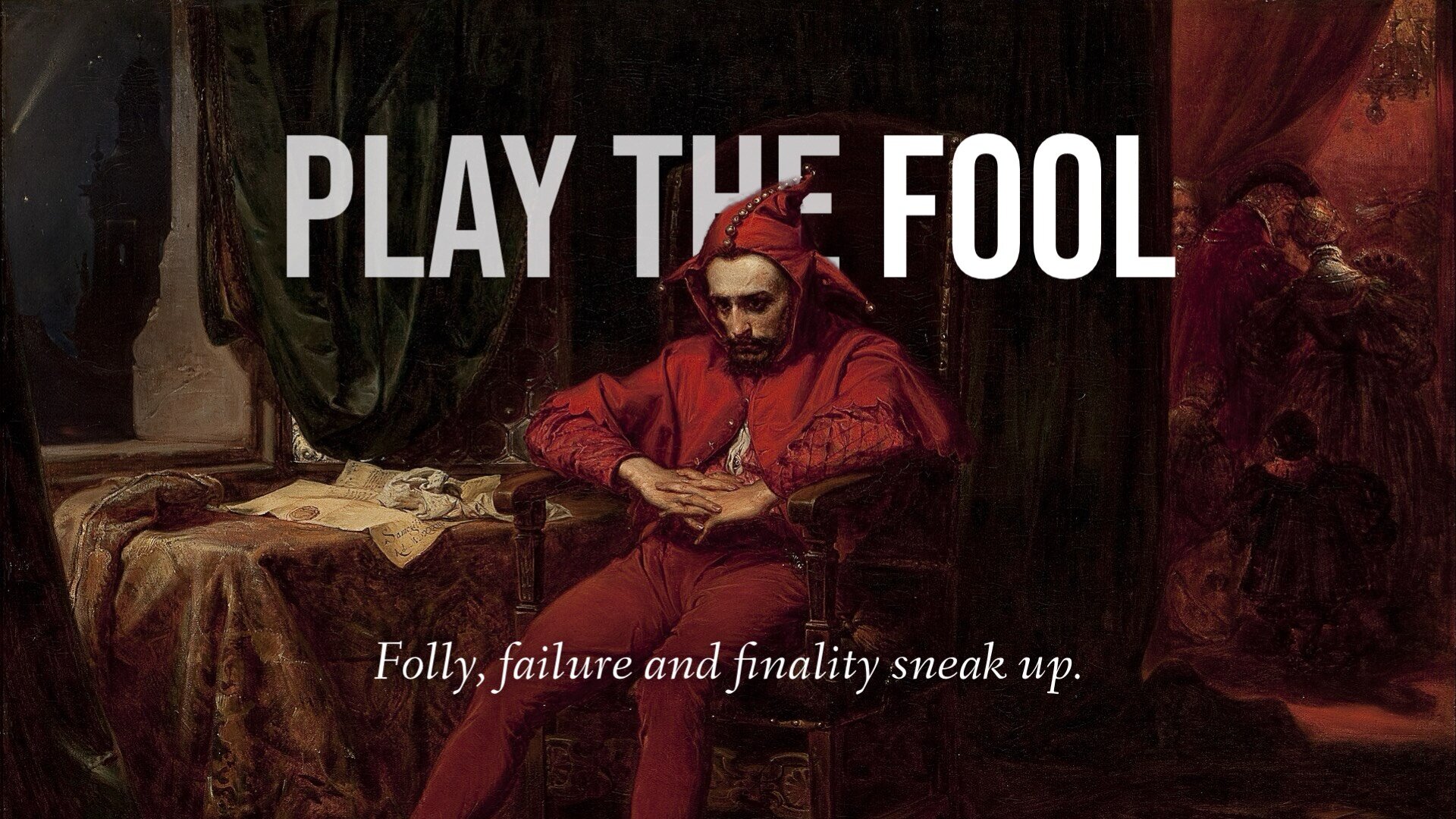
If we’re all fools, what’s it matter if one fool hurts another? Does anything matter? To God, the answer is it does — and not all fools are alike because of Him.
The following study questions are AI generated and may contain errors.
The sermon opens with an abandoned mini-golf course that never reopened as a metaphor for broken promises. When have you waited a long time for a promise—human or divine—that seemed to stall or fail entirely? How has that waiting shaped your hope or cynicism toward God’s promises?
Psalm 14:5–6 says God is with the generation of the righteous and is a refuge for the poor, even when circumstances don’t reflect that. Where do you see people—or yourself—tempted to mock those who still trust God’s promises? How does the psalm challenge that attitude, and have you ever found yourself with a foot in both camps?
The spam-versus-ham illustration suggests that God can take what the world considers worthless and declare it valuable simply because He loves it. In what ways do you still evaluate yourself or others by worldly “filters” rather than by God’s love and choice? What would it look like to see people the way God does?
The pastor argues that the real question isn’t “Are we righteous?” but “Are we loved by God?” How does this shift in perspective change the way you approach your relationship with God—especially when you feel unworthy? How does Psalm 14:7’s vision of restoration and rejoicing speak into that?
The “We Three” scene from Twelfth Night pictures everyone as fools; the difference is who admits it. In what areas of life do you still act like one of the self-important knights rather than the fool who knows he needs grace? What would it look like to live out that recognition—not with shame, but with the joy the psalmist describes—this week?
This transcript has been automatically generated and may contain errors.
If you ever turn off onto Harvester Road, you may have noticed, if nothing else, giant poles with giant nets stretched between them. And if you’re newer to this area, or for our online family, if you haven’t been to this area before and you were driving by, you’d wonder, well, what are those for?
Well, you see, they surround a driving range and mini-golf course that closed probably two decades ago. It’s been a very long time. And this mini-golf course has just sat there for all that time. That driving range just sat there. The giant nets for catching golf balls so they don’t hit the apartments behind them are still there. Parts of the mini-golf course are still there, and for a long time, it was still fully there. There was still a promise it might return, and it should have. It was a beautiful mini-golf course with really neat little winding paths and tapered landscapes. It was really, really well done. It took forever to build—way too long. That’s part of the reason why it closed. It never got off to the right foot.
But then there was always the promise it would return until it didn’t. They started to take part of it down. A few years ago, I may have alluded to this golf course because there was talk they were going to tear it down and build something else there, and so they did. They started to take part of it down, and guess what? Now there’s part of a mini-golf course because even the plan to build something else didn’t work out either. It just is now a partially destroyed mini-golf course. So if you’re hoping for the golf course, it’s gone. If you’re hoping for whatever would be built in its place, it’s not there.
Hi, welcome to Steadfast. I am so glad that you are here tonight because we’re talking about the things that actually do happen rather than the things that get promised and don’t happen. And everyone needs to hear about that, so please hit like and share. Help us get the word out. Truly, if you hit that share button right now, someone’s going to see that you’re watching this video live if you’re on here with us live, or even if you’re watching it on rerun, and it will help someone else who needs to hear what we’re going to be talking about.
Because what I described is one particular mini-golf course in one particular place, but if, say, you’re in New Jersey and not in Missouri, you probably have seen the same thing. If you’re in Guanajuato and not Missouri, you’ve probably seen the same thing. If you’re in Greece and not here in Missouri, you’ve probably seen the same thing. We’ve all seen this, wherever we are, whatever part of the world you might be in, you’ve seen it. It seems like the wise thing to do is simply to be cynical, to not expect promises to come true because too often they don’t. And when we wait, we grow more skeptical.
When that mini-golf course closed and then they said, we’re going to reopen in a year or two, you might have doubted, but there was plenty of reason to still think it would happen. The longer you wait, the more you expect, no, I don’t think it’s going to. And sometimes, with God’s promises, it feels like we’ve been waiting an awfully long time—a lifetime—waiting for Him to make things new and right, to make our lives feel right, to eliminate the yearning and the pain and the confusion that we experience in this life.
It seems like the foolish thing is to actually believe that God protects His people, that God has a plan for His people. Because foolery, real-worldly foolery, says, look at the wiser, more cynical path that believes everything is just meaningless anyway, everything is just driving to destruction. Just try to get fulfilled in yourself and your own happiness and your own desires right now, because what else is there? Maybe even laugh at the people that think there is something.
But as we come to the end of Psalm 14 tonight, what does the psalmist say? David says, no, there is actually something more, even when it doesn’t look like it. And let’s pray tonight that we would see that clearly and have that instilled in us. Would you pray with me, please?
Father, we do pray that you would help us, that you would guide us to see how your truth, your promises are actually going to happen. That when we feel like they’re distant, when we feel hopeless, Lord, would you help us to have hope that comes from you? We pray in Jesus’ precious name. Amen.
Let’s go ahead and look at verses 5 and 6. We’re picking up right where we were last week, Psalm 14, if you want to turn there. David writes, “There they are in great terror, for God is with the generation of the righteous. You would shame the plans of the poor, but the Lord is his refuge.” God is the refuge for the poor, for the oppressed, for the brokenhearted, for those who are hurting. That’s who God is.
It doesn’t feel like it, right? Because they’re poor, they’re oppressed, they’re brokenhearted, they’re hurting. It’s bad. Doesn’t it seem like the people who are happily going along, maybe even making fun of those people, they’re the ones that have the control. They’re the ones that have things right. Because they’re the ones where everything works out.
Psalm says it’s foolish to shame the lowly. To look at where people are now and say, well, look at you. The silly hope that Jesus is going to make things right, well, look where that’s gotten you. It hasn’t gotten you anywhere, has it? You’re just as sad and beaten down as anyone else.
Are they right? It encourages a certain level of bully mentality. Certainly, there’s an appeal here, and that’s what we see with this one who would oppress the downtrodden, the ones who are already suffering, right? Because they’re the ones foolish enough to think God’s going to do something. Why not just mock them a little more? They like being down? Well, let’s put them down even further.
Sometimes you’ve been on the receiving end of that. You’re known for believing in the promises of God’s word, and people make fun of you for it. Maybe you’re the one who’s been doing the making fun of. Sometimes we keep our foot in both camps a little bit, right? We believe in God’s promises, and people make fun of us, but we also kind of make fun of people who take it just a little bit too seriously, who still actually believe that God’s way really does work, and we don’t have to somehow add the worldly way in, what we’ve been talking about the last few weeks.
And, after all, what’s it matter if the poor get mocked, the oppressed, the sad, the downtrodden? Why not? Because we’re all corrupt anyway, right? That’s what we were told in the psalm. There’s an unrighteous, so if one unrighteous person gives another unrighteous person a hard time, what’s the big deal? Doesn’t seem like there should be any. We’re all bad anyway, right? If a bully bullies a bully, is that bad? Doesn’t seem nearly so bad, does it? The problem is that all this is based on where we are in the state of the world.
And David reminds us what really matters is where are we in the state of God’s view. We all have problems, I think I can safely say, with spam, don’t we? Texting spam, voice spam, and, of course, the original, email spam. We got that name, right? And spam is all that awful junk mail that just pours in.
I’m getting a ton of it right now because, you know, we’re getting up to election season, so there’s all that political junk mail that just keeps pouring in. And I’ll try to train my spam filter. Here’s a whole bunch of spam. This is stuff I don’t want. And then I’ll go through the spam box and pull out all the things that I do want and say, this is a bunch of ham. That is good stuff. I want you to keep that. I don’t want you to filter that out.
And I do that dutifully day after day, year after year. And sometimes it sort of feels like I have it under control. But you know what? Then all of a sudden, like right now, I have a ton of political spam in my inbox again. And things like those horrible authentication codes you need to log into places, they’re right back in the spam boxes. Frustrating, right? Why can’t you tell the difference?
I know what I want, right? I’d like to hear from Kickstarter, the crowdfunding site. I like some of the projects they do. I don’t want to hear from all the spammy newsletters that promote the latest snake oil Kickstarter and Kickstarter-like thing. But somehow the ones that are actually from the legitimate site and maybe an actual Kickstarter project that I funded, they go into the spam box. And what goes in my inbox? There’s that political spam. There’s that scammy-seeming Kickstarter-ish thing. All that stuff in there. You get all those fundraising newsletters, but the actual political analysis newsletter I want to get is in the spam box.
It’s frustrating, and I would imagine you’re nodding with me because we know this, right? It happens, and it’s been happening for years. But no, I’ve been describing something here and kind of brushing over it. I’m not talking necessarily about personal communication with people. I’m talking in every case about bulk email, right? If there’s a newsletter you want to receive, that’s still bulk email. It’s just as bulk email you want.
If there’s a project or a company that you want updates from, it’s still bulk email. It’s just bulk email you want. And oftentimes it’s talking about the same things as the bulk email you don’t want. It looks about the same to a spam filter. It says it’s bulk. It’s clearly not written to you. It’s using all these keywords that are things that you’ve said are spam. I’m going to toss this in the spam box.
That’s what we’re doing when we say, well, if there’s an unrighteous, everybody’s bulk email, right? Everybody is just meant to be discarded. And all the more so, right? If you have that email that’s scammy and also has a lot of misspellings, it should be rejected, right? Unless it’s actually from a friend who just doesn’t spell very well. Then you don’t want it to be discarded.
Look at the people of the world and say the lowly, they seem to be a bunch of misspellings. They should just be discarded. God says, I want you to pay attention to what I pay attention to. Because the mighty, they’re bulk messaging too. But they lack the one thing that matters. They lack God’s protection, God’s love. When God chooses, what should be spam becomes ham.
Just like when I choose something, I say it’s a value. This message is a value. It’s not spam, it’s ham. God does that for you and for me. It’s not that we’re fundamentally different, that those others are more bulk or more junk or more spam. We’re just as much so. But for one really important thing, which is that God says he loves us.
We might have all the misspellings even, the one that really looks like it should go in the spam field. But when we turn to Jesus and we have a relationship with him, he changes everything. He says, I don’t care if it looks by every measure that you can think of like you should be in the spam filter. I love you. I want you in the inbox. I value you.
Just like that thing you’ve been waiting to have come into your messages for so long and it finally pops in. That’s how you are to God. He loves you. That’s why ultimately the issue isn’t whether all are righteous or not. The issue is, are we loved by God or not? Some of the spam is going to become ham. That leaves the rest of the spam, the stuff that often looked like it was passing right by, an ultimate terror. Because you know what? When the spam does end up in my inbox, when I’m not spending the time actually filtering it and carefully filing it, what do I do? I just start hitting the delete button. I’m just going to delete it, just destroy it, get rid of it.
And that’s ultimately what the psalm is talking about. Those who look like they’re ahead will not stay ahead. Now’s the time that one can be ahead in the real way that counts. Verse 7: “Oh, that salvation for Israel would come out of Zion. When the Lord restores the fortunes of his people, let Jacob rejoice. Let Israel be glad.”
Oh, that salvation would come. And that restoration there is speaking of God. Just look at that one more time here. Take a look. What does it say? “Oh, that salvation for Israel would come out of Zion.” The deliverer is going to come out of Israel. Now, does that mean Israel is saving itself? No. Who is the one who brings salvation to Israel? The Lord. Who is the one who brings salvation for you and for me? The Lord. Who’s the one that’s going to take you in all your spamminess and give you value and say, this is one whom I treasure and love?
God offers restoration. And that’s the hope. Not, are we mighty right now? Are we lowly right now? Are we happy right now? Are we sad right now? But are we loved by God right now? That’s the thing that makes the difference. All have turned aside, yes, but that doesn’t mean all are rejected. That’s the fundamental thing here. And that’s the tension this psalm wants us to feel because it makes both points very clearly. None are righteous. Well, that means we should despair, right? No. Because we can yearn for salvation and not just yearn. Verse 7 doesn’t end us on a hopeless note. We’ll cry out for salvation and there will be none, but rather that it will come. That it is there. That the deliverer of Israel is still the one who delivers today. That if only of salvation, well, it happens. It really is real.
That, yes, none are righteous, but God is righteous. And he can take one who looks as spammy as can be—and in fact is spammy—is an outright scam. He can take me and say, but I love you. He can take you and whatever it is that you think, well, God’s filter would never want me and love you. The real question, if we really think about it, is do we understand our state? Do we see where we are? All too often, we don’t.
We’ve been in this three-week series called Play the Fool, and I mentioned the first week that there have been different things meant by the word fool over time. And that in a court of a king, oftentimes the fool is actually the wise person. We see that over and over again in Shakespeare’s works.
One of my favorite scenes of a fool is in Twelfth Night, a delightful play. And in Twelfth Night, Bestie the Fool walks into the tavern where Sir Toby and Sir Andrew are talking, trying to be self-important, as they are inclined to do. They think they’re wise. They think they’re great knights. They’re not, even though they have the title Sir. And they’re discussing what the meaning of life is. You’d think they were really, really profound.
And they’re making attempts to use philosophical language in the way philosophers divide up the different things that are important in life. They’re doing all this stuff, talking as if they’re important. And then in comes Bestie. Bestie puts his arms around them and says, Have you ever seen the picture We Three? And if you know the picture he’s referring to, there are many famous versions of it out there. It’s a picture of three fools.
What’s Bestie’s point? These two self-important people who think they’re so important, and so important to the court, so important in their intellectual ability, they’re actually fools. Only the thing is, they only know that Bestie’s the fool. Bestie is there asking them if they’ve ever seen the picture, saying, You do realize that as I’m standing here with you, you’re in the picture with me.
You see, that’s the fundamental difference that’s being described in this song. Everyone is a fool. Everyone’s played the fool. The question is, are we Bestie who realizes it? Are we the two that are babbling on and self-importantly thinking we’re not? Because the fundamental thing we find in this psalm is not that we can become truly unfoolish in ourselves, but that we can go from being one of the two fools who think they aren’t fools to being the one who knows that he is and turning into the one who isn’t.
That’s what we need to do. It’s not about how righteous we are in ourselves, how much we can get rid of the unsolicited, junk mail nature of ourselves and become something of value. It’s how much do we know the one who makes us valuable because he loves us? Do we know that? That’s all there is. That’s all that can be done. We cannot do anything more. Our difference is how we’re seen by God.
Here’s the good news, that when God sees us, we can do exactly what the psalmist says in verse 7, that we don’t just say, okay, God sees me of value, but we can respond with what? With joy.
I mentioned yesterday we’re going to begin a new series, Gone Fishin’, on this coming Sunday, talking about how we carry that joy into the world. We should be carrying this into the world. We’re not meant to just hold on to it.
We’re all fools. The beautiful thing, the wonderful thing, is that when we realize that, when we realize that we’re part of We Three, right there as a fool, we say, I am a fool, that God’s grace and his wisdom is there to meet us.
Would you pray with me, please?
Father, too often we play the fool. We’re praying, but we play the fool. As we play the fool, we think we’re not. We think we’re wise. We think we’re so sophisticated. We think that giving up on the cynicism is actually a good thing, or rather, embracing it, and giving up on hope is a good thing, because that just gets you down further.
Look at the people who don’t believe that there’s hope. What happens for them? They seem to get ahead. But Lord, we know that you are the only way to truly get ahead, that the measure that we can see at the moment isn’t the true measure, that that’s the reason why there’s terror, that you do provide a true shelter, and that shelter is there for those whom you choose, those whom you love, not for those who think they’re really smart in themselves.
Lord, would you help us to see that, and to live by the truth that we’re made righteous through you and you alone, and to turn to you, and to hold on to you, and to hold on to your wisdom, rather than the earthly wisdom we try to embrace. We pray in Jesus’ precious name. Amen.
Hope this has been an encouragement to you today once again. Give us a like or a share, please, and you can always text us if you’re trying to figure out how to move from foolish to wise. Well, you can’t do it on your own. We can walk with you as you turn to the one who does do it for us. You can just text the number on screen—833-356-4032—or the comments below. Either way, we’d love to hear from you, and we can pray with you and just talk it through because we’re all fools. It’s just a matter of realizing we are, and then encountering the one who gives us grace anyway, Jesus.
Tonight, you can say, “Lord, I am a fool. I’m a sinner. I am broken. I might be able to put on the happy face. I might be able to have seeming mightiness in this world, but I know it’s all a farce. Would you help me hold on to you instead?” And He will do that.
We’re going to be thinking about that more in our coming series. We wrapped up playing the fool, but next week we’re going to begin a brand new series, “Established,” looking at the first chapter of 2nd Corinthians and the confident grace, that grace we can really hold on to that we find in our God. So, I hope that you’ll check that out next Monday night, 7 p.m. Invite someone to join us, 7 p.m. Central time.
Also, before that, we do have our brand new series on Sunday night, “Gone Fishing.” I hope that you’ll join me for that as well. It’ll be a blessing to get to share that with you. It starts at 5:30 p.m. Central time this coming Sunday.
Meantime, I hope you have a wonderful and blessed week, and I look forward to seeing you again very soon.
Start the Conversation