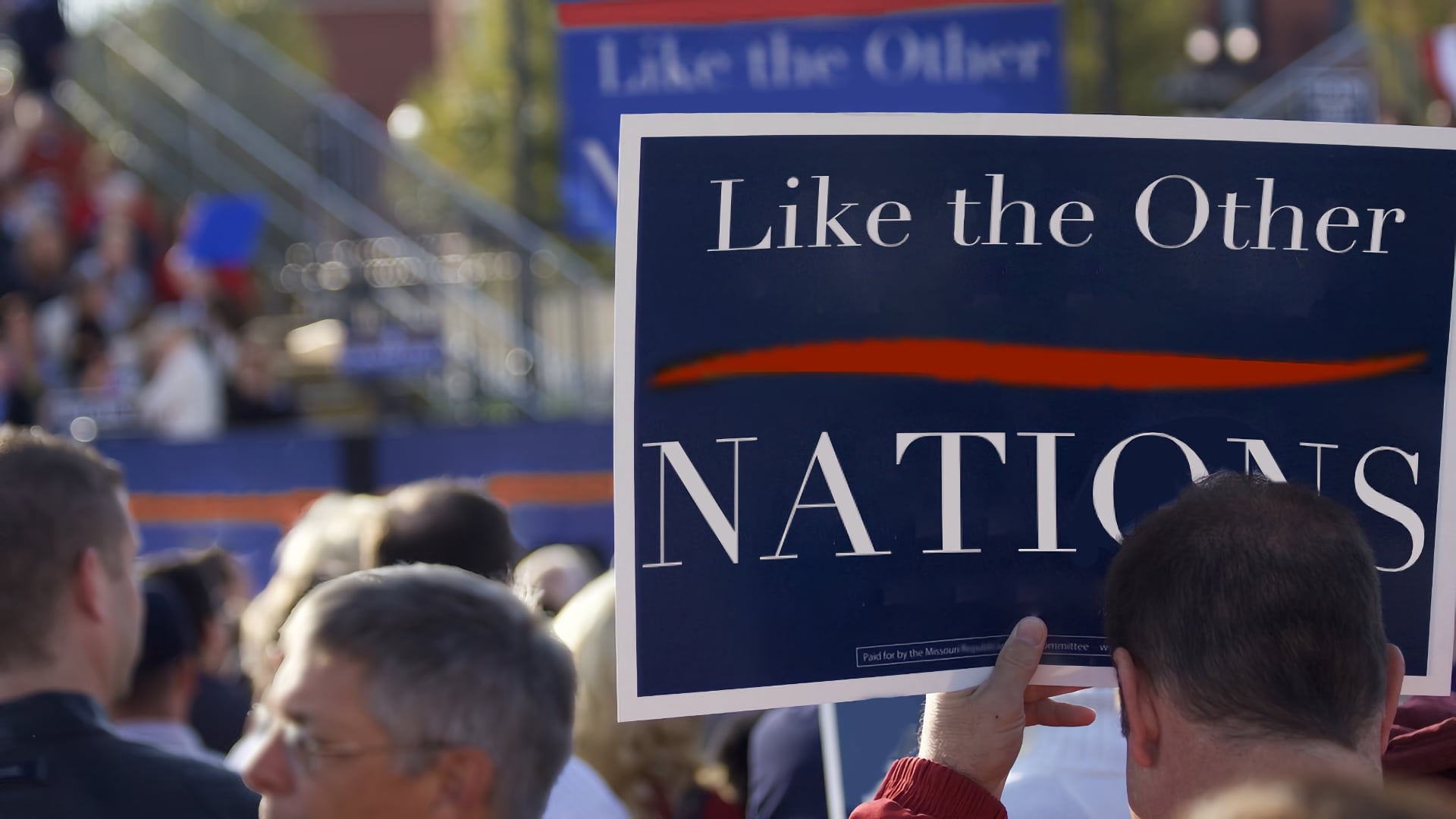
What do we do with the outcome of tomorrow? Scripture happens to tell us precisely what we should do. Please join Pastor Tim for this Election-eve Steadfast.
The following study questions and transcript are AI generated and may contain errors.
David had multiple opportunities to kill Saul, yet chose not to because Saul was “the Lord’s anointed.” How does recognizing God’s sovereignty over leadership—even flawed or opposed leadership—shape the way you respond when outcomes disappoint you?
The sermon asks whether we hope Jesus transforms our opponents or defeats them. How does that distinction change the way you pray for leaders you disagree with, or the way you engage with people who oppose causes you care about?
The sermon emphasizes that respecting leaders doesn’t mean affirming everything they do. Where is the line between standing firm for God’s truth and showing genuine respect to those in authority, especially when their policies conflict with your values?
Daniel and David both refused to compromise their convictions, yet did so respectfully. Can you think of a time when you—or someone you know—stood against authority in a way that either honored God or damaged your witness to Him? What made the difference?
What practical steps can you take in the days after an election to avoid fear, anger, or gloating and instead display confidence in God’s sovereignty to those around you?
The sermon suggests that outsiders notice when Christians treat opponents differently than the world does. What would it look like in your workplace, neighborhood, or social circles to show love to someone who politically or personally opposes you in a way that points them toward God rather than your own agenda?
The following study questions and transcript are AI generated and may contain errors.
Well, good evening and welcome to Steadfast. I’m so glad to be here with you again tonight. We find ourselves on the evening before the election here in the United States, and over the last month in this series, we’ve been contemplating what it looks like to desire a leader after God’s own heart rather than one like the other nations. As we come back to this series one last time and contemplate the story of David and Saul one more time before tomorrow, let’s go ahead and come before our God in prayer and ask that He would guide us as we seek to be His light in the world.
Let’s pray. Father, thank you for your goodness and your love. Thank you for being with us. Lord, would you help us to constantly be reminded of that, and would you help us to show your love to this world, including in the context of political uncertainty? Many of us are fearful. Many of us wonder what will be next. Lord, we know that you are in control, and would you remind us of that? And because we are reminded of that, would you give us the strength through your Spirit to do your work and to rest in you? We pray in Jesus’ name, Amen.
What do we do in life when we don’t like an outcome? Some of you watching this tonight will not like the outcome on Wednesday or Thursday or whenever we find out the result of the election. Maybe I won’t. What do we do on January 20th when one of the two candidates that has been on our screen so much over the last few months is now installed either for a first or second term in the White House? What do we do the year after, and the year after that?
Well, in many parts of our life, we know what we do when we don’t like something or someone. We try to distance ourselves. We turn our backs. There’s a wonderful little YouTube you should go watch if you’re feeling stressed about Bailey. I had never heard of Bailey until yesterday, but Bailey is this dog that has his own YouTube channel. I think he has a quarter of a million followers. In this picture, you see Bailey’s first encounter with the kitten Simon, and as you can see, Bailey doesn’t really like this situation very much. I don’t know if Bailey just sees that little kitten and knows that kitten has claws and is afraid he’s going to be attacked, or he doesn’t like this new animal in the house, but he does what we would often like to do: he turns his back on Simon.
That’s what we’d like to do, and yet we say in a situation like a presidential election if we don’t like the leader, we can turn our back all we want, and the president is still the president. So what do we do? What do we do when we oppose leaders in the White House, in Congress, at our state and local level, or anywhere else that there is someone who is leading? Well, what we find in Scripture is that even though they may oppose us, and at times we may feel very actively like certain politicians oppose us—not us personally, but the things that we hold dear, or at least we have a reaction to them personally and feel like they oppose us—maybe in certain cases, especially on a local level, we directly feel their opposition personally. But what do we do?
We find in Scriptures that even when they oppose us, we still give them respect. God calls us to respect all people, especially those that He allows to be in positions of leadership. We see people—even people we disagree with—and they’re made in the image of God, and God has allowed them to be in the place they are for some reason. It’s not always clear. Sometimes we want to say, God, why are you allowing this person to be in this position? I think that’s how David felt in the text that we’re looking at tonight.
Just to pick up where we were last week, David had just been anointed king, but there’s a problem: there’s already a king in Israel, Saul. Now, Saul had been given a judgment that he was going to lose his kingdom, and yet at this point, he is still very much the king. And David ends up encountering Saul in a number of different situations, ends up in Saul’s household, in fact married to one of Saul’s daughters. David tries his best to respect Saul even though he knows in the back of his mind that the Lord has anointed him king. He knows that Saul is presently the Lord’s anointed.
But Saul has none of that. Even though David is respectful of him, Saul sees David as a threat. Saul sees David as someone who, very much I think in Saul’s heart of hearts, he knows should be king. And so Saul does the thing that many ancient kings thought was the absolute most logical thing to do in such a situation: Saul launches a campaign to kill David, and David flees. David has to leave the house, sneak out, and go out into the wilderness to try to run from Saul. Saul at times sends his troops out trying to find David.
That’s where we return to the story tonight in 1 Samuel chapter 24. We read these words: “When Saul returned from following the Philistines, he was told, Behold, David is in the wilderness of Engedi. Then Saul took three thousand chosen men out of all Israel and went to seek David and his men in front of the wild goats’ rocks.” So David has fled. David spends some time outside of the borders of Israel. Sometimes he’s in the wilderness within Israel. But David has fled out of Saul’s presence because he has very clear indications that Saul wants to kill him, including Saul throwing spears and various other acts that generally give you the sense that someone wants to kill you.
Now, David knows that the Lord’s anointed him, but Saul’s still king. So I think David is confronted with that question that we may feel later this week. If the person that you voted for either already or you will vote for tomorrow isn’t elected, and you think on Wednesday or Thursday or hopefully not any later than that, how did God allow this person to win the election? We might feel sort of like David felt in that moment. It looks like doom for David here. David has 3,000 men looking for him with one purpose: to make sure that David is no longer a threat to Saul. And the way that would happen would be to kill David.
Then we see something really interesting. David gets what, if we weren’t in Scripture and we were just thinking in terms of life, we might often call luck. David happens to be hiding from Saul’s men in a cave. God allows Saul to fall into David’s hands. Let’s look at the next few verses. It says, “…and he,” that is Saul, “…came to the sheepfolds, by the way, where there was a cave. And Saul went in to relieve himself. Now David and his men were sitting in the innermost parts of the cave. And the men of David said to him, Here is the day of which the Lord said to you, Behold, I will give your enemy into your hands, and you shall do to him as it shall seem good to you.”
Then David arose and stealthily cut off a corner of Saul’s robe. And afterward David’s heart struck him, because he had cut off a corner of Saul’s robe. And he said to his men, The Lord forbid that I should do this thing to my Lord, the Lord’s anointed, to put out my hand against him, seeing he is the Lord’s anointed. So David persuaded his men with these words and did not permit them to attack Saul. And Saul arose up and left the cave and went on his way.”
So here we have this picture: David and his men are hiding in this cave, and Saul sees the cave as a nice rest stop along the highway. He’s been traveling, he’s looking for Saul, and he needs to go, as it says, relieve himself. He needs some time in a restroom, and he goes in there.
Think about that for a moment. Saul is incredibly vulnerable here. David knows that Saul is there. Saul has no idea. And Saul is indisposed. David has the perfect opportunity. His men say, Look, David, here. Just look at this. You know how you said that the Lord had anointed you and that you were meant to be the king of Israel? Well, wonder no more how that’s going to happen. Wonder no more why God has allowed Saul to be in power. Because here is your opportunity. You can take Saul out. It’ll be easy, no risk to yourself, and then you will be the obvious king. Everyone already respects you. They know of your great defeat of Goliath.
These are the things running through David’s head, and his men are encouraging him in this. What do we see from David? We see that he doesn’t cower. He doesn’t tremble at the moment: “Oh, Saul’s here. Maybe he’ll get me,” even though he doesn’t know I’m here. He doesn’t compromise either. You notice that as David approaches him, everyone would have been expecting David to actually kill Saul. But David simply cuts off a piece of his robe. He’s close enough to kill Saul; in fact, killing Saul probably would have been easier than trying to cut off part of his robe without alerting Saul to his presence.
And even in that, David feels guilty. Here are the royal robes of the king, and he has cut them off of Saul. Why? Because he recognized that for the moment, God had allowed Saul to be on the throne.
The ancient world and more recent times, even if we look at places today where they may not have kings but they have dictators, it’s not uncommon for one dictator to obtain power by killing the previous one. It certainly hasn’t been unusual over the span of history for a king to obtain power by killing the previous one. Sometimes the king that kills the previous king is a far better king. We know David is going to be a far better king than Saul. His men can see the plot of action here. This is what you do when you want to be king and there is a man in your way: you kill him.
But David won’t compromise. Even as he sees Saul there, he takes the opportunity to demonstrate that he’s not going to play that game. That David isn’t going to be a part of the worldly ways of leadership but seeks, to the best of his ability, to follow the Lord.
Notice what happens when David later reveals what he has done. We see David speaking to Saul: he comes out, approaches Saul, bows down, and says this:
“May the Lord judge between me and you. May the Lord avenge me against you. But my hand shall not be against you. As the proverb of the ancients says, out of the wicked comes wickedness. But my hand shall not be against you. After whom has the king of Israel come out? After whom do you pursue? After a dead dog? After a flea?”
David says, look Saul, and he says it very respectfully, more respectfully than that, he says, “My father, I had the opportunity to kill you. That’s never been my purpose. My purpose has simply been to stand for God’s cause. It’s you who is pursuing me.”
In the moment Saul’s caught up and he realizes this, but it goes right out of his mind, and we see just a few chapters later a very similar event play out again. And David again resists the urge to kill Saul and again demonstrates his commitment to integrity, to following God’s will.
I think in that David gives us a model of how we approach those whom we feel are in opposition to us, especially leaders. And in that, it’s recognizing that the respect that God calls us to is not coming from affirming everything that leader stands for, everything that leader does, but the confidence that God is in charge; that we don’t have to compromise our own values and our own integrity to stand up for what God has called us to.
David had the opportunity to bring forth a different kind of kingdom, but not the kind of kingdom God was calling him to do right there. David didn’t want to kill Saul. David wanted to be faithful to the Lord, and he had confidence that the Lord was going to fulfill His promises—that David would in fact be king. And I bet David played out all kinds of scenarios in his head trying to think, “Well, how does that work? How does it happen?” But one thing that David knew was that it wasn’t his job to force it to happen; it was his job to stand firm for the truth.
And so he wasn’t going to just buckle under the fear of Saul and compromise who he was and say flee the land. And as he refers to at one point, people were telling him just go worship other gods, leave Israel, leave everything about Israel behind. He wasn’t going to do that.
And he wasn’t going to let Saul off the hook and say, “Yes Saul, you’re right to be pursuing me; you’re right to be trying to kill me.” No, he was going to stand up for himself. But he also wasn’t going to try to force the issue of his coming to power by killing Saul.
In fact, as we go on through 1 Samuel, we get to the end of 1 Samuel and Saul finds himself mortally wounded. We have him fall on his own sword. But someone who hasn’t come to understand David races off and arrives at David’s camp at the very beginning of 2 Samuel and says that he has killed Saul, thinking that David is going to be excited. Someone has finally stood up and killed Saul for David.
David has nothing of that. He is furious at this man because this man has tried to force what God was doing in his own power. He took the life of the one that God had installed as king. And David recognized, even though he was called to be king, and even though this king wanted to kill him, that it wasn’t David’s job and it wasn’t David’s loyalist job to kill Saul. He wishes Saul well. He wants to see a different Saul. He wants to see a Saul where he can sit in Saul’s presence and serve him well, serve him faithfully, rather than the Saul that throws spears at him.
We see the same thing in Daniel. We looked at Daniel last week and if we turn, for example, to Daniel 4:19—Daniel is presented with one of Nebuchadnezzar’s dreams. And as he is, he hears that Nebuchadnezzar is going to suffer mightily. And instead of rejoicing in this and thinking, “Well, maybe this is the point where God’s going to overthrow this evil empire and my people will be able to go back to their land,” Daniel has a different reaction.
Take a look. It says, “Then Daniel, whose name was Belshazzar, was dismayed for a while, and his thoughts alarmed him. The king answered and said, Belshazzar, let not the dream or the interpretation alarm you. Belshazzar answered him and said, My lord, may the dream be for those who hate you and its interpretation for your enemies.”
Daniel knows what God has foretold, what he’s prophesied through that dream, will happen to Nebuchadnezzar. And Daniel doesn’t rejoice. In fact, he wishes that only the enemies of the king would face what Nebuchadnezzar is going to face. He doesn’t desire to see Nebuchadnezzar be killed or humiliated. He desires to see Nebuchadnezzar understand who God is. That changes everything.
I found myself, as I was thinking about these passages and thinking about the political situation we are in, thinking about how so much often feels like a game. If you’re playing, for example, a card game, and maybe it’s one of the different variants of a card game where you have different piles of cards, and you have the opportunity to lay down your cards on those piles. One of the games that my family likes to play is Kings on the Corner. If you have those different piles, you might have a card that would play really well on one of those piles, and yet it’s not your turn and so you’re waiting, hoping that no one else has that opportunity to play on that particular card. You might even have a pretty strong suspicion that someone else has the same sort of card that you do and you hope that they miss the opportunity.
Now, in a game that makes sense, we’re trying to win. That’s the whole purpose, right? At least have fun trying to win. But we see that there’s a difference between opposing cheating, which is clearly just utterly wrong, and wishing the opponent to miss an opportunity to do well. And if you’re playing a really friendly game of cards, maybe even say, “Take a look over there, look at that card,” or maybe not. But what about in life?
In a game, it’s okay. Part of the strategy is trying not to let everyone know about all the opportunities, and that’s how you win. But what happens when we play life like that? When we live life like that? I think we do. I think in some sense that’s what Saul’s doing here. He’s not concerned with seeing the Lord and His truth proclaimed. He’s concerned with holding on to his kingdom. And David could have done the exact same thing.
But that brings us to a question, and it’s this: Do I hope Jesus transforms my opponents or defeats them? If we know that God has defeated His enemies, if we know that God is victorious for all eternity, our hope should not be that we see God defeat our enemies but that God transforms our enemies.
That we see in those places where they oppose us that we’re doing what’s pleasing to God, or in those places where they oppose others and the others are doing what’s pleasing to God, we should be hoping for those opponents to be transformed by the Holy Spirit, not simply defeated.
And so we’re called to help people see the place, so to speak. When we see someone missing an opportunity to play the cards of life in the places that are pleasing to God, we don’t hope they stumble and that maybe that does them in. We try to help them to see the opportunities to be transformed.
And part of the way we do that for our leaders whom we’re not interacting with personally all the time is that we pray for them. Scripture is clear: whether we like the president or those in Congress, or those who govern our state or our city, what do we do? We pray for them.
Let’s look at what Paul writes in 1 Timothy chapter 2. He says, “First of all then, I urge that supplications, prayers, intercessions, and thanksgivings be made for all people, for kings and all who are in high positions, that we may lead a peaceful and quiet life, godly and dignified in every way.”
Paul is encouraging the people to pray for the Emperor and for the governors, even as the Roman Empire increasingly persecuted Christians. Paul is going to ultimately die at the hands of the Roman Empire. Many of the other early followers of Jesus, including most of the disciples, will die at the hands of the Roman Empire.
What does Paul say? We should pray for those who lead, those whom God has allowed to be in those positions, even when they persecute you. And in that, we go back to what Jesus said on the Sermon on the Mount, Matthew chapter 5, verses 43 and 44: “You have heard that it was said, You shall love your neighbor and hate your enemy. But I say to you, love your enemies and pray for those who persecute you.”
Why would we do that? That’s so counterintuitive. Why would we pray for those who oppose us, those who hurt us? Why would we seek to, in some sense, be trying to nudge them to those plays they’re missing on the board of life? We should want them to miss them. Maybe they fall and are humiliated, right? No, that’s not what Scripture says.
Listen again to 1 Peter chapter 2. Peter writes, “Be subject for the Lord’s sake to every human institution, whether it be to the Emperor as supreme or to the governors as sent by him, to punish those who do evil and to praise those who do good. For this is the will of God, that by doing good you should put to silence the ignorance of foolish people.”
Why do we pray for those who persecute us? Why do we seek to follow our leaders and to show them respect and honor, even when they don’t necessarily seem to deserve it? We do it for God’s glory—that those outside the church would see us and not see those who fall into those same patterns as the world: patterns where we insult and attack and dishonor those we dislike, and we praise and rejoice and pray for those whom we like.
But rather, the sort of actions that only come from those who are living confident that their king has already won, confident that God is already in control.
Now, you may be saying, but what if those leaders call me to do what is sinful? And clearly, Scripture never calls for us to obey human leaders in opposition to God, to do the things they want us to do that are displeasing to God. And we see that with David. David doesn’t just cower over to Saul and do whatever Saul wants.
Daniel, likewise, is told multiple times to do things that would bring dishonor to God that would lead him, for example, to worship idols. And Daniel says, no, I answer to God first. We see that again in the New Testament as leaders order the people to turn away from preaching the gospel, to be quiet. They won’t do it.
So there are times in which our principles cause us to stand against the leaders. However, even in those times, they did it respectfully. And that’s the key thing here. Peter and Paul aren’t unaware of the persecution happening. They know that the leaders would like nothing more than to see every Christian turn from Jesus.
When Jesus called us to love our enemies and to pray for those who persecute us, it wasn’t because he thought that we weren’t going to have any enemies. It was precisely because he knew that everyone who follows Him will have enemies. But we show His love when we don’t act the way our hearts want to. And that’s what we’re called to do this year and every year, after every election, in every situation.
Let’s live with respect to those whom we find are in opposition to us—not, again, compromising our morals to do it, but even as we stand up for God’s truth, doing so in such a way that those looking at the church can’t look at it and say, “Look at them, they’re just a bunch of sinful hypocrites,” but they’ll say, “Why? Why would they do that? Why would they care about those who don’t care about them, who even hate them?”
And what happens when we do that? What happens when we keep trying? Well, sometimes things like this. You see, Bailey and Simon became friends, and you see them in other videos sleeping curled up on the couch together, playing together. Bailey overcame that sense that Simon was in opposition to him.
And so often, when we do these things, even if the leaders themselves never know that of our hearts, never know that we’re praying for them, what happens to the individuals around us, the people at work, in our neighborhoods, and in all the places we go, see our heart. And transformation happens. It makes a statement. It says that we answer to something higher.
Just like David saying that he wouldn’t kill Saul because the Lord had installed him as king showed to everybody that he wasn’t going to be just like every other ancient king. He really was seeking after God’s heart. And that should be our prayer.
That’s our challenge, I really believe, going into this week. How, as things go well in maybe some areas of the election in our minds and not as well in others, how do we make sure that in our political engagement and that continuing engagement in our civil society in the weeks and months to come, how do we do that in such a way that we would see those around us who think that we’re prickly little angry kittens find out that we can actually be their friend? That we actually show God’s love. How do we glorify God in our actions?
Well, it starts by praying for those who oppose us, and then allowing God’s Spirit to use that heart of prayer to show His love. Would you join me in prayer? Lord, would you transform our hearts and help us to show your love this very week? As we may have friends who are disappointed, or maybe were disappointed, help us not to lash out if we’re disappointed. Help us not to gloat if others are disappointed, but help us to show your love.
Help us to be respectful to those that you allow to pass through this election with victory. Help us to stand firm for your truth, that we wouldn’t use that as an excuse to compromise our morals, but that you would help us—that even as we stand firm in your truth, we would do so in such a way that we can convey your love and our confidence in your victory.
Lord, would you be with our nation? Would you be with everyone running for public office? Will you be with our world? We pray in Jesus’ name, Amen.
Well, we’ve been thinking about how we follow leaders and what kind of leaders are good. Next week we’re going to be thinking about what’s the purpose of the church. We talked about that a bit tonight—that we’re supposed to glorify God and help other people to see who God is. We’re going to spend the next few weeks thinking about the Great Commission that Jesus sends out His disciples to fulfill as He departs this earth, and that He continues to call us to.
Think about that in the sense of: what do I need to go and do? How do I follow Jesus faithfully? How am I used as an instrument of His in this world that is still, and perhaps more so every day, in desperate need of hope? How do we show that hope to this world?
I hope you’ll join me next week at 7 p.m. on Monday night for Steadfast as we begin that brand new series, Go! Also, if there’s any way I could be praying for you this week, I’d love to have you shoot me an email, and I’d love to join you in prayer. Or you can leave in the comments; we can pray for each other together.
If there’s anyone that needs the encouragement of this message tonight and this call of how we interact with leaders, please share this. Please help us get the word out. I thank you again for joining me tonight. I hope you have a wonderful and blessed week.