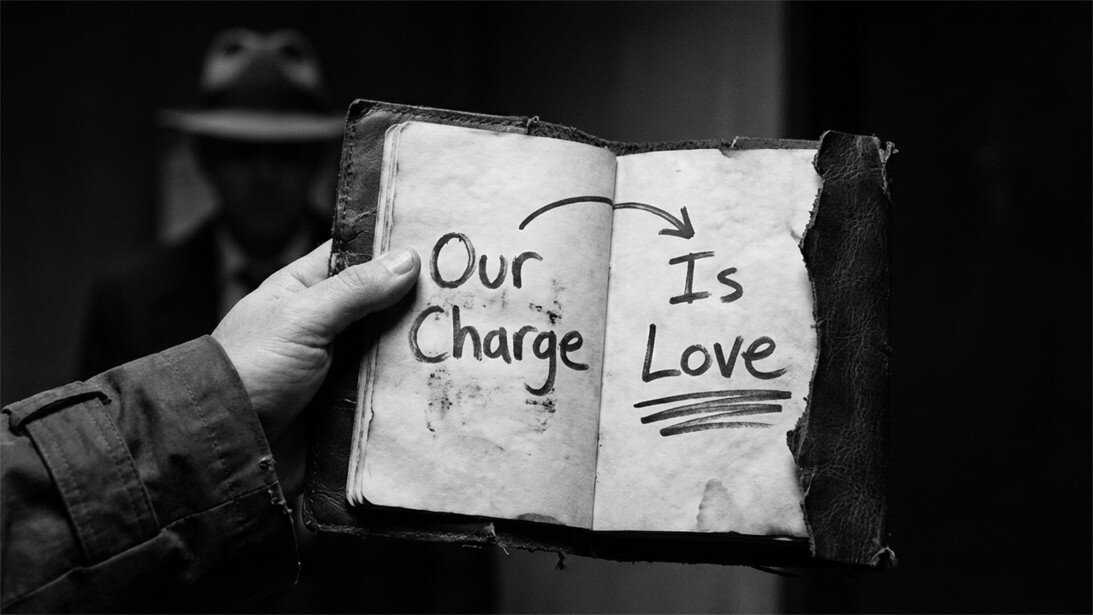
We begin a new series in the Psalms tonight, looking at David’s lament in Psalm 12. What happens when we feel like evil has triumphed and whatever good we do is fruitless?
The following study questions are AI generated and may contain errors.
The sermon uses the image of planting flower bulbs in fall and waiting through winter as a metaphor for God’s promises. When have you felt like you were staring at “empty ground” while waiting for God to act? How did that season shape your faith?
David cries out that “the godly have disappeared” and “the faithful have vanished,” yet he still turns to God rather than giving up. What is the difference between acknowledging that things look hopeless and concluding that God has actually abandoned us? How do we maintain that distinction in dark seasons?
The sermon emphasizes that the disciples did not know Easter was coming when they were in the darkness of Good Friday. How does their genuine uncertainty change the way you think about your own struggles when you cannot see how God will resolve them?
The preacher describes how the wicked seem to have momentum and “reason to brag” while God’s people appear to be losing ground. When have you felt tempted to compromise your convictions because the world’s way seemed to work while faithfulness seemed to backfire? What would help you trust God’s promises in those moments?
In the parachute story, the pilot was actually safe even though landing felt like falling into emptiness. How does God’s promise of safety differ from human reassurance? What does it mean to be genuinely safe in God even when circumstances do not feel safe?
This transcript has been automatically generated and may contain errors.
Don’t you just love spring flowers? Here we are coming up to Easter, we’re in Holy Week, and spring flowers are blooming outside. You go into the store and they have flowers for sale. Spring flowers are just beautiful. But if you pause for a moment, it’s really kind of a strange process if you think about it, to plant flower bulbs. Because what do we do? We take these things that don’t look like much of anything. They’re certainly not pretty. And we plant them in the ground months before they’re going to bloom. And we hope they’ll do something. Will they? Hopefully. But you can’t tell. And if you get wild and you plant them kind of willy-nilly and you don’t really remember where, you might not even be sure if you’re looking in the right spot. Is there anything that’s going to come up here?
Hi, welcome to Steadfast on this Holy Monday. I’m glad to be here with you as we begin a brand new series, The One Who Does. If you think about Holy Week, it’s all about One Who Does for us. He does what he says he’s going to do, and he does it in ways that we could never do. But sometimes as we look at God’s promises, it’s sort of like looking at the ground before the spring flowers sprout up. Maybe there’s a spot in your yard where you planted some bulbs last fall, and you see some of the other bulbs coming up and you think, but are my bulbs going to come up? And I can’t tell you the answer. Will they? I really don’t know. You don’t know. Because maybe they weren’t planted quite properly. Maybe the bulbs weren’t healthy when you planted them. Maybe they’d sat around for years without being planted and then they were dead. We don’t know. Or maybe the conditions are just slightly different in your yard. A little more shade, a little more exposure, and they’re just growing a little bit more slowly. We don’t know.
When we think about our lives, well, we kind of feel like, am I on the part of the ground where God planted bulbs? Is he going to sprout here? Or has the time come and gone? Was the time ever at all? Those are the sorts of things we struggle with. Because we go by what we see, right? We see the spring flowers, they’re sprouting up, and we say, oh, beautiful spring flowers. But we don’t know what to do with the patch of ground where as the snow melts away, it’s just mud still. Is something going to sprout, or isn’t it? We don’t know.
Holy Week is a we-don’t-know kind of mystery, because in it we see the amazing action that God does. But all the preparation before, there was a lot of time where people wondered. And afterwards, the apostles were also going to be challenged as they awaited the next thing that God’s going to do. What do we do in those we-don’t-know moments? We turn to Psalm 12 tonight, and as we do, God’s going to speak to us in those times where we feel like we’re not sure if we’re staring at just empty, dead ground, or we’re staring right into the spot where the bulbs are going to spring up. With Him, they are. Let’s pray that we can see that tonight. Will you pray with me, please?
Father, thank you for this evening. Thank you for your word. Would you help us to be those who trust in you, who believe your promises and are assured of them, because we see over and over again, what do you do, Lord? Would you spring up the beauty of spring in the places where our lives feel dead and wintry? Would you help us to see that tonight, to know that tonight, and then to share that hope with others, we pray, in Jesus’ precious name, amen.
What can we see? Well, we’re talking about flowers. We can see some of the flowers up, and we might say, oh, well, that’s what a tulip looks like, or that’s what a daffodil looks like. What can we see about God’s promises, so as we anticipate, we know what He’s going to do as well? Verse 1: Deliver, Lord, for the godly have disappeared, people of integrity have vanished.
People lie to one another, they flatter and deceive. That’s the state that we’re in, right? It’s muddy, cold, dead dirt, oftentimes, it feels like, that we’re in. The godly often feel like they’re missing. We look in this world, and we think, if God’s sprouting up a garden of beautiful, amazing flowers of His people, it sure doesn’t look like it. It looks like the flowers are dying, if anything.
David, as he reflects on this, what does he say here? He uses two different ways to put this. At first, he says, save, O Lord, for the godly one is gone, so singular, and then he says, for the faithful have vanished from among the children of man. What does he have in mind there? Well, with that godly one, what he’s talking about is the representation of the godly.
We use that kind of phrasing all the time in our language, where we say, well, the good one’s gone, speaking of, say, the fruit and the produce section, we don’t mean that there was only one good one. We just mean that there isn’t anything left. David has that in mind, although, as we see over Holy Week, and as we’ll get to further next week, there’s also a good one, right? We just want to set that over to the side for the moment, because the big point here is, in his dark moment that David is experiencing here that he’s describing in the psalm, he looks out and he says, where are God’s people? It seems like they’re not here.
He uses that concrete good one and the broader phrase that he also uses here to get the sense of which there’s just, there isn’t anyone. There’s not one. There’s not a bunch. There’s just none. They’re gone. David’s not the only one to feel this way. First Kings 19:14, Elijah’s just seen a miracle done by God, but he’s out hiding. God asks him what he’s doing. He says, I have been absolutely loyal to the Lord, the sovereign God, even though the Israelites have abandoned the agreement they made with you, torn down your altars, and killed your prophets with the sword. I alone am left, and now they want to take my life.
If you ever felt alone in trying to follow the Lord, know you’re in good company. King David felt alone. It’s kind of hard, maybe, for us to imagine. He had a whole royal entourage, right, and he could order them to be faithful to the Lord. Of course, that doesn’t really work, right, but he could get the appearance at least. Elijah, just seeing God bring fire down from heaven on Elijah’s call, how does he feel? He feels alone.
And so if you feel alone, it’s not weird. It’s part of how we process this, as creatures who can only see the dead ground, even when we see God working, and then we move down a little bit, and we say, well, but is this ground dead? Maybe I was in a living part of life for a bit, but now I’m in this dead ground. We feel alone. We see God work, and the next day something goes wrong, and it just feels empty again. That’s how David feels here. The godly one is gone, for the faithful have vanished from among the children of man.
What’s in the place of that? What’s David seeing instead? Well, he sees unfaithful people. And all the beautiful storefronts of God’s splendor and promises, they’re closed down, and there’s someone hawking counterfeit goods in place. David says it feels so empty. I think this is a good place to dwell on Holy Week, because it speaks to, I’m pretty certain, how the disciples felt for at least part of that week, right?
I mean, talk about the rollercoaster of emotions here. Palm Sunday. We talked about that yesterday on Palm Sunday. It was so beautiful, right? So majestic. And then you have the downward movement, just the natural settling back from an emotional high of just the time in Jerusalem, and it’s not exactly going amazingly, right? Jesus doesn’t immediately become king. Things seem a little bit more normal afterwards again, and people are still arguing with Jesus and so on. And then you get to the end of the week.
How as human beings do you process that this Savior that you’ve been following was being hailed at the beginning of the week and is dead at the end of the week? How do you even begin to process that? Boy, does it feel empty. Boy, does it feel like the godly are just gone. From Palm Sunday glory to Good Friday darkness.
We can talk about, well, there’s Easter afterwards, right? Even when we talk about, please come to our Maundy Thursday service where we’re going to reflect on the Passion Week, and then please come back on Easter for the hope. The disciples, they weren’t hearing anyone saying, please come back on Easter for the hope, because the one who told them that sort of thing, well, he was in the tomb. And yes, he told them ahead of time, but in that dark moment, all they were was alone. The directory seems hopeless. For them, and often for us, right?
Maybe you left Palm Sunday service last night feeling great, and then the day was crashing down to the reality of everything that goes wrong. How do we process that? Do we just conclude that things are just going in the wrong direction? I want to show you a picture and see if you can recognize the store I’m taking you to. Take a look here. It looks sort of like a generic store, right? But can you guess what store this is? Because more than likely, even though this particular location is in Miami, you’ve been to this store before at some point.
Well, let me go ahead, put it in the comments, look around a little, and I’ll show you. You can see there’s different departments. There’s health and beauty. There’s greeting cards, household supplies. There’s all kinds of different things in there in this relatively generic looking store. So what do you think it is? Well, it’s the last Kmart in the continental United States.
It doesn’t look much like a Kmart, does it? Unless you’re a really astute observer of corporate architecture, in which case you notice that the style of the building, the brick or the stone is actually exactly what Kmart always used, and you look a little bit more closely and you realize, wait, that looks like a Kmart garden center. If you guessed that, you were exactly right. The last Kmart in America is actually exiled to the garden center of what used to be that Kmart location. The front of the store has been torn down and something else is in it now.
I thought about that as I saw that picture the other day, and I thought, you look at a store like this, and how does Kmart ever come back, right? It’s not gone yet, technically. It’s still there. There’s still a store there. But do I think that there’s a day that, down from Little Hills, you can drive over to the Kmart again? I’m pretty skeptical. It’s more than likely just too late. The momentum is going in the wrong direction. If you were, if you’d built your life on Kmart, you’d say, all the Kmart loyalists are gone. There’s not one good Kmart left. It’s gone, right? And it feels like, as you see that, there’s no way it’s coming back. And you’re probably right.
It often feels that way with God’s people, too, doesn’t it? Let’s go on to the next part of our passage. Verse 3. David cries out, May the Lord cut off the flattering lips and the tongue that boasts. They say we speak persuasively. We know how to flatter and boast. Who is our master? The ungodly, well, they know how to connive, right? They’re growing. They’ve opened up new stores. They’re all over the place.
Even as David cries out to God for help, he can say, well, here’s what they’re saying. And they’re saying, we have it all under control. Old stores have been torn down, the stores of righteousness. In their place, there are stores of wickedness, but those stores actually are building up, and there’s a bunch of them. And the momentum is opposite of the seemingly downward momentum that David is feeling here. The downward momentum that the disciples were feeling as they took Jesus’ body to the tomb. And then they gathered together. The downward momentum we often feel.
We wonder, where’s God in this? And when we feel that, oftentimes it does look like the wicked, they aren’t just bragging. They have reason to brag. The language used here in Psalm 12 for how they’re speaking is the same language used in Daniel 9-7, speaking of God’s strong covenant, and how when he speaks, there’s a covenant promise.
They’re saying, our lives are so strong, they just are there and unstoppable. They think they’ve created an appearance of strength, but they also seem to have that strength behind them. And if we look at them, we say, yeah, it kind of seems like they do. They brag about it. They look to their own tongues and say, we can bring about our will, because we can convince people and they’ll follow us and they’ll do what we say. And there’s nothing you can do about it, David.
The disciples look over. Maybe they walked around the town to try to clear their heads, trying to figure out what had happened that day. We saw the Pharisees chatting off to the side, laughing about it. The Sadducees, maybe some of the Roman soldiers. They could brag about it. Pharisees thought that they had it all under control. Why? Because they could eliminate Jesus. They could say the right things, and down goes this supposed Messiah.
What do we see in John 11:50? The chief priest says, you do not realize that it is more to your advantage to have one man die for the people than the whole nation to perish. He says, here’s how we have strength in our nation. Here’s how we preserve it. We just get rid of this pesky Jesus fellow. He’s inconvenient. He doesn’t say the things we want him to say. He doesn’t do the things we want him to do. He challenges our position, our comfort, and so off he goes.
David here in Psalm 12, what does he do? He cries out, Lord take away their tongues. I don’t want to hear them bragging about things that are displeasing to you anymore. Will you stop it? Will you stop them? But isn’t it interesting when you think about it? When David writes those words, it sounds pretty dismal, doesn’t it? But what is he saying here?
Verse 1: Save, O Lord. Deliver, O Lord. Verse 3: May the Lord cut off all the flattering lips and the tongue that makes great boasts. Here’s what David does when it feels empty. He comes to the Lord and asks not to feel the emptiness, but to feel God’s presence, to see God work.
What’s the challenge when we face emptiness? Are we going to look to the Lord and say, God, take away the evil that’s happening, and take away my hearing of it. Stop their tongues. Let me instead focus on you. Or are we going to say, well, maybe the momentum is just too strong. I’m not going to invest in Kmart. It’s dead.
Even if someone offers me a great deal, right? It’s not going anywhere. I’m not going to invest in God’s kingdom, because it’s dead. The wicked prevail. The evil ways of doing things, they prevail. And even those who claim to be righteous seem to have to make sacrifices of that righteousness in order to prevail. Maybe that’s just the way it is. David says, no, I’m going to come to the Lord.
It’s really the challenge that was in front of the disciples on Holy Week. Were they going to look to the one who is true and righteous, or were they going to look to the ones with conniving tongues that seemed to work? For Judas, we know where he looked. He said, this isn’t working as it is.
We don’t know fully why, but as he saw the people challenging Jesus, as he looked for what he wanted to see, as he wished for the money that he could get, all those things, what toxic brew was going on in his heart, Judas looks to the ways of the world, to those who say the things that David writes about here.
Where did the other disciples go? Well, they run in fear. But where they ultimately go is what gives us the rest of this story. Like David, they come back to the Lord. It’s okay sometimes if we’ve run in fear. It’s okay if sometimes we’ve been hiding. We can still say, but now I want to reach out to the Lord.
Now is the time to recognize, I’m not even reaching out because he’s right here with me. David realizes, yes, it feels empty, but it’s not. Sometimes we just feel like we’ve fallen from a plane and been abandoned. I saw this video at the beginning of the War with Abraham, and this video is of a female American pilot who had to parachute into Kuwait when her plane was shot down. I think about that. It’s just a brief little thing, but I tried to picture myself in this pilot’s position as she thought about, what does it mean when I fall into this foreign land?
She might have wondered, you know, I’m dressed as an American pilot, I don’t have Islamic regulatory clothing on, are they going to kill me? She might have wondered, am I going to fall into an enemy area and they’ll kill me for that? She might have wondered, what happened to my plane? What’s going on here? Am I even going to survive as I hit the ground? But you hear the person who’s recording this video racing towards her saying, it’s okay, you’re safe, thank you for helping us.
I think about the beauty of that, that here’s this man, he doesn’t know who she is, but he knows that there’s this dangerous enemy nearby, and there’s this pilot who was on a mission that would ultimately provide him with safety, and he rushes and he provides hope.
She wasn’t dropping down into a desert of emptiness, even if it looked that way. And I’m sure coming down on that parachute, it looked like, I might just die out here before anyone even finds me. But then someone does find you, you’re fine, really? You need something? No problem, you’re safe, you’re safe, everything is good, no problem, thank you for helping us.
What beauty is in those words in an empty moment. In the desert, there’s rescue. As we think about what David is recognizing here is that God’s saying those words to him. He knows he can still come to God. He feels like he’s just parachuted out into the wilderness, into the desert, into this hopeless place. We feel like we’ve parachuted out.
Maybe we’ve stepped out in faith to do something that God’s called us to do. God called me to be more faithful in this area, not to bend the rules in this area. Now it feels like it’s actually coming against us. As we read this psalm, God’s saying to us, you’re safe, you’re safe.
As we’re in the desert, we’re safe. And unlike that man racing towards the woman who had parachuted out of the plane, we’re truly safe. That man wanted to reassure her, but if she’d been injured in the fight, maybe she wasn’t really going to be okay.
As far as I know, she was, but she might not have been. He couldn’t guarantee it. He could do his part, but he couldn’t guarantee it. And he couldn’t guarantee that overall everything would go well, that something wouldn’t strike both of them in the midst of this war as he was trying to rescue her. He couldn’t do it, but God can.
He can promise that we’re safe, and we’re actually safe. That man couldn’t fix everything, but God can. When everything we see looks hopeless, when it just feels like it’s empty, that’s when it’s time for us to turn to the one with hope.
That’s what David’s doing here. He’s saying, it still feels empty. It feels very empty, but I know that he’s here, and I can come to him, and I can ask for his deliverance because he’s here, because he listens, because he’s always running towards me saying, you’re safe, you’re safe. We just have to turn to him.
If you don’t know where your life’s going right now, and you’re wondering if you’re safe, this psalm is for you saying, it’s safe, it’s safe, you can turn to him.
If you’ve taken a stand, and it seems to actually, it doesn’t just go nowhere, it goes backwards, it backfires on you, God’s coming alongside you and saying, it’s safe, it’s safe. You’re in that dead field, and you’re wondering if those bulbs are ever going to sprout. Because they’re saying, my promises always sprout.
And we can trust in that because of Easter. Because of what happens this Holy Week. We go through this emotional journey. I hope that you’ll be with us on Monday, Thursday. Talk more about that in a moment.
We go through that darkness, but we realize in that darkness what’s God doing. He’s not giving up. He’s not failing. He’s actually doing what’s necessary, so that when we crash, and we wonder what we should do, we can look to him, because what do we do? What do we find? He’s right there with us in the room.
Would you pray with me, please? Father, thank you for this evening. Thank you for your word that assures us, that tells us it’s safe, it’s safe, when it doesn’t feel safe.
Lord, would you help us to hold on to your promises, to see how they will spring up, even when we’re staring at the empty field, and we don’t see anything sprouting up yet. Still snow-covered, or the snow’s melted away, but it’s just this mud.
Would you help us to see that you’re saying, it’s safe, it’s safe, my promises are true, they will happen. Would you help us to hold on to that? We pray this in Jesus’ precious name. Amen.
I hope this has been an encouragement to you tonight, and I’d like to ask you to do me a favor. I know I ask it every week, but here we are on Holy Week.
If you would hit that share button, it’s right there, right next to the video, on whatever platform you’re on, and then share it, whether it’s onto your social media pages, email it to someone, call someone up and say, let’s watch this together, would you share this?
Because here we find God’s hope, and it would be so great if we can share it with other people so they can go on that Holy Week journey with us from despair to hope.
Speaking of which, Holy Week is this week, and so we have Monday, Thursday, it’s at 7 p.m., in person and online, so you can come to 335 Droste Road and join us in person. You can tune in online, on YouTube, on Facebook, on X, however you’d like, but please be a part of it. I would be so grateful to get to share this with you.
It’s such a beautiful thing when we look at what our God has done for us, as he gave the new commandment and he sent his disciples into the world, and then he paid the price for us. Such a beautiful thing. And then we pick up the story on Easter Sunday.
I hope you can make it to both Monday, Thursday, and Easter Sunday, because it’s a two-part story. It’s the despair, but it’s also the hope, so please do join us for that this week. We’ll be picking up this story back in Psalm 12 next week on Easter Monday, so I hope to see you there for that as well.
All these times, of course, are Central Time. If you have a different time zone, just adjust. And if there are any comments, any questions, any way I can be praying for you, you can always text us at 833-356-4032, or there’s a comment box below, and you can use that. It’s great to hear from you either way. Great to get to pray with you.
I hope you have a wonderful and blessed week, and I’ll see you again very soon.
Start the Conversation