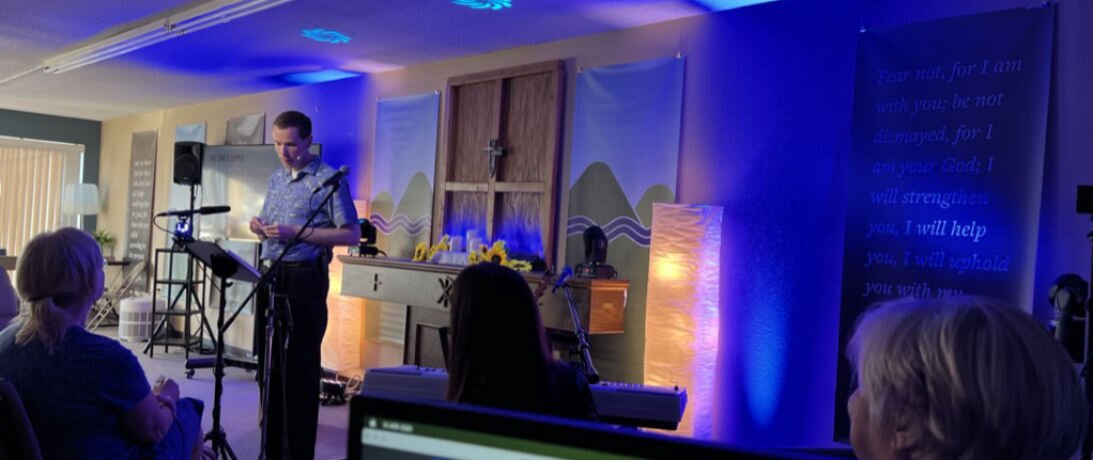
When it feels dark, we need the well trod paths of God’s Word to strengthen us so we don’t lose hope.
When evil seems to be prospering, the temptation can be to find a backup plan instead of God’s way. Do we need one?
Easter is God’s profound statement that He not only listens, but He also saves.
We begin a new series in the Psalms tonight, looking at David’s lament in Psalm 12. What happens when we feel like evil has triumphed and whatever good we do is fruitless?
When a worthy cause demands everything, compromise feels reasonable—even necessary. As Paul delivers a charge to Timothy to continue the job, he gives an important qualification: fight the good fight while holding firmly to faith and a good conscience, because the good fight is lost not through open defeat but through the quiet erosion of integrity.
We too often forget that the source is joyful and accept the far more mundane or depressing secondhand source.
Two half-brothers leave for the same war; only one comes home. When rescue divides one person from another, “Why me?” can feel unanswerable—and salvation can raise the same uneasy question. In 1 Timothy 1:15–16, Paul refuses to ground his rescue in merit, calling himself the worst of sinners and pointing instead to Christ’s purpose and patience.
We tend to measure our worth by what we bring to the table, but Paul’s testimony in 1 Timothy 1:12 turns that calculus upside down. He could speak of his calling despite his failures because God’s strength doesn’t depend on ours.
We need to know what things are for and use them in the right way in life. That’s true of God’s law just like anything else.