Pastor Tim continues our series, Steadfast, looking at Psalm 46:1-7, where we learn of God’s heavenly city He invites us into. What do we do when it feels like God’s dwelling place is far away? We look to His promises that come from His steadfast love.
Please join us live next week on Monday at 7 pm. You can find out how here.
Prefer to listen in the car or while doing other activities away from your computer? You can subscribe the Little Hills Podcast on the Apple Podcast app to automatically download an audio-version of each message for your listening convenience.
The following study questions and transcript are AI generated and may contain errors.
What “fortresses” have you built your sense of security around, and how have recent challenges exposed their limitations? What would it look like to stop returning to those fortresses once the crisis passes?
The sermon distinguishes between God being a “refuge” (a place of shelter) and God being our “strength” (the power to reach that shelter). Why does this distinction matter, and how does it change the way you think about God’s protection in moments when you feel too weak to even seek help?
In Psalm 46:4, destructive water becomes life-giving water flowing through God’s city. The sermon suggests this represents God transforming the forces of a fallen world. What does it look like for God to transform something destructive in your own life or community?
The sermon says God’s help is “as near as the dawn”—that no matter how dark the present moment feels, morning is coming. How does that promise affect the way you face uncertainty, and what would it take to actually believe it in a crisis?
The preacher calls the church gathering—even virtually—a “foretaste” or “preview” of God’s heavenly city. What does it mean to experience that preview in community, and how might it change why you show up to worship even when circumstances make it difficult?
The following study questions and transcript are AI generated and may contain errors.
Good evening and welcome to Steadfast once again tonight at Little Hills Church. We’re so glad to have you here tonight. We’re going to jump into Psalm 46 tonight. It’s going to be our first time that we’re switching passages since we began as Little Hills Church and we are so glad to have you here.
Psalm 46 is a really special psalm. It was the inspiration behind one of the most famous hymns in all of the church’s history and I bet you know it, A Mighty Fortress, but before we get into that, let’s go ahead and pray and get into God’s Word. Let’s pray.
Father, thank you for your Word. Thank you for the promises we find in it and as we reflect on how you are our refuge and you are our strength, Lord, would you give us peace tonight? Would you give us joy knowing that you are our God and you are our Savior? We pray these things in Jesus’ name, amen.
Let’s go ahead and dig in. If you have a Bible with you or you want to use the Bible app that’s embedded at live.littlehills.church, you can go ahead and read there as well and we will dig into Psalm 46.
In it we read these words, God is our refuge and strength, a very present help in trouble. Therefore, we will not fear though the earth gives way, though the mountains be moved into the heart of the sea, though its waters roar and foam, though the mountains tremble at its swelling. There is a river whose streams make glad the city of God, the holy habitation of the Most High. God is in the midst of her. She shall not be moved. God will help her when the morning dawns. The nations rage, the kingdoms totter, he utters his voice, the earth melts. The Lord of hosts is with us. The God of Jacob is our fortress.
This is the promise we’re digging into tonight and as I said, this passage not surprisingly labeling God as a fortress, as our fortress, is a source for Martin Luther’s hymn. The interesting thing that historians have noted is that there is very little known about Luther’s authorship of a mighty fortress. We don’t know exactly what occasion it led to Luther penning it. We have a strong suspicion and that was the plague of 1527. Luther himself did not catch that plague, but it burdened him greatly as many of us are feeling the burden now as we hear of friends and loved ones or simply those in our community who are falling ill. And as he did, it was reported that though Luther was well physically, he was not well at all for he felt the ache, the pain of seeing suffering all around him. He felt the responsibility as someone God had called to minister to the people of his community as he saw them falling ill and dying. And so he wrote this hymn, it’s thought perhaps in that time. In the early printing of it, it was labeled a hymn of comfort. We often think of it as a very triumphant song, a mighty fortress is our God. Was it really? It was a desperate cry, we know that for Luther whenever he wrote it and all the different forms of suffering that he saw for the comfort that he knew in knowing his God was his refuge. That’s what we find here.
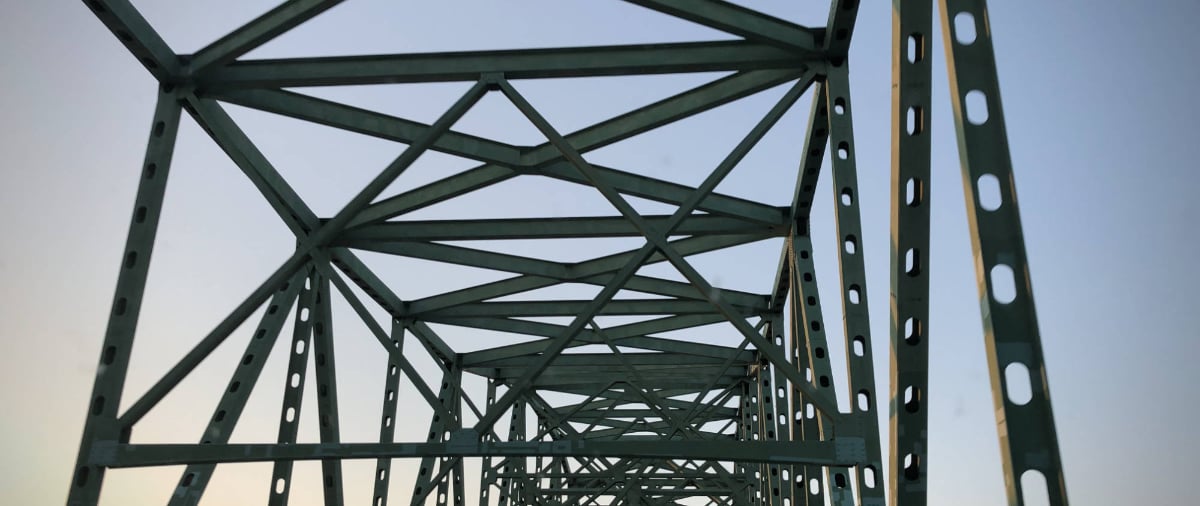
Now it might seem odd, we know what a fortress is, I have a little fortress here. And so I mean, this is what we imagine right when we think of a fortress, a nice little castle and we think, well, how has God a castle? Does he, you know, have a drawbridge and boat monsters and things of that nature? And of course, that’s not what he’s talking about, what he’s talking about is a place of safe haven, a place where we can go. God is actually at that place and he is our strength. That’s what we see in verse one. Once again, it says, God is our refuge and strength, a very present help in trouble.
We can go to the extreme with this and that’s what we see in this passage. What does it mean to be a refuge and a strength? A refuge, of course, is our fortress, a place where we can go and people can throw cannonballs and attack us and we’re safe because we have these big stone walls. But more than that, what do you do if you can’t even get to that refuge? How many movies have been made about someone trying to race to find some safe haven and they can’t quite get there as they outrun the enemy. But the psalmist knows that God is more than simply a place of shelter. God is our strength. He’s the one that gives us the strength to reach that shelter. And so we can go to the most extreme forms of trouble that we will ever face and know that God will be there with us. And that’s what we see in verses two and three. If you’ll turn there with me, we read these words.
Therefore, we will not fear, though the earth gives way, though mountains be moved into the heart of the sea, though its waters roar and foam, though the mountains tremble at its swelling.
Think about that for a moment. The psalmist imagines the most permanent things we could possibly encounter in life being ripped apart and failing. What does it mean to move mountains? Do you see them fall? Moved into the heart of the sea? If you’ve been around any sort of mountain, whether it’s a small mountain or a large mountain, one thing that’s very apparent is that mountain is stronger than any of us. Even with our ingenuity, we may carve out a mountain to build a road, but it takes enormous amounts of force and often years of work just to carve a little bit of a mountain. The psalmist says we won’t fear even if the mountains are collapsing around us and the sea is roaring and full of foam. In other words, it seems as though the psalmist is imagining the very end of the world when everything that we know is collapsing. He says, but we will not fear. Why? Because God is our refuge and our strength. That’s far better than the best fortress we could possibly build. God is a fortress beyond any fortress, anything that we can come up with to protect ourselves.
The problem is our fortresses often seem really strong until they run into a problem. I was reading over the weekend of a Venezuelan military boat. It encountered a cruise ship out in the international waters not far from its country, and it decided that it wanted to charge it with some kind of crime. I’m not sure they really knew what, but they decided that cruise ship had to be a nemesis, and so they ordered it to go back to port in Venezuela. Well, the cruise ship called back to its headquarters. It didn’t want to leave international waters and go into a hostile country, and so it didn’t respond while it was trying to figure out what to do, and it just waited. Well, the Venezuelan ship fired upon it and then decided when the cruise ship still didn’t respond, it would use drastic force. It would actually ram into the cruise ship and force it back to Venezuela. I don’t know. I haven’t heard an interview, but I’m sure the captain of that little patrol boat thought it was going to be able to accomplish this. He was trusting in the refuge of his highly armed ship, and if I ran to a highly armed ship, I’d be pretty worried, but the captain didn’t know what kind of ship he was ramming into. The little ship built to go explore areas with icebergs, and so it had an ultra reinforced hull, and as the little ship ran into it, it started to sink. They trusted the refuge of their military craft, and yet it was nothing compared to the unexpected force of that iceberg-reinforced ship.
So often in our own lives, we’re like that little ship. We think that we have everything planned, and we have our little fortress we’ve built, and maybe we even add some flags, and we add some cannons, and we think we are safe. But then we run into the unexpected, and we start to sink. I think at this time, certainly many of the things that we thought were stable and secure, many of our fortresses that we’ve built up, no longer seem quite as sure and secure. What are my fortresses? What are your fortresses? What are the things that you hold on to and believe are the things that provide you security in life?
The solution at this point isn’t to wait for normalcy and then go back to our old fortresses, as if we simply had to abandon our fortress for a period of time. Rather, this is an opportunity for us to see the true reality of life, a reality in which we have to face that all the fortresses that humanity can ever assemble can’t stand against the challenges we face. What are we supposed to do in such a time? What are we supposed to do when the fortresses we count on fail? Well, the psalmist tells us.
You see, God calls us into a city that never fails, his city. He calls us into a dwelling that never fails, his dwelling. He calls us into his presence, a presence that will never leave us insecure, that will never fail us. We see that in the transformation that happens as we go into verse four. If you turn there with me, listen to what happens. We’ve had these raging seas, these seas that are angry and ready to destroy. In verse four, we’re told this, there is a river whose streams make glad the city of God, the holy habitation of the Most High. You see, while water represents in verses two and three a destructive force, a force that could take away life, here we see it as life-giving, coming into the holy city of God and making it glad. What happens? God that happens. We see the Savior of the world coming in and transforming the destructive forces of a fallen world into a place that God’s people, those that dwell in that city, can rejoice in. We see water that, although throughout Scripture is often represented as quite destructive, giving life. Now, if we think about Scripture, we see that that is not an unfamiliar picture, just one that hasn’t been seen for quite some time. For back all the way in the Garden of Eden, we’re told that a river flowed out of Eden, a beautiful river, a river that was represented as life-giving. Here again, we hear a promise of a day when God will take the destructive forces of the world and again make them life-giving. God establishes his people as unmovable, and that’s what we see in verse five.
If you look there with me, it says, God is in the midst of her. She shall not be moved. God will help her when the morning dawns. Even the mountains can be moved. We saw that in verse two. Huge mountains. Imagine the largest mountain you’ve ever seen, a mountain full of rock being moved. What do we find on God’s people? What happens to them? They shall not be moved. How? Well, we see that in verse five as well. God will help her when the morning dawns. The city of God, the people of God that that city represents. God will help his people. What does it mean that his help is as near as the dawn? It means it’s not that far away. We know how the dawn comes every day. The psalmist wants to reassure us with here, that no matter how dark the present moment might be in your life, dawn is coming. God’s help is coming. It is that near.
We read more of the very same reassuring words in Lamentations 3, 22 and 23. As this lament went out, people still knew that God was their rescuer. Even as the city they loved fell, the earthly city, they knew something better was to come. Listen to these words. The steadfast love of the Lord never ceases. His mercies never come to an end. They are new every morning. Great is your faithfulness. That’s our God. Great is your faithfulness. When we feel in our darkest times, when we feel like the morning is far away, we are reassured that just as from day to day, in the darkest moments of night, dawn isn’t that far away, so too in the darkest moments of our lives, God’s help is not far away and to the shore.
Consider the following examples that the psalmist then goes on to provide for us. First, let’s look at Psalm 46, verses 6 to 7. We’re told that the nations rage. Think about that for a moment. The nations rage, the kingdoms totter, he utters his voice, the earth melts, the Lord of hosts is with us, the God of Jacob is our fortress. The very earth can melt, the nations can rage, but God is with us. What is being talked about here? We might say, well, what? This doesn’t sound familiar. I’ve not experienced this. It seems like when there’s rage against God, maybe even in my own heart, I don’t see this sort of resolution. I don’t see God with us, but we’re told when this will happen in Revelation 21. Listen to this promise from God about what is to come.
And I saw the holy city, New Jerusalem, coming down out of heaven from God prepared as a bride adorned for her husband. And I heard a loud voice from the throne saying, behold, the dwelling place of God is with man. He will dwell with them and they will be his people and God himself will be with them as their God. That’s the promise. Yes, it’s not here fully yet, but that is where we’re headed. So when the psalmist announces that God is our refuge and our strength, that God is our fortress, he is talking about what we know is already assured to come. Sometimes we think of the end of the world as a very uncomfortable thing of judgment and destruction. But if we’re sheltering in the refuge of God, that God is our fortress, it is instead the reassuring promise of a time when God invites us fully into his heavenly kingdom, into his city, and we rejoice in his presence and his protection. You see, as we read in Revelation, as we read here in Psalm 46, the promise here is that if God is near already, he’ll be even nearer in the time to come.
What good does this do for us right now, you might be asking. Sure, okay, there’s a promise sometime in the future, but how is that the sort of comfort that I need in a time in which my fortresses are being torn down? How do I turn to God in such a time and feel comfort? Well, we see in God’s people, in his church, a preview of what is to come. It’s a preview, it’s a foundation, it’s a starting point, a foretaste of the comfort that God is going to give us. We can’t imagine what it’s like to have God himself dwelling with us, but as we come together as God’s people and we worship him and we hear his promises, what are we seeing? We’re seeing just a preview of that wonderful promise that God has for us. Think about it, if you have a really busy time at work and you know you have a nice long vacation planned down the road, but you take a day off, sometimes that day off is almost as refreshing because it allows you to imagine what is to come. So too, even though we don’t have the opportunity yet to fully experience what it’s like to be in God’s presence, we get to taste it when we come together as God’s people and remember his promises because we can reassure each other and we can look at the very fact that we’re gathered together and we start to see a picture of that fortress coming together, that city that will not fall no matter what happens to the mountains.
Whatever is going wrong, what we’re called to do in our lives is to look to what God is building and throughout scripture we see a constant direction towards that blueprint that God has already established and which will be fulfilled in the time to come. He calls us to follow him, to trust in Jesus as our King, for that King will never let us down, unlike all the kings of the world. Everything in this world that claims to be a fortress we’re seeing can be forced to bow down at the pressure of a tiny little virus, but even if the very mountains fall, the King of the Heavenly Kingdom will never fall.
If you’re in the church and you’re thinking, but the church pews are empty right now, the seats are empty, the stages are empty, the buildings look almost scary to think about, all these places that were once joyful places singing God’s praises that are empty in this time of sheltering. Maybe not what we wish for, certainly not what I think anyone planning an Easter service was wishing for, anyone looking forward to going to one later this week, but you know what? God’s people don’t fall even when they’re sheltering in place. Even when the church can’t assemble in a building, the church is still here. God has still established it. It will not fall. It will only become more and more strengthened by God’s spirit until the day that he returns and we experience the fullness of the refuge that he provides. So we don’t need to fear in this time, rather just as when Luther had to take shelter from those who would oppose him, he didn’t, well he did fear, he was a human being, but in his knowledge he knew he should not fear, and the psalmist was the same way. He probably feared even as he wrote these words reflecting on it, and yet he knew that we need not fear. Why? Because God is our refuge.
If you haven’t been involved in the church because you say it doesn’t look like that heavenly city, I know the imperfections of it, I don’t need to be in an imperfect place. I hope you’ll reconsider, because it’s where God is building, whether it’s Little Hills, I’d certainly love to see you there when we can physically meet, but we’re obviously starting at the humblest of grounds, we’ve never had a service in person yet, or at some other good, faithful church that seeks God’s word and the truth in it. I encourage you when this is all over to make sure that you’re committed to being a part of that building, because each one of us is being used as a living stone, God’s taking us and building us to turn us into that beautiful city that offers refuge to all that call on the name of the Lord. It is unshakable, because we looked at Jesus and his steadfast love. God invites us, he calls us into a city that will never be shaken, his city. In that city, he calls us into his very presence, we’re not merely off on the borders, he calls us to rejoice as part of his family. I hope that you have already experienced that hope, and if you haven’t, I hope that even this night as you hunger and thirst for the security that we find in God, that you will turn to Jesus, who knows that security, who offers it to us, that refuge, that strength. Let’s pray.
Father, we thank you for your refuge, your strength, that though the fortresses of the world may fall and crumble, yours never will. That you yourself offer to be our mighty fortress. You are our refuge, you are also our strength, so we never fail to reach that refuge. Lord, each of us is carrying a burden tonight, so many burdens probably, of all the things, all the uncertainties that we have in this time, all the things that we counted on that we thought were certain, and sure, and firm, that don’t feel that way any longer. But whatever those may be, Lord, will you enable us to set those before you and cling to you, the one who is always secure, who is always immovable, and who is always there for us. We pray in Jesus’ precious name, amen.
Well, we are so glad to have you here once again tonight, and I’d love to invite you back next week. We’re going to continue and finish out Psalm 46, we’ll look at the last few verses, and we’ll look at how that gives us hope in the light of Easter. It’ll be Easter Monday, and we can celebrate together that hope. As we think about that empty tomb that we’ll celebrate even from our homes on Sunday, we know that we serve a triumphant king who can triumph over even the most powerful forces in the world, even death. That’s what we’re going to be thinking about next Monday. So I hope you’ll join me at 7 p.m. next Monday night, that you’ll share with friends that could use some encouragement from Scripture, and that in the meantime, you would remember the one who is your refuge and your strength in whatever you might face this week. I hope you have a wonderful week, resting in the refuge of our God.