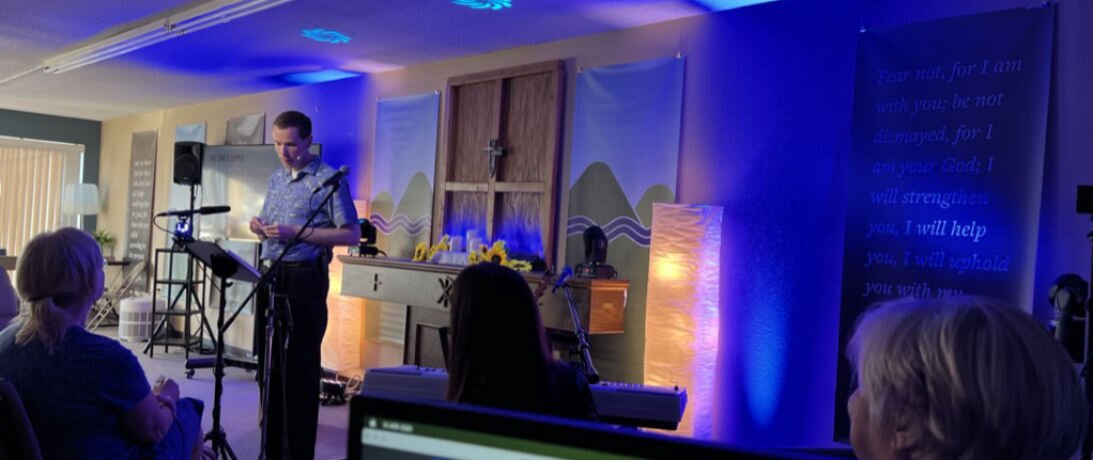
How much religious activity would it take to make up for the parts of life we still withhold from God? In Isaiah 1, Israel brings a multitude of sacrifices, gathers for solemn assemblies, and makes many prayers—yet God addresses his people as Sodom and Gomorrah and says their worship has become a burden to him.
We’ve all charged after something we thought would finally set things right, only to watch it cost us everything we hoped to protect. That’s the dumb-ox pattern God confronts in Isaiah 1 when he asks his people, “Why will you still be struck down? Why will you continue to rebel?”
An ox knows who feeds it; a donkey knows its master’s crib. But what about God’s people — including us? We forget.
Sin is really sticky — far more persistent than those obnoxious tags stuck on things that we struggle to get off. But, Jesus’s mission in this world was to do what we can’t: remove that sin from us.
God takes us as those who are lost in the dim darkness and offers us a light so overpowering that nothing can stop it — or His mission He sends us on.
Christmas has a way of feeling like a destination—the carols, the decorations, the nativity—as though the manger is where everything finally arrives. John 1 won’t let it stay there: the Word became flesh and dwelt among us, and the question John presses is what exactly that birth was launching toward and what it means for us now.
Comfort, institutional preservation, and tribal identity can crowd out obedience to God’s call in our lives. Do we hear His call to reach those in need of His Grace and to live in the “risky repentance” that involves?
Solomon, Rehoboam, and Jeroboam all treated God’s promises like something they could improve on or control on their own terms only to encounter the pavement courtesy of the black ice of sin. Our efforts end like that, but God’s faithfulness outlasts our failures.
Jim Wolfe traces God’s redemptive plan through four Old Testament “roadside attractions” that foreshadow Christ — skins, boxes, baskets, and snakes. Along that scenic route, we arrive at the true meaning of Christmas, an attraction we actually need.
A folding map only works if you already know where you are. Enough wrong turns, and you’re stuck staring at it with no idea how to find yourself—let alone get back on course. Psalm 89 asks what God’s promises do for those of us who aren’t the Hannahs and Davids, who look at the map and go the wrong way.